 The 2025 edition of the Propliner Annual will be published in late April 2025. As its title implies, Propliner Magazine is totally dedicated to Propliner aircraft and is a must-have for any aviation enthusiast and especially Propliner enthusiasts. Orders for this bumper 176-page publication can be placed at www.propliner.co.uk
FAA Kicks the Can Down the Road on AHM's Part 16 Complaint - April 16, 2025
The Airline History (AHM) recently announced on its website that the FAA has once again issued an extension on the museum's Part 16 Complaint with the new decision date being June 9, 2025.

The museum has been granted supervised access to Hangar 9 to remove its property but, at this time, the DC-3, M404 and other large exhibits remain in the hangar. It's anyone's guess what will happen to these iconic aircraft and exhibits.
In related news, on December 4, 2024 I reported that an organization calling themselves the "Kansas City Aeronautical Museum" were pursuing establishing a museum in Hangar 9 with many of the AHM exhibits. I recently heard that the organization has abandoned its quest due to the ongoing Part 16 complaint, which could possibly take years to wind its way through the FAA bureaucracy and the courts.
Three Super Constellation Fuselage Sections Offered for Sale - March 25, 2025
Three former military Super Constellation fuselage sections have been offered for sale today on the Barnstormers.com website.
c/n 4137 C-121G 54-4062/N105CF
c/n 4350 EC-121H/N51006
c/n 4416 NC-121K BuNo 141292

All three are located at Dynamic Aviation in Bridgewater, Virginia and were collected by Karl Stoltzfus over the years. BuNo 141292 was the last Constellation of any type to be operated by the U.S. military when it was retired by the U.S. Navy in June 1982. N105CF was partially restored by the Super Constellation Flyers Association (SCFA) when the organization changed plans in August 2002 and acquired C-121C N73544 from Benny Younesi. While BuNo 141292 and N51006 consist of forward fuselages, N105CF includes the majority of the fuselage, empennage and wings. Hopefully someone will purchase these relics so they can be saved from the scrapman.
AHM Announces a Second Notice of Extension by the FAA re the Museum's Part 16 Complaint Against the Kansas City Aviation Department - February 11, 2025
As reported on November 21, 2024, the Airline History Museum filed a Part 16 complaint against the Kansas City Aviation Department. The complaint was filed on September 4, 2024, with a decision due from the FAA on December 10, 2024. This was extended to February 7, 2025 and the Airline History Museum recently announced on its website that it has been extended again to April 8, 2025.

Lufthansa Technik Issues Statement re Starliner Rollout - January 18, 2025
Lufthansa Technik issued the following statement re the rollout on LinkedIn
A Milestone in Aviation History
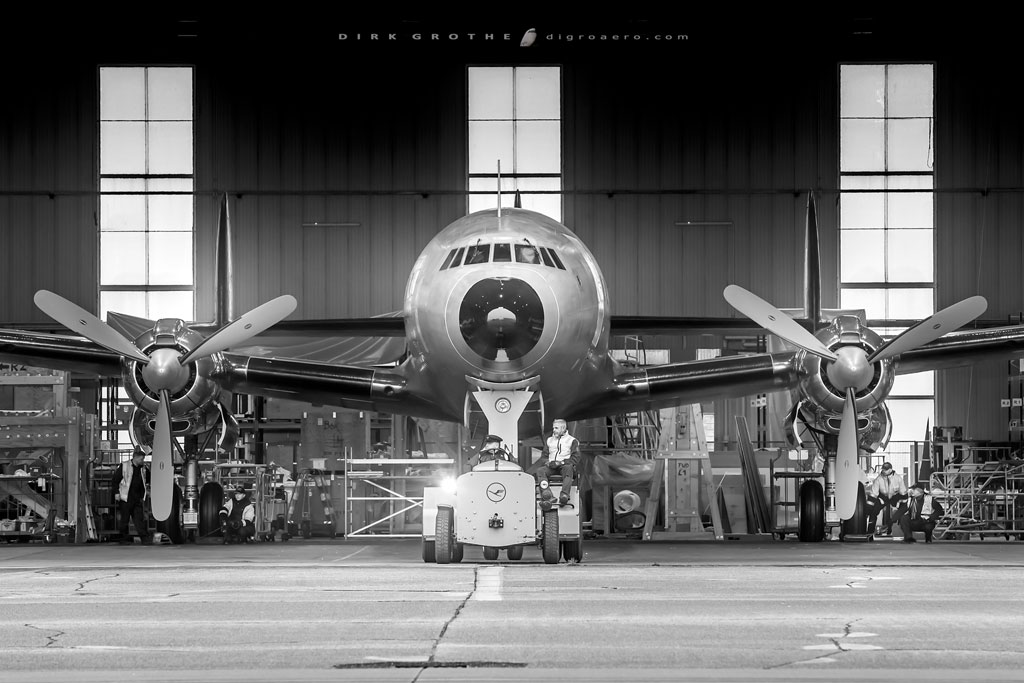
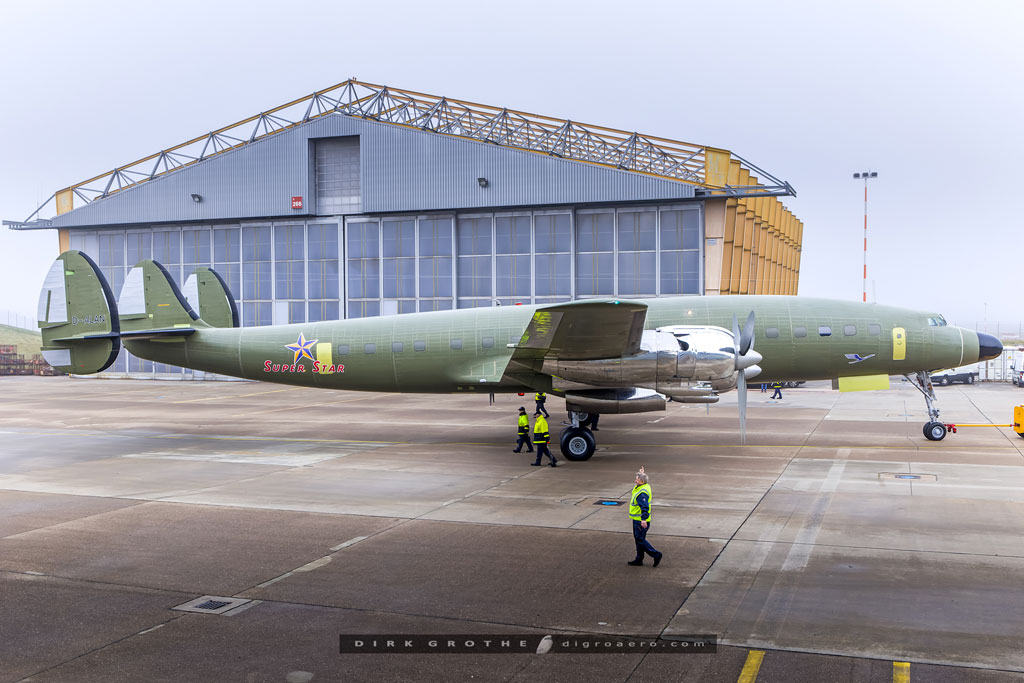
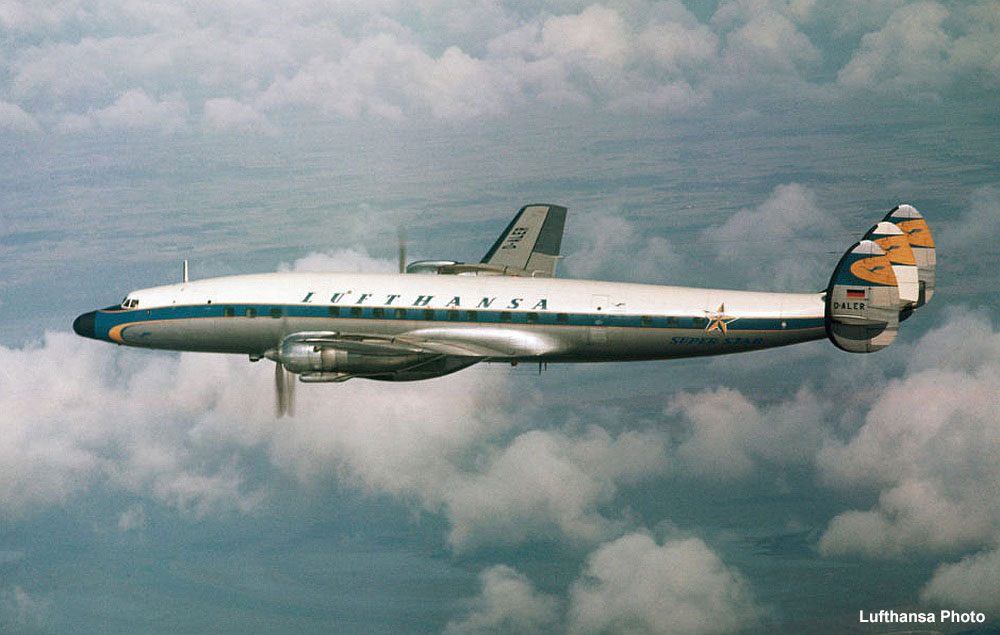
Today marks a significant milestone as we together with Lufthansa Group proudly unveiled the meticulously reassembled Lockheed L-1649A Super Star at our Hamburg headquarters. For the first time in decades, this iconic long-haul aircraft rolled out of the hangar on its own landing gear and onto our apron - a moment of aviation nostalgia igniting widespread excitement.
An interdisciplinary team of around 15 mechanics, spanning multiple generations, worked tirelessly over the past year to bring this aircraft back to beauty. Their expertise and dedication made the precise reassembly of large components - like the fuselage, wings, and the iconic triple tail unit - a reality. In October 2023, these components arrived in Hamburg, along with 292 wooden crates of smaller parts.
One standout feature of this non-airworthy reassembly is the cockpit, restored as faithfully as possible to its original 1950s condition. The lighting and controls are fully functional, and cable pulls make the rudders and flaps movable - a tribute to the exceptional engineering of its time.
In 1957, the Lockheed Super Star flew the connection to New York non-stop across the Atlantic. The aircraft was therefore a technical masterpiece of its time. With its four piston engines, it closed the chapter of classic propeller-driven aircraft on the North Atlantic routes. These flights, which lasted up to 17 hours, took off from Hamburg, where the maintenance base was also located. The roll-out therefore took place at a location of equal importance to Lufthansa and Lufthansa Technik.
Reassembled Starliner Emerges From Hangar - January 17, 2025 - Updated January 20, 2025
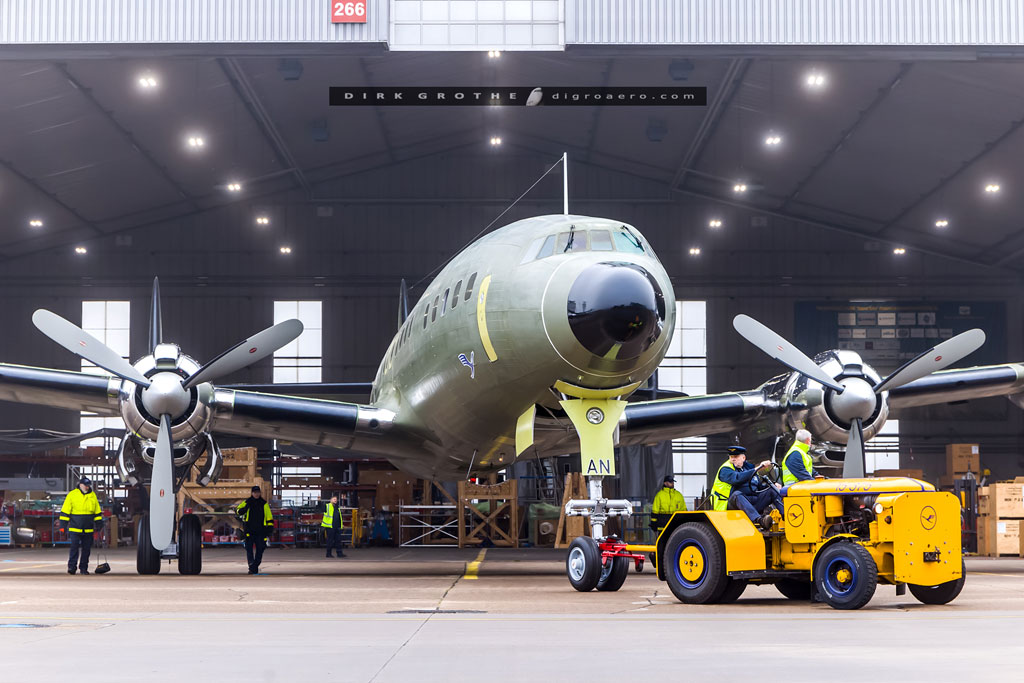
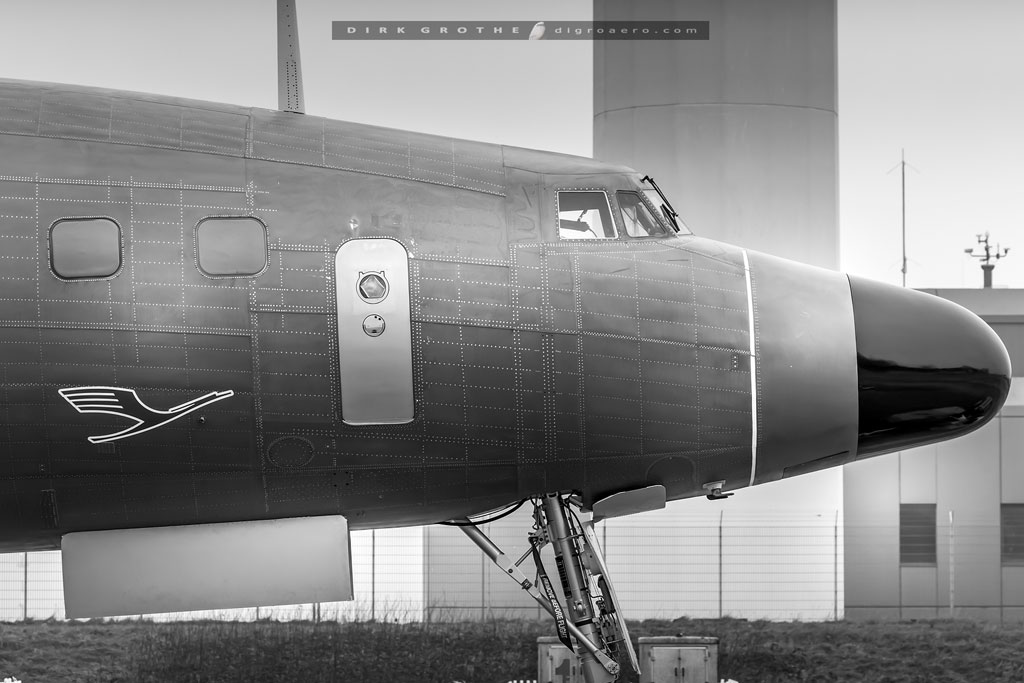
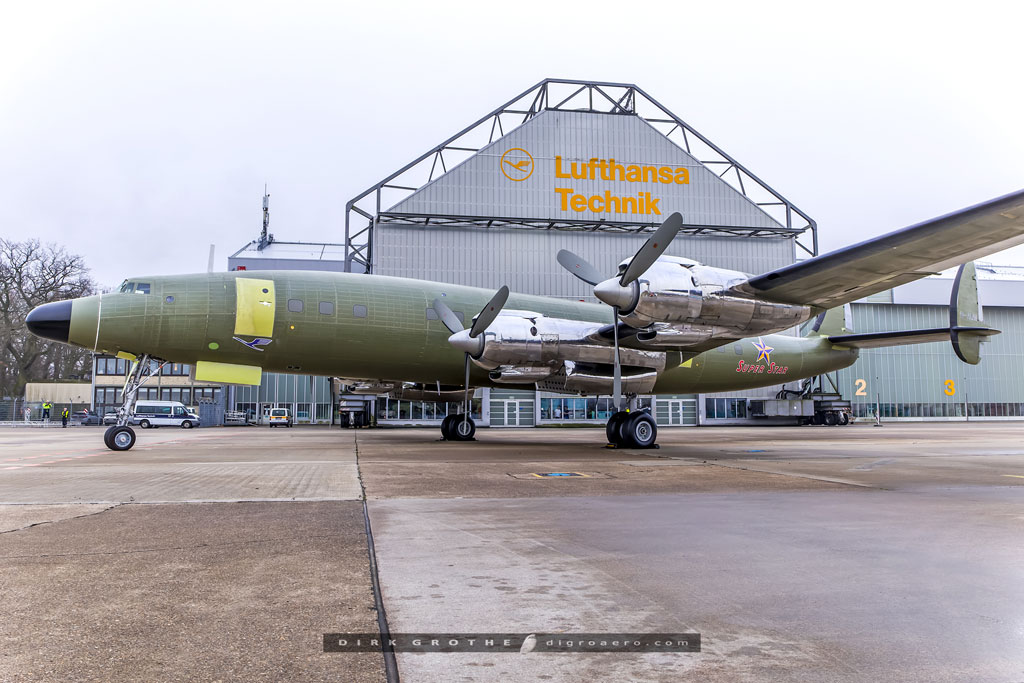
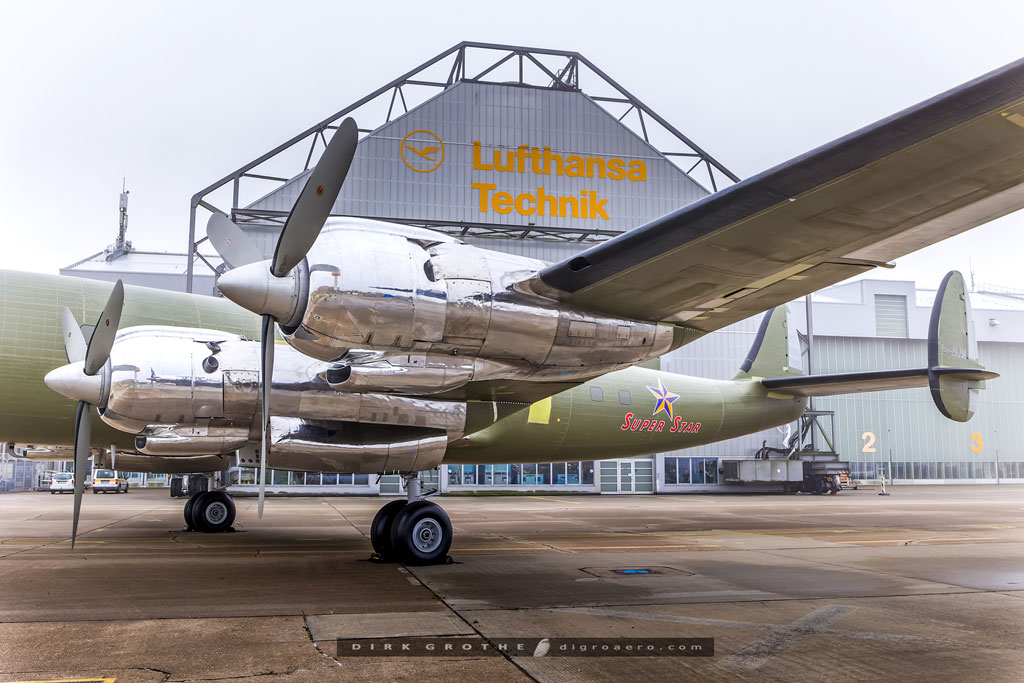
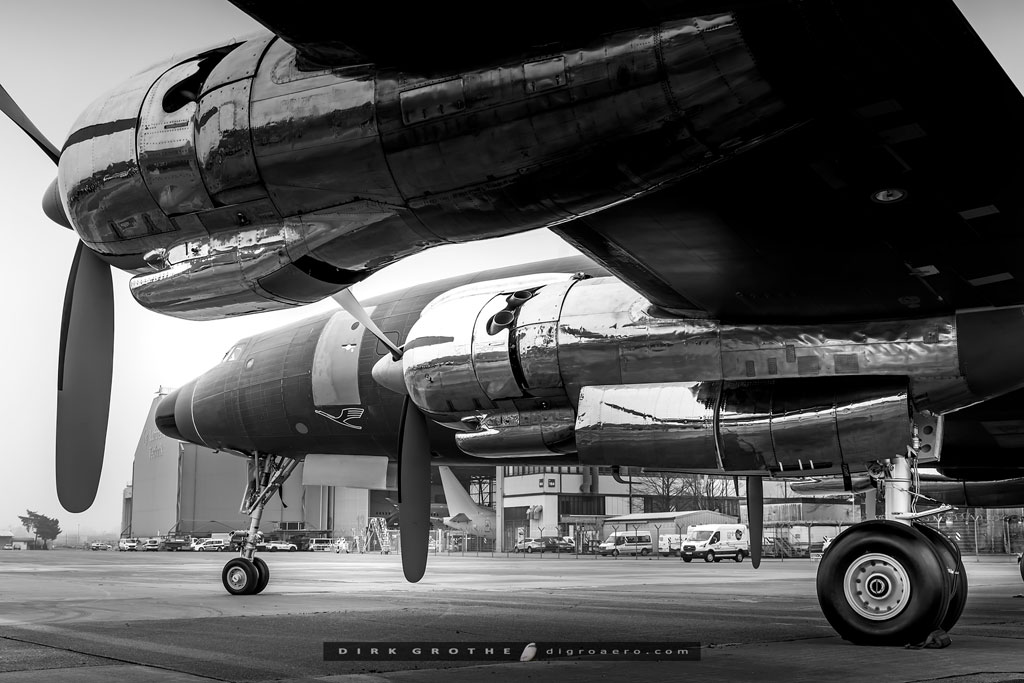
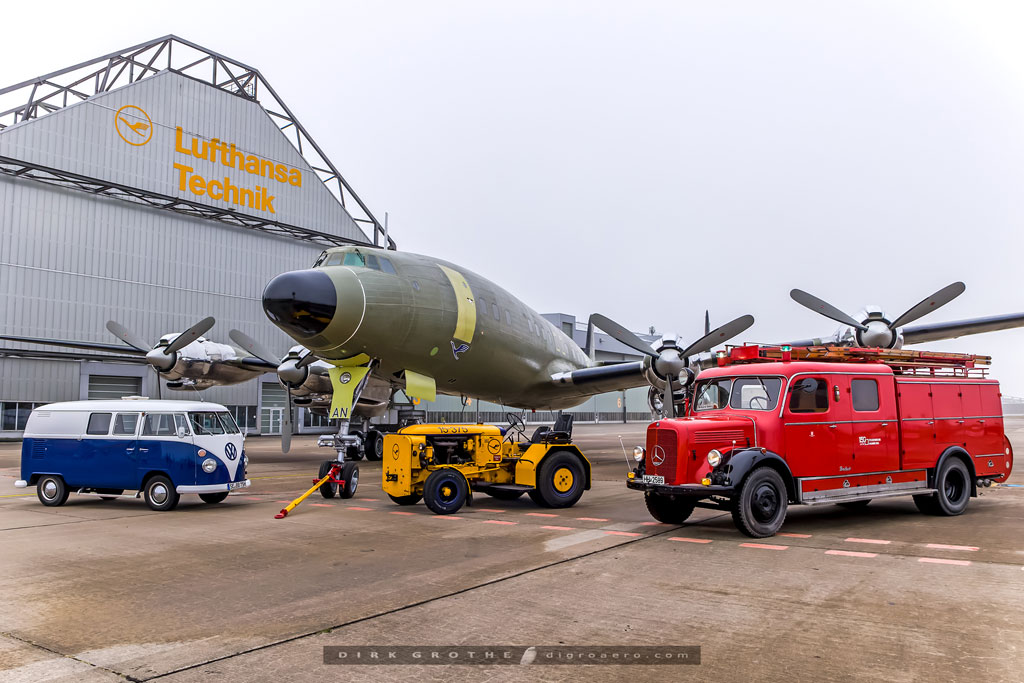
L1649A N7316C (D-ALAN) was rolled out of a Lufthansa Technik hangar at Hamburg Airport today after reassembly by Lufthansa Technik staff and retirees. It was moved to Hamburg in October 2023 and on April 12, 2024 Lufthansa announced that the aircraft and Ju52 D-AQUI would be placed on display in Frankfurt at a dedicated visitor and conference center. Construction is scheduled to be completed in 2026, just in time to celebrate the 100th anniversary of the airline. Dirk Grothe captured some great photos today of the aircraft emerging from the hangar and forwarded the following report and photos.
Rollout of the Lockheed L-1649A "Super Star" at LH-Technik Hamburg today.
A milestone in aviation history is being shown to the public for the first time: Lufthansa Technik has completed the extensive assembly of a Lockheed L-1649A. The fully restored long-haul aircraft was pulled out of the hangar on its own undercarriage for the first time and thus experienced its roll-out in Hamburg - a moment that not only thrilled aviation enthusiasts.
Former N7316C (c/n 1018, delivered 1957 to TWA and last flight on 09.11.1983) has been under restauration
by Lufthansa since 2008 in Auburn (Maine, USA) to restore it in an airworthy condition for future flights until the project was stopped in 2018 after 10 years and 150 Million Euro costs and the aircraft was shipped to Bremen/Germany in 2019. It was transferred to Paderborn in February 2021 and to LH-Technik Hamburg in October 2023.
The aircraft was purchased by Deutsche Lufthansa Berlin Stiftung in 2007 together with N8083H (c/n 1038 former TWA) and N974R (c/n 1040 former LH D-ALAN).
Following the roll-out, the aircraft will be dismantled into larger segments again in the coming weeks, before being transported by heavy transport to Munster/Osnabruck Airport in July. There, it will be painted in Lufthansa's original design from the so-called parabolic phase.
After painting, the Lockheed Super Star is scheduled to arrive in Frankfurt in October. Just in time for Lufthansa's 100th anniversary, from spring 2026 it will be the main attraction of the Lufthansa Group's new conference and visitor center beside the Lufthansa Aviation Center at Frankfurt Airport, together with the legendary Junkers Ju 52 D-AQUI. Thanks to a glass facade, the exhibits will also be clearly visible from outside.
For more information about the rollout, check out Dirk's Flickr report; this Vintage Aviation News article; and this AEROTIME article. Many thanks to Dirk for sharing his report and photos.
Kansas City Super Connie Engine Runs - January 12, 2025
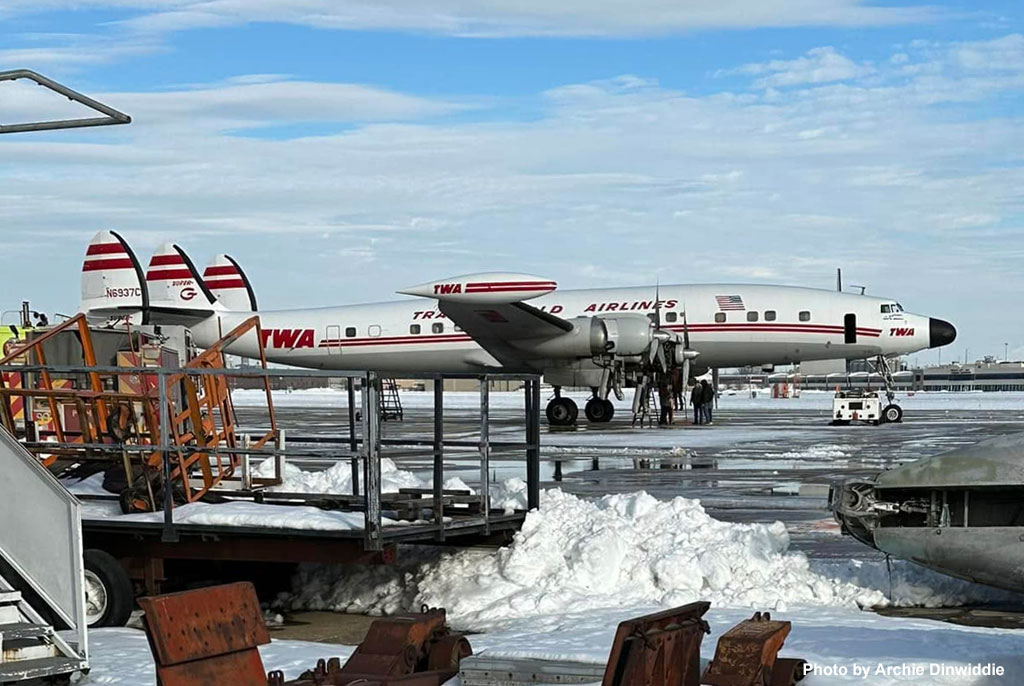
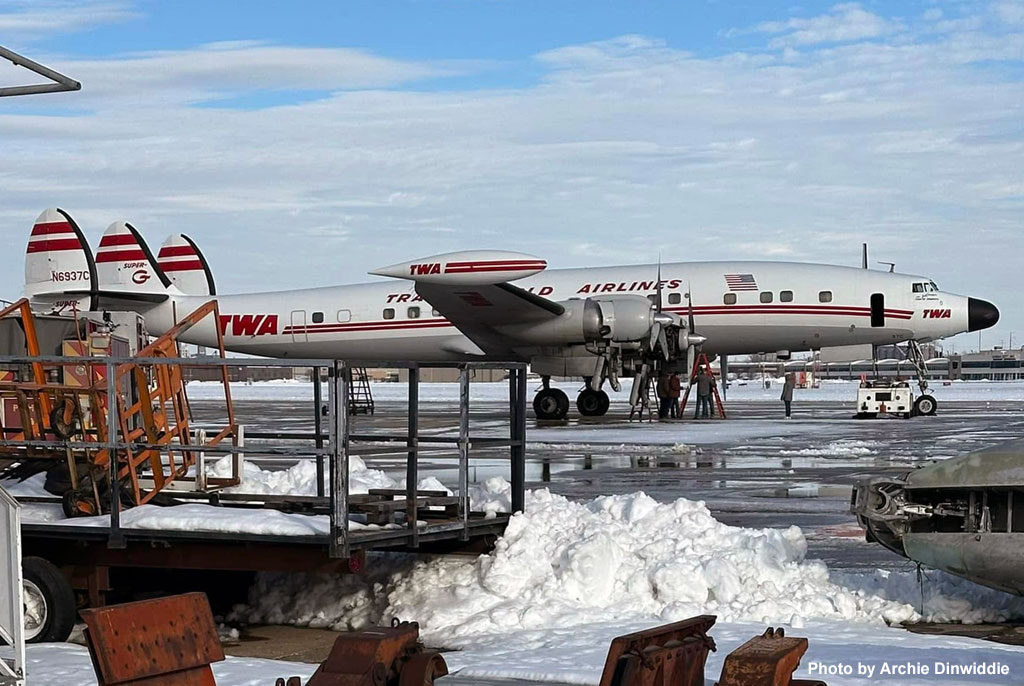
As reported on November 1, 2024, Super Connie N6937C was acquired by John Travolta's production company Constellation Productions Inc. in September 2024. After some TLC by mechanics, the aircraft emerged from Hangar 9 at Kansas City Downtown Airport yesterday for some engine testing. All four engines successfully ran and the aircraft taxied around the ramp before heading back to the hangar. Archie Dinwiddie photographed the aircraft and recorded some videos, which he posted on the Lockheed Constellation Facebook page. Many thanks to Archie for sharing his photos and videos.
What's Going on in Kansas City? - December 4, 2024
The situation regarding Kansas City's Airline History Museum (AHM) took a strange twist yesterday, which comes on top of last month's revelation that the museum's crown jewel Super Constellation N6937C had been acquired by John Travolta's production company Constellation Productions Inc. Yesterday morning, AHM posted a Press Release on their Facebook page that was very similar to one posted on November 18, 2024 ending with "The museum is not gone, and the desire is to open the doors so all can see the rich history Kansas City has had in part of aviation!"
Fast forward a few hours to 2pm, when an organization calling themselves the "Kansas City Aeronautical Museum" held what was billed as a "Sneak Peek" walk-thru of the Kansas City Aeronautical Museum (KCAM), formerly the Airline History Museum. Attendees were provided with a document titled "The Rescuing, Resurrection and Expansion of the Kansas City Aeronautical Museum", which noted that Signature Flight Support is a collaborating partner in this endeavor. This is an amazing development in that Signature Flight Support had locked AHM out of Hangar 9 since July 2022 over a lease/rent dispute. Here are some key points from the document.
The former Airline History, located in Hangar 9 at the Charles B. Wheeler Downtown Airport (Southwest Corner of the field), is announcing a rebirth and expansion under its new name of Kansas City Aeronautical Museum (KCAM). Through a collaboration of Signature Flight Support, the TWA Museum, the new management and Board of Directors of KCAM and others, the new entity is implementing a multi-year plan to expand the scope of operations to appeal to a broader base of visitors.
Through a dedicated task force, KCAM is leading this collaboration and expansion effort, with key board members including John Miller, Steve Woods, Nick Riesenberg and Terry Reed, whose task is to develop and implement a detailed expansion plan. (Not quite sure who the other two board members are but John Miller and Steve Woods also serve as TWA Museum directors.)
This is an amazing turn of events and begs the question of why Signature has flipped from being an "adversary" to being a "partner." Perhaps the back rent has been paid? Based on the December 3rd AHM press release it appears that AHM President John Roper was not aware of what was going on. I've also heard that neither was John Travolta's organization. If this was indeed a "palace coupe" the next weeks ought to be interesting, especially in light of the upcoming December 10th FAA ruling.
The "Sneak Peek" was very well attended with over 100 people showing up. Here are some comments from one of the attendees.
Engines #1, #2, and #3 ran satisfactorily. Engine #4 needs various carburetor parts like gaskets and diaphragms that are expected to be installed soon. The inside had been detailed and looks great. The outside is another matter - there are a number of hydraulic leaks I observed including from the prop hub of #1, and streaks on the bottom of the fuselage going all the way back to the tail. It could be in better condition than I observed, but I was told the hydraulic system needs serious repair if the aircraft is ever returned to flight. Also, there are huge piles of Connie parts of all sizes and descriptions. As to long-term plans, I persistently keep hearing Travolta would love to keep the Connie in KC at Hangar 9 even after he fixes it and uses it in his movie.
The Martin 404 is mighty dusty but otherwise appears to be in good shape for sitting inside the past few years. The rear airstairs were down and the cabin door was open, but I didn't go aboard.
I saw mold damage to a number of items such as uniforms on display and Ambassador class seats. Not enough to make you want to grab a mask and wash your hands, but enough that the items probably can't be salvaged (or in the case of the seats the upholstery and foam would have to be replaced). Literally hundreds of models are still stored in their display cases. Still a lot of stuff like signs and large format photos hanging on the walls.
The archives area is a disaster. The further I went into it the worse it appeared - just stuff piled haphazardly everywhere. It looked more like a forgotten garage than an archives room. I could also hear a humming noise, so I looked around and found that apparently there is a dehumidification system, but the door appears to have been propped open with junk for an extended period of time so the system appears worthless at the moment.
A document titled KC Aeronautical Museum VISIONS and GOALS was distributed to attendees requesting them to "share their thoughts and ideas of our rejuvenation and expansion plans. Your input and point of view will be highly valued."
Hopefully good things will come from this latest development and the museum, whatever it will be called, will get back on its feet and return to being a viable institution. My fingers are crossed. I will update the website as this story develops.
Airline History Museum Releases Statement - November 21, 2024
The Airline History Museum recently issued a statement providing an update on their ongoing struggle with the City of Kansas City and Signature Aviation. The statement acknowledges that the museum's Super Connie N6937C has been sold but doesn't list the new owner, which most certainly is John Travolta. On November 15, 2024 I reported that three of the Super Connie's engines were scheduled to be run that day. That didn't happen but the #1, #2, and #3 engines were successfully run four days later on November 19th. The #4 engine still needs a bit more tinkering but should be tested in the near future.
The Airline History Museum
November 18, 2024
The Airline History Museum (AHM), as you probably know, has been through the wringer for the last few years, embroiled in a battle with the City of Kansas City, with the FAA docketing a formal complaint submitted by AHM.
This all began when the City of Kansas City (via the City Council and the KC Aviation Department) decided to void an agreement we had with the City allowing AHM a full rent abatement for use of Hangar 9 through 2035 (it’s all exhaustively documented). Signature Aviation became the de facto supervisor of Downtown Airport and in short order went after the Museum for rent we did not owe. A lawsuit was the result.
To our absolute astonishment, the State of Missouri ruled against AHM. Locked out of the hangar for 2 years running now, Signature has showed no evidence of wanting to talk, even though AHM has made multiple offers.
Outside of the illegal lockout, AHM filed a Part 16 Complaint with the FAA, essentially spelling out chapter and verse how the City, the Aviation Department, and the City Council allowed Signature Aviation to run Downtown Airport, either through deliberate or benign neglect, in violation of Grant Assurances.
The Part 16 Complaint specifically demonstrates how the City misused the funds from government grants meant to support aviation efforts at the Downtown Airport, as well as at MCI, through repeated violations of the terms of FAA Grant Assurances issued to the City. The City relies heavily on those grants, which amount to millions of dollars.
The Part 16 Complaint goes on to cite separate instances where: AHM has lost revenue due to the Museum closure; AHM has been denied use of the space leased to them; AHM has been denied use of their own aircraft, access to the airport; been deprived of the benefits of abatements and support which were granted (but diverted to Signature Aviation ) and suffered damage to our reputation and loss of donor confidence.
The KC Aviation Department must follow FAA Regulations in the management of aviation-related activities to qualify for these grants. They have not.
As it is now public information, we are sharing that the dear, beloved Connie, has a new owner. This person is true supporter of aviation and other historical aircraft; it could not be in better hands.
For now, we are awaiting the decision by the FAA, which is due 12/10/2024. They could investigate some, none, or all our Complaints. No doubt, if the FAA sides with AHM, you can expect follow up legal activity on our part and to be granted access to our entire fleet.
That’s all we can share at the moment.
The Board of AHM
Kansas City Super Connie Update - November 15, 2024
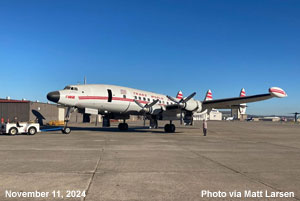 Super Constellation N6937C emerged from the Airline History Museum hangar on Monday November 11, 2024 for the first time in quite a few years. The aircraft was given a good washing to remove years of accumulated dust and dirt before being towed back into the hangar for additional work on the engines and related systems. Three of the four engines are scheduled to be run today and hopefully all will go well. While I don't believe there are any plans to get the aircraft back in the air in the immediate future, it is needed for the shooting of scenes involving the aircraft taxiing. Many thanks to Matt Larsen for providing the photo and report.
Kansas City Super Connie Changes Hands - November 1, 2024
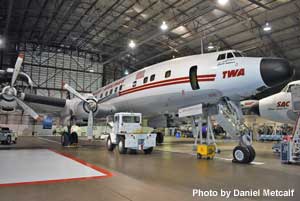 Super Constellation N6937C was registered to Constellation Productions Inc. in September 2024. The company is reportedly owned by John Travolta and this appears to be very good news. The aircraft had been owned by Save-A-Connie/Airline History Museum since December 1986 and was a fan-favorite at airshows from the late 1980's to July 2005 when an engine failure grounded it. The museum has been in a prolonged legal dispute with Signature Aviation and has been locked out of its Hangar 9 facility at Charles B. Wheeler Downtown Airport in Kansas City since July 2022. Air Classics posted the following news piece on the magazine's Facebook page yesterday.
DOES THE SUPER CONTELLATION HAVE A NEW OWNER?
Recently, we have been receiving dribs and drabs of information that concern the Lockheed Super Constellation on display at the Airline History Museum in Kansas City. Over the years, AIR CLASSICS has reported on the ups and downs (mainly downs) of this museum. The museum displays a superlative collection of TWA-related aircraft including a Martin 4*0*4, Douglas DC-3, Northrop Delta, and, of course, the magnificent Super Constellation. The Super Connie used to be regularly flown but has not turned a prop blade in years. The museum's management simply aged out and there appeared to be little interest in getting anyone younger into the organization. Then came a scandal concerning possible misappropriation of funds. More recently, the museum has been locked in a battle with an FBO that wants the property on which the museum's historic hangar resides.
Our latest information - and it is not confirmed - is that John Travolta may be the Super Connie's new "guardian." It seems that the registration of the aircraft is now with Travolta's Constellation Productions, the actor's film and creative development company. Travolta loves the Connie and even owned one in the past.
We have also been receiving reports of a major new Hollywood movie revolving around a Super Constellation. The little bit we have seen is very exciting and is based on a true event. While we have not been able to find anything definitive, this may be why a certain flurry of Connie-related activity has taken place. We will be offering more information as it becomes available.
Stay tuned for the latest developments in this fast-moving story. For more information about the museum's legal battle with Signature, check out the January 20, 2021, September 17 2022 and April 14, 2023 reports on this website.
Former Swiss Super Connie For Sale...AGAIN - October 2, 2024
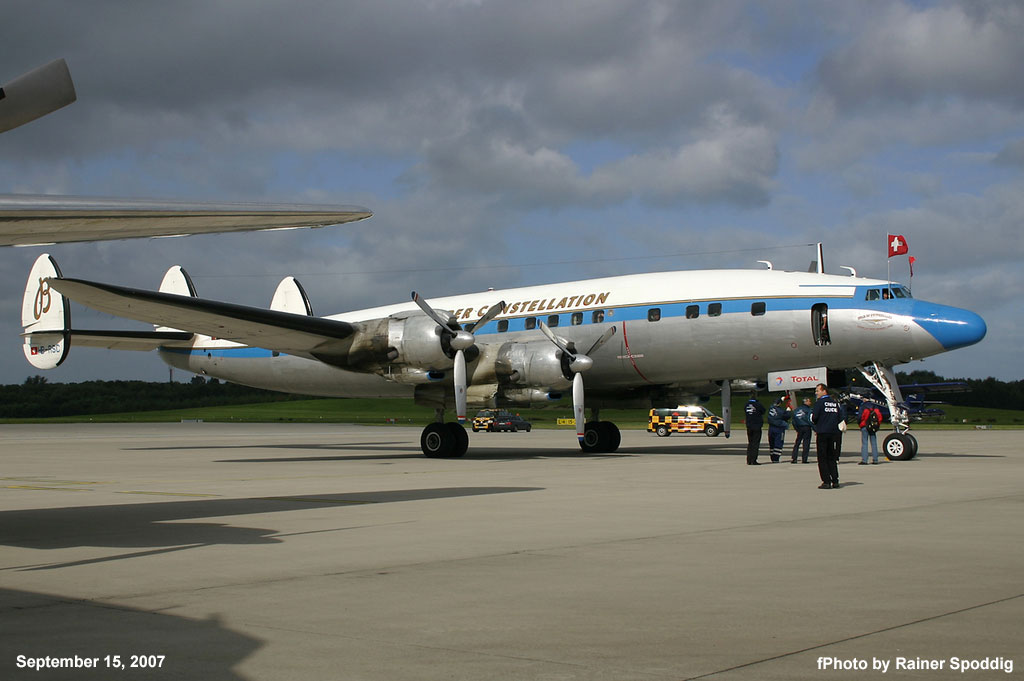
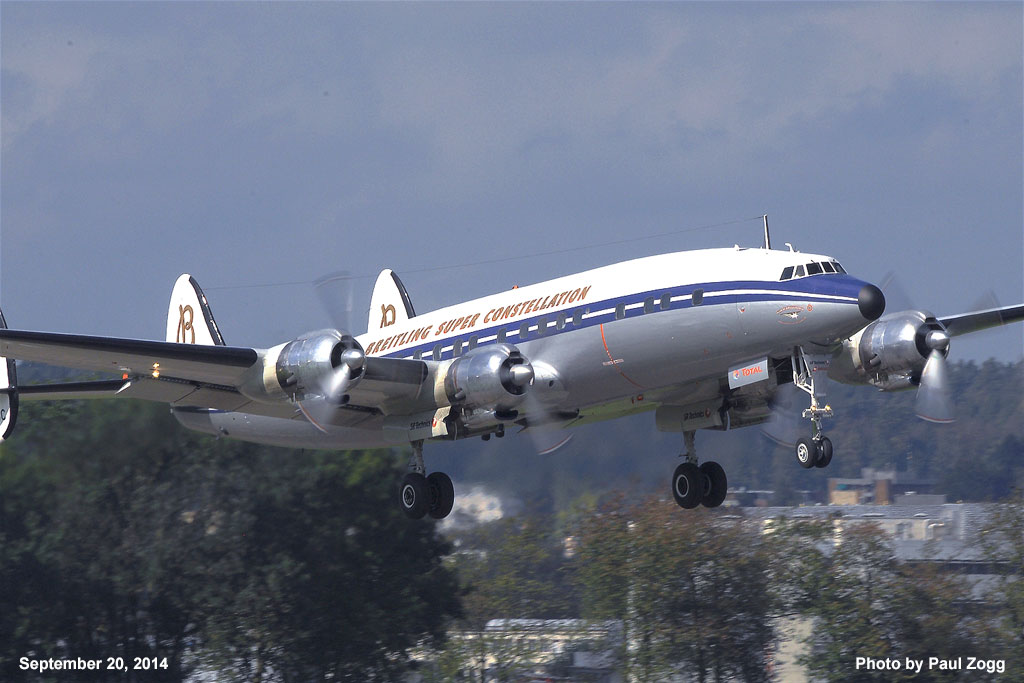
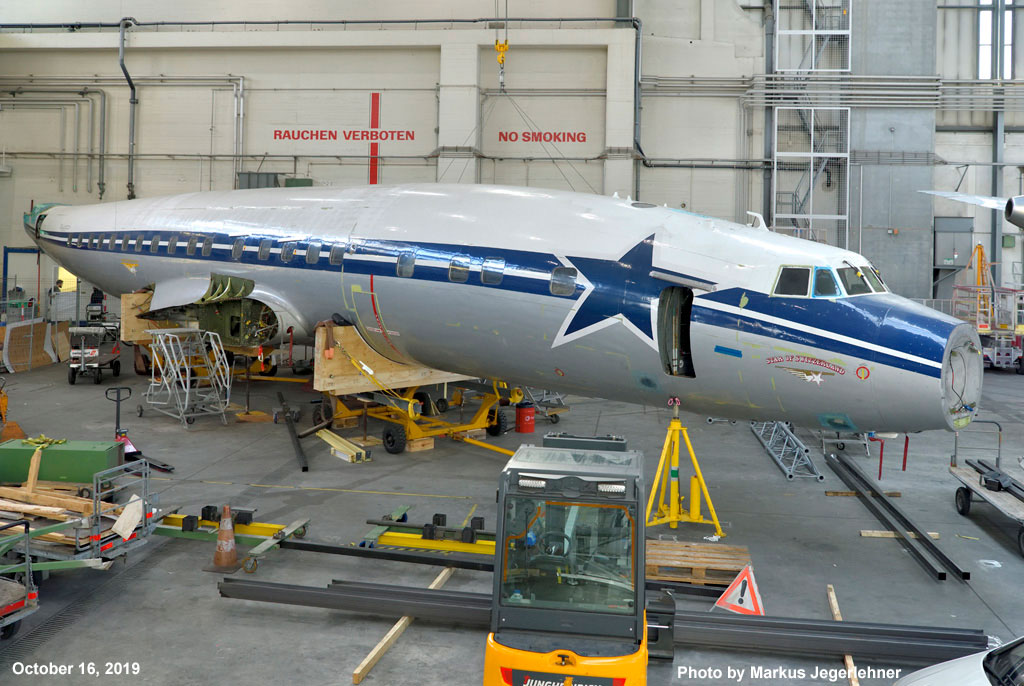
The KEY.AERO website reported on September 26th that C-121C Super Constellation HB-RSC was recently advertised for sale by aircraft broker Mesotis Jets of Austria. "The aircraft (HB-RSC, c/n 4175) appeared in a recent advert by aircraft dealer Mesotis Jets of Austria, which described it as having been professionally stored at Bremgarten in Germany in a disassembled state. The company advises that the aircraft can be shipped to a buyer worldwide. The latest attempt to sell the aircraft comes after plans to restore it by DIAG Aviation GmbH had to be abandoned."
The aircraft has a very interesting history and was a star of the European airshow circuit as the "Breitling Super Connie" from 2004 to 2016. Disassembled and sold to a German investment group in 2019, the aircraft has been stored in a German warehouse since 2019 after plans to restore the aircraft to an airworthy condition were abandoned. It was previously advertised for sale in April 2023 but nothing came of this. Hopefully she an be sold to a group that will at least restore her for static display. At this point, I don't believe there is any chance of the old girl ever flying again. For more info about the aircraft and these latest developments, check out the KEY.AERO article.
Constellation Cockpit Saved - August 25, 2024
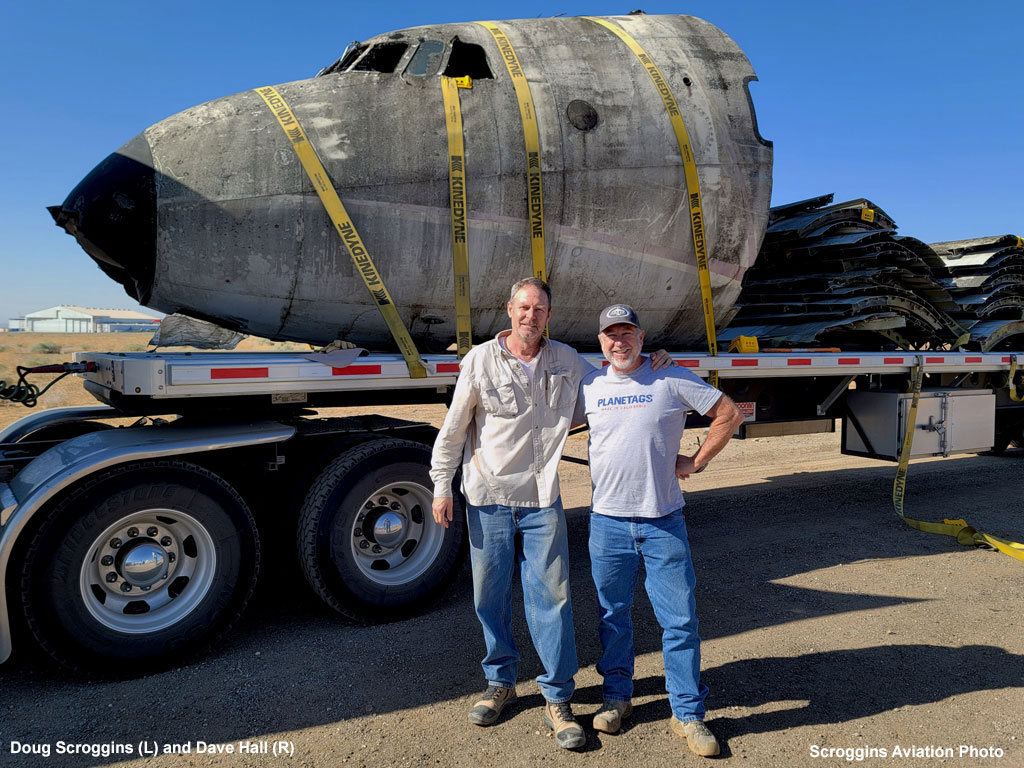
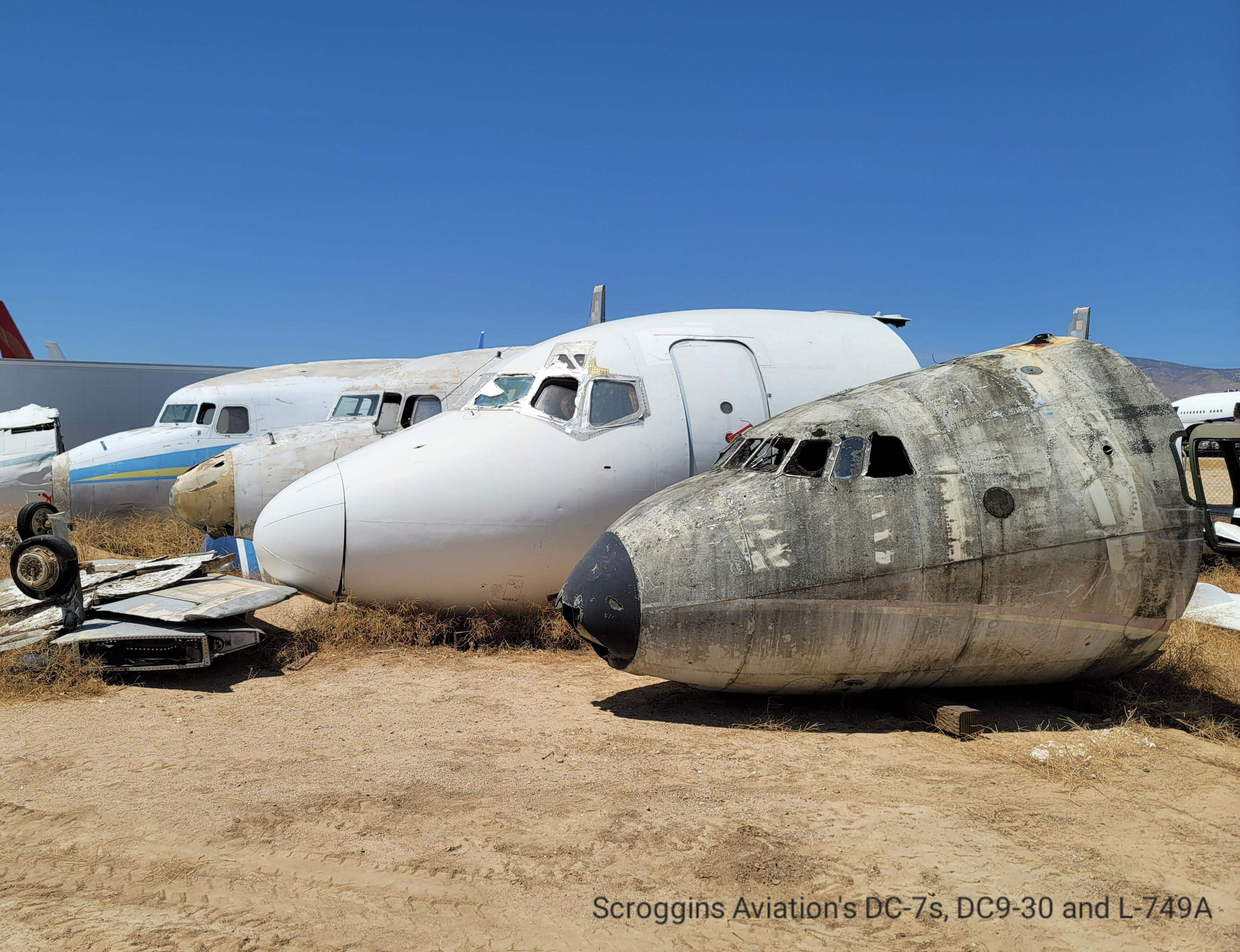
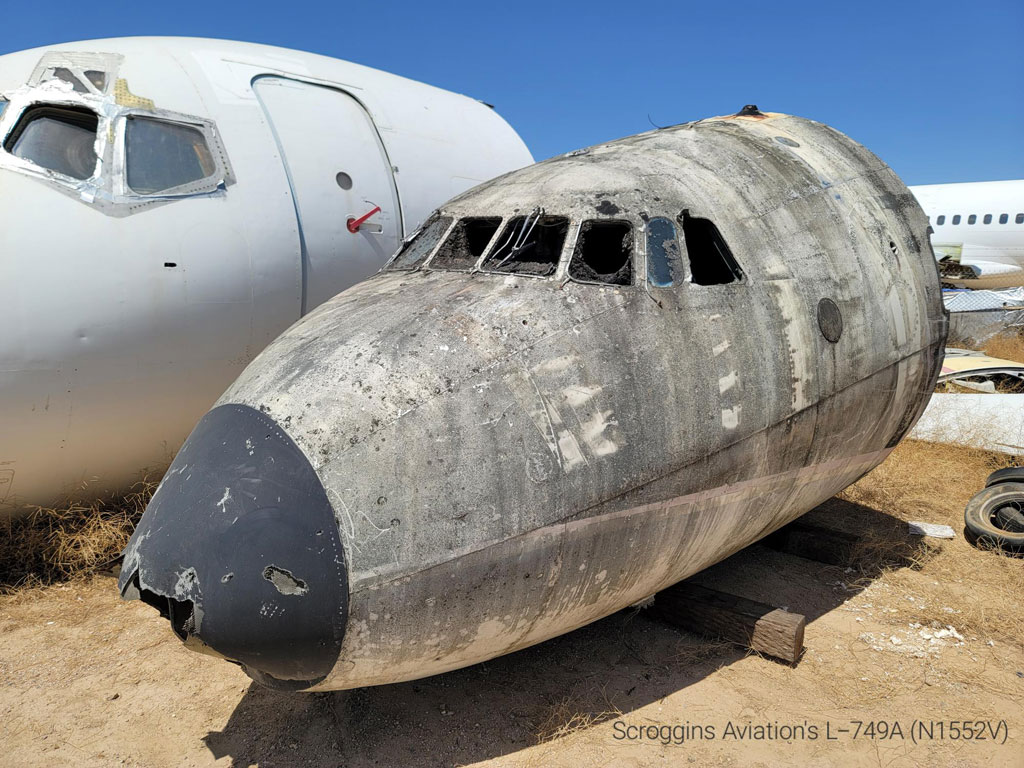
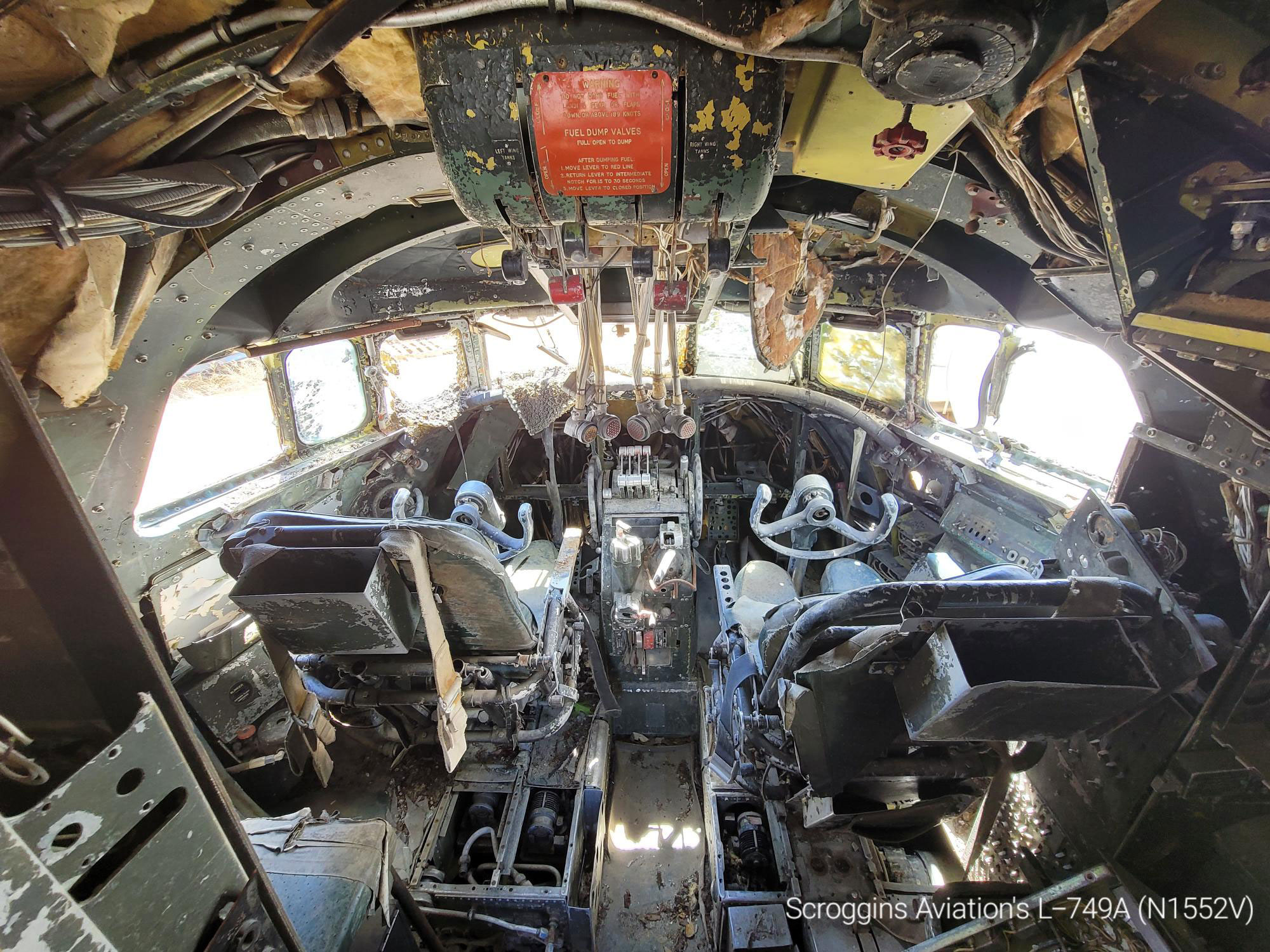
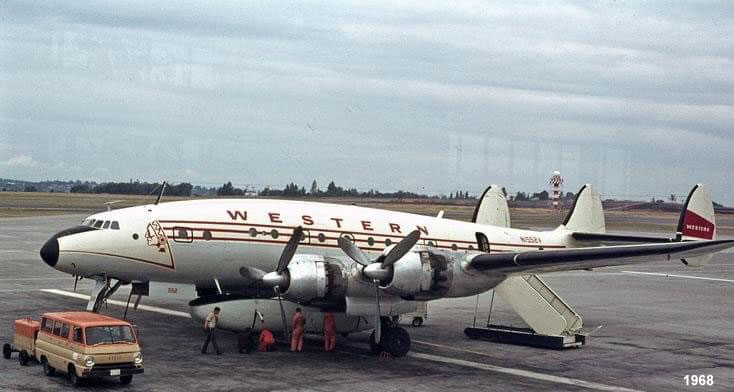
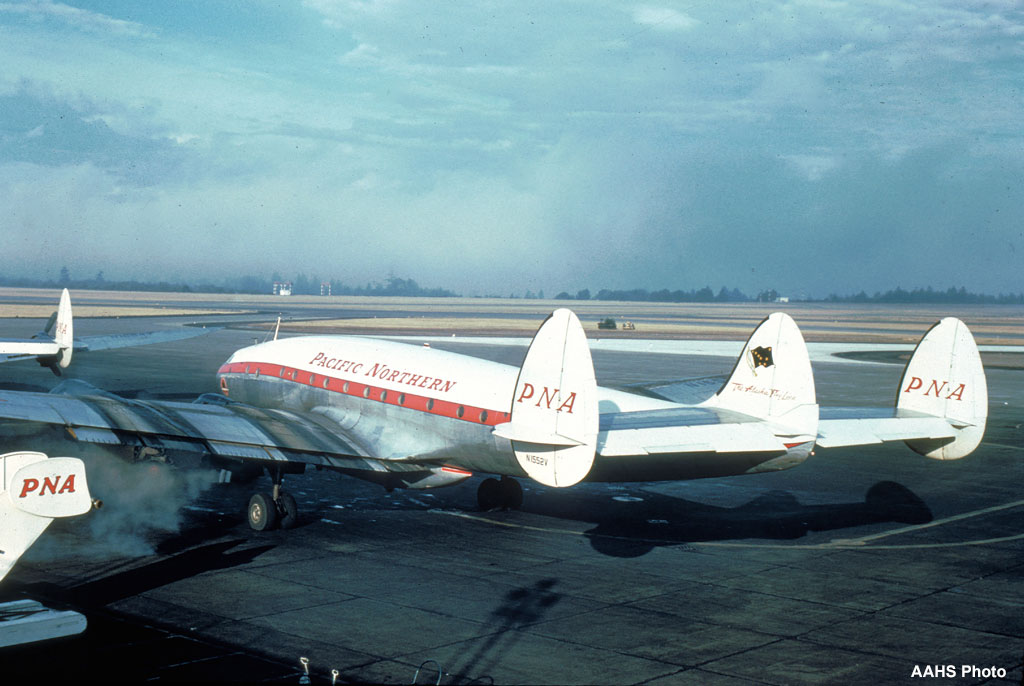
I received an email yesterday from Doug Scroggins with the great news that the cockpit from L749A Constellation N1552V has been saved and will not be cut up into Planetags. "Scroggins Aviation and PlaneTags went in and salvaged the Connie in Kasilof, Alaska. PlaneTags (MotoArt) will make use of the fuselage skin for tags and Scroggins Aviation saved the cockpit to be used in a planned feature film based around a Connie. Scroggins will then have the cockpit find its way to a museum. The cockpit is currently in Scroggins Aviation's yard located in Mojave Airport, CA. It is planned to be used in a film and, when the film is completed, it will find its way to a museum where it will be put on display." Many thanks to Doug for caring enough about this iconic aircraft to save the cockpit section, which would have surely been converted into Planetags. The first photo shows the cockpit arriving on August 24, 2024 at the Scroggins Aviation yard inside the Mojave Air & Space Port boneyard. The next two photos show the cockpit alongside a DC-9 cockpit; the cockpit from DC-7 N4874C; and the cockpit from DC-7C N5902. The bottom row shows photos of current cockpit interior and what the aircraft looked like in its final year of operation with Western Airlines.
Bad News re Alaskan Constellation - July 21, 2024 - Updated July 28, 2024
On June 25th we reported that a long-forgotten Constellation N1552V had surfaced in Kasilof, Alaska and was being offered "free for the taking" to anyone who would haul it off the owner's property. The owner told me that a California company had "claimed" the airplane and would soon be removing it from his property. I was concerned that Planetags was that company and now my worst fears have been realized in that apparently that is the case. Hopefully at least the cockpit can be saved and not cut up into thousands of trinkets. UPDATE - It now appears very likely that the cockpit section will be saved. More details to come as I get the OK to publish them.
Long Forgotten Constellation Surfaces in Alaska - June 25, 2024
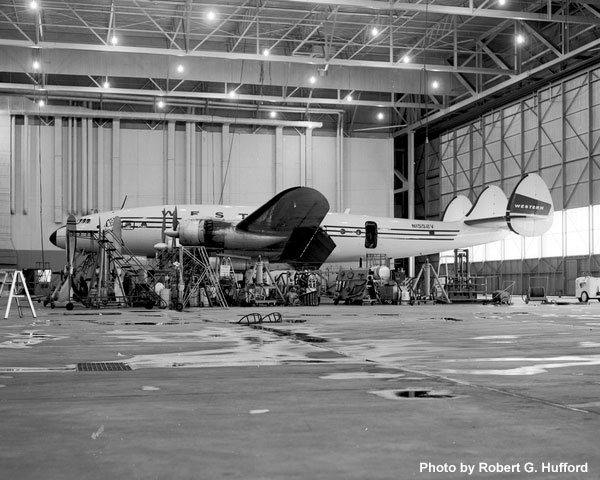
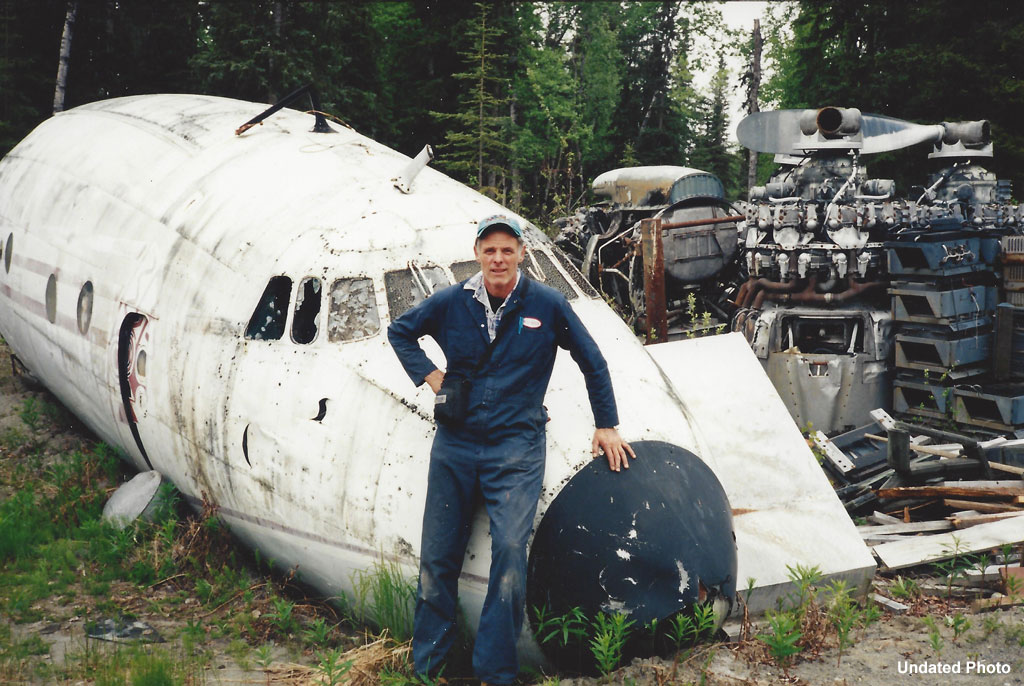
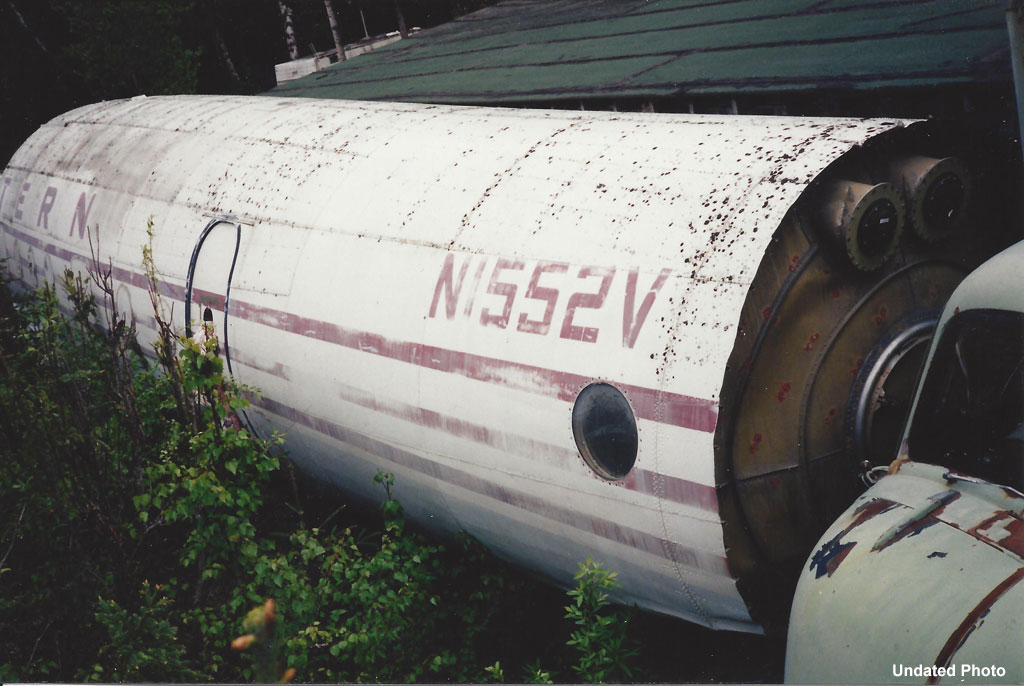
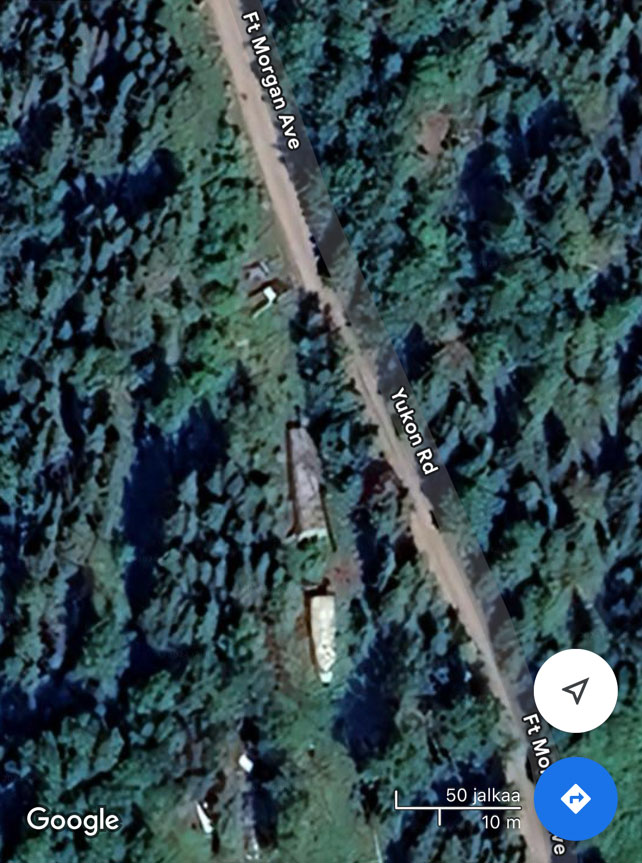
The list of Constellation "Survivors" has grown by one with the "discovery" of the disassembled fuselage of L749A N1552V in Kasilof, Alaska. The aircraft was retired by Western Airlines on November 26, 1968 after completing the last Constellation passenger flight in North America. It was donated to the city of Kenai, Alaska and subsequently acquired for a restaurant project that never happened. While undated photos of the aircraft surfaced a few years ago, it was assumed that the aircraft had been scrapped in Kenai. Six days ago a Craigslist advertisement was published offering up the aircraft for "free" if the buyer removed it from its current location. I called the number listed in the Craigslist ad and spoke to Henry Morgan who posted the ad. He told me that he acquired the aircraft 15-20 years and that he doesn't have the wings and empennage shown in the undated photos. He believes those items were scrapped prior to him acquiring the fuselage sections. I asked if he had any responses to his ad and he told me that a company in California plans on claiming the aircraft. While the discovery of a new "survivor" is very exciting, hopefully the California company Henry that referred to is NOT Planetags who have already destroyed the forward fuselage of former NASA Super Constellation N420NA that had been hiding in a New Jersey junkyard for many years.
Many thanks to Antti Hyvarinen for the heads-up on the Craigslist ad and the Google Maps image.
Indian Naval Aviation Museum Super Constellation - May 10, 2024
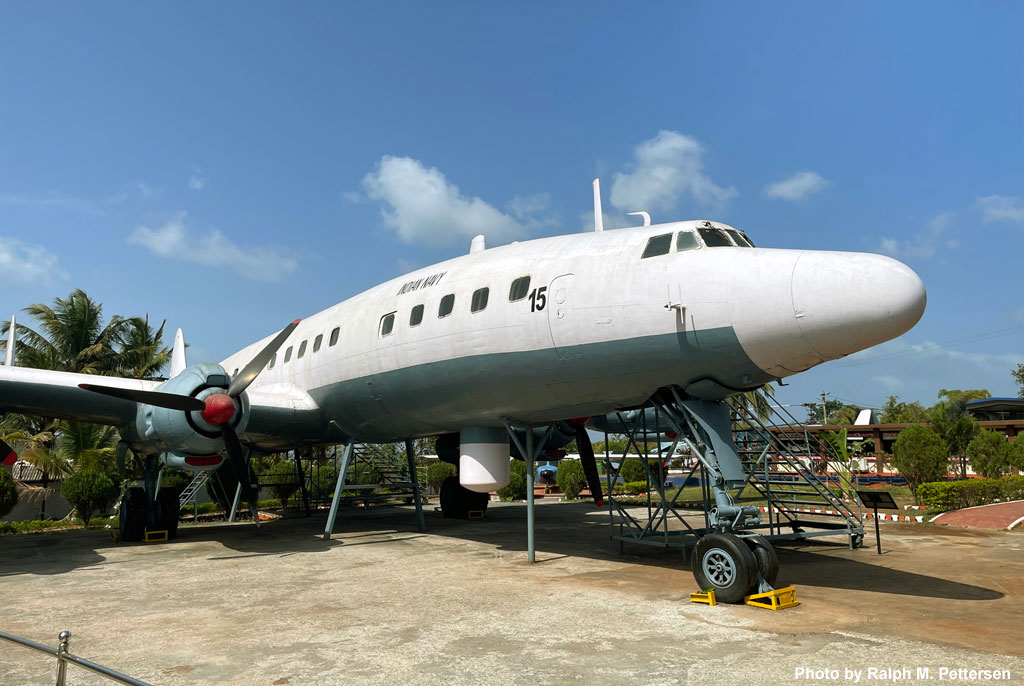
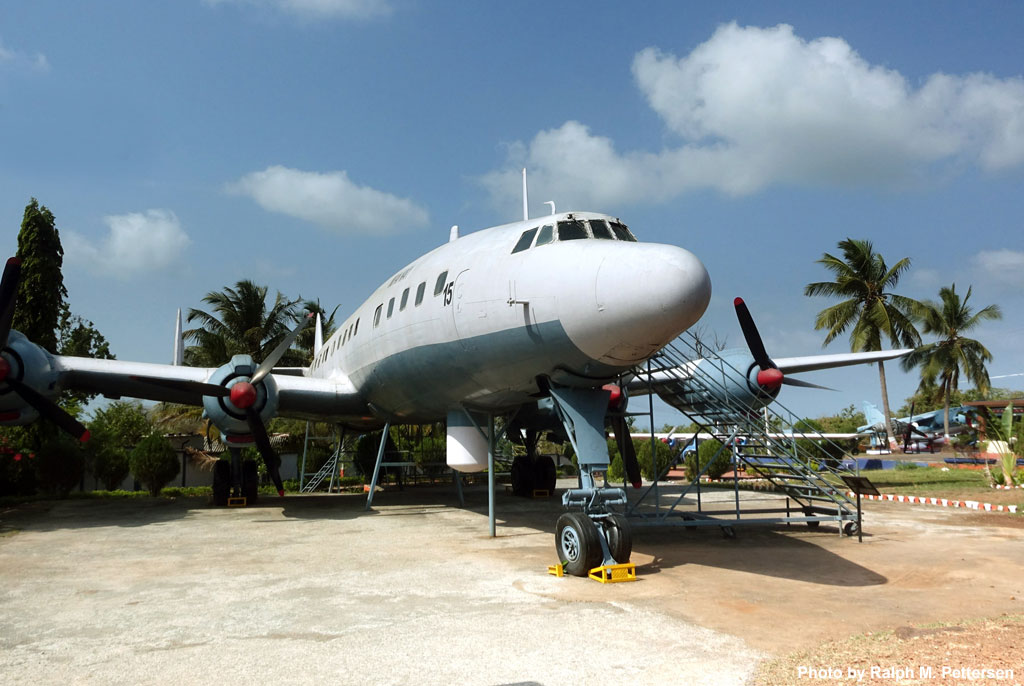
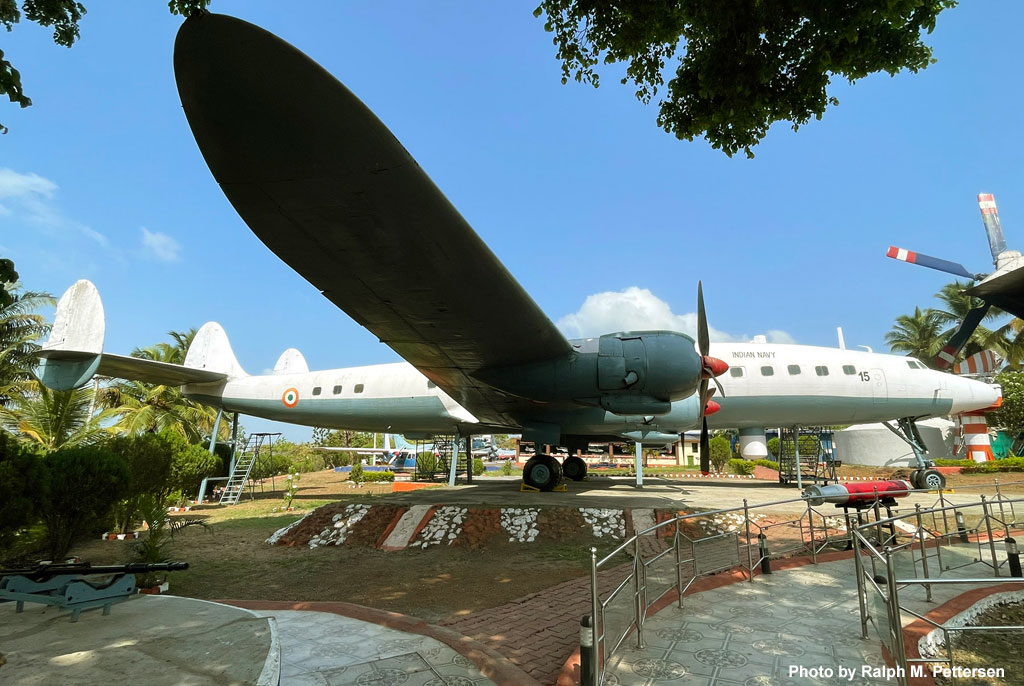
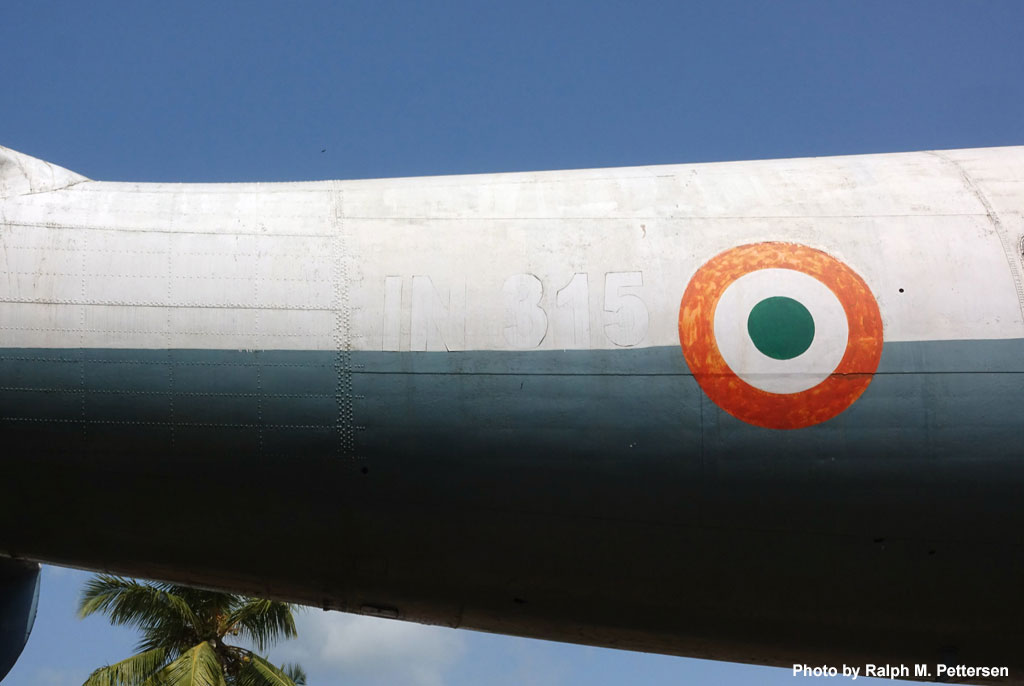
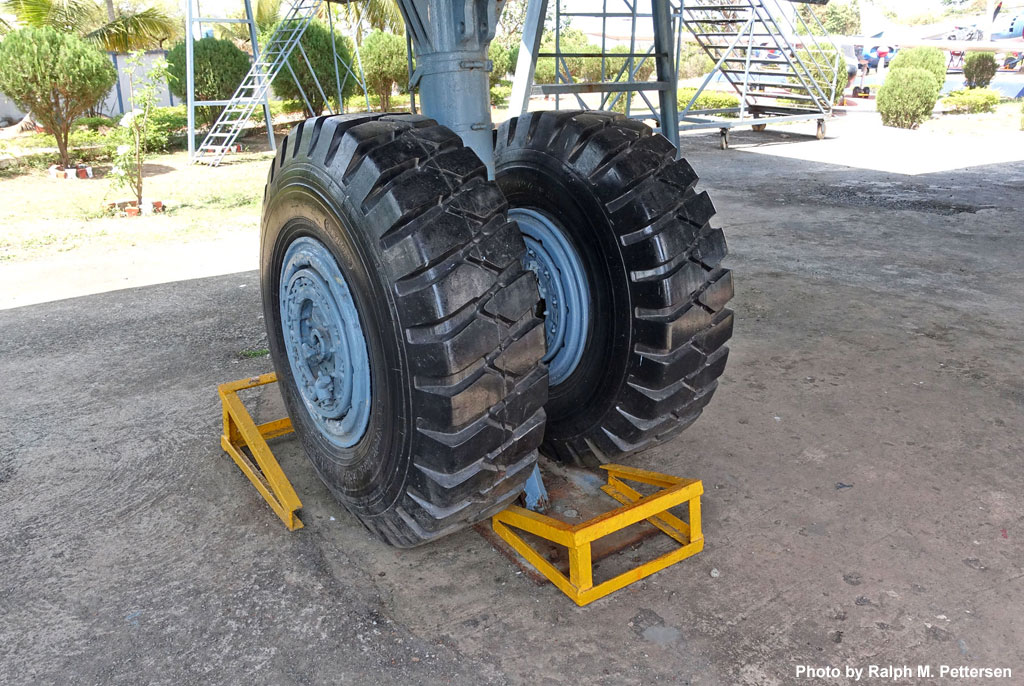
I visited the Indian Naval Aviation Museum in Goa on May 5, 2024 and photographed former Air India, Indian Air Force and Indian Navy L1049G IN315. The Super Connie was delivered to Air India International February 1955 as L1049E VT-DHM "Rani of Ellora" and later converted to a L1049G. After retirement from Air India, the aircraft was acquired by the Indian Air Force in October 1961 as BG575. The aircraft was transferred to the Indian Navy by November 1976 as IN315 and converted for maritime reconnaissance use. By April 1999 it had been retired and was moved to the museum about a year later. The aircraft appears to be well cared for and I was amused with the truck tires installed on the main landing gear.
A Promise Kept - Display Facility Planned for Two Iconic Lufthansa Aircraft - April 17, 2024
As reported on October 24, 2023 parts and pieces of L1649A N7316C were being moved from Paderborn to a hangar at Hamburg Airport where the aircraft would be reassembled by Lufthansa Technik staff and retirees for eventual display. On April 12, 2024 Lufthansa announced that aircraft and Ju52 D-AQUI will be placed on display in Frankfurt at a dedicated visitor and conference center currently under construction. Planned completion of the center is 2026, just in time to celebrate the 100th anniversary of the airline. The two aircraft will obviously be a major feature of the facility and will hopefully guarantee the survival of these iconic aircraft for many years to come. This marks the end to Lufthansa's ill-fated and very expensive 10-year effort (2008-2018) to restore the Starliner to a better-new-airworthy condition. While Propliner enthusiasts would have wanted the Starliner restoration project completed and both aircraft kept in an airworthy condition, it's a great outcome for both aircraft considering the circumstances.
Michael Gagnon emailed me a link to an article on the Simple Flying website and Jan Frieben forwarded the following photos and an article he wrote about the latest developments. Many thanks to both Michael and Jan.
Final location for Lufthansa's Ju52 and Super Star Constellation Announced - Jan Frieben
In October 2022, Lufthansa Chairman Carsten Spohr announced that to mark the 100th anniversary of the company name Lufthansa, they were planning to create a future roof for the Ju52 and Super Star Constellation. The fact that this will not simply be an exhibition hall also has economic aspects.
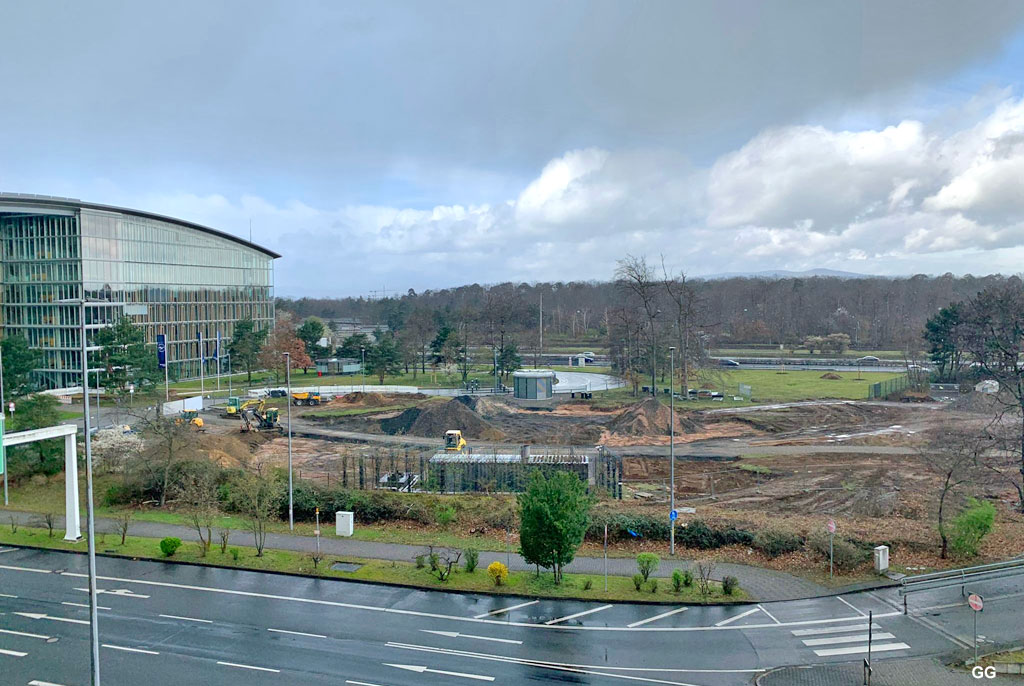
Anyone who knows Frankfurt Airport will have been surprised at what construction work has been underway in recent weeks next to the Lufthansa headquarters. Immediately to the east of the Lufthansa Aviation Center (LAC), the Lufthansa Group has started building a new conference and visitor center at Frankfurt Airport.
The new building is part of a long-planned conversion and expansion of the buildings at the airport between LAC and Terminal 1, which will form an architecturally homogeneous, modern overall complex once all construction work has been completed. Lufthansa's new conference and visitor center will be one of these building blocks for the future.
New forms of collaboration are to be established for employees, the airline's customers, partner companies and aviation enthusiasts.
Lufthansa's history and development expertise should be brought to life - especially for the design of future aviation. According to the motto: "With the past into the future!" Without the developments of the past with all their positive and sometimes negative effects, our present would not exist, ... and also no future.
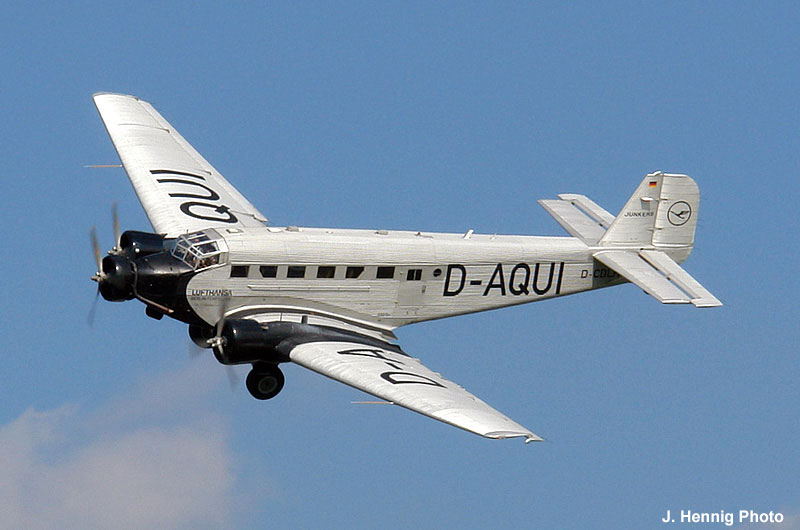
What could be more natural than the Junkers Ju52 D-AQUI, also known by its nickname "Aunt Ju", and the legendary Lockheed Super Star Constellation in this future building and meeting place for aviation enthusiasts and guests from other areas of interest. To integrate L-1649 with the registration D-ALAN into a building in which future aviation components will also be developed.
The Ju52 will serve as a symbolic aircraft for the first "Luft Hansa" (as it was briefly called at the time), representing the period in which Lufthansa was establishing global commercial aviation. It is currently stored in a hangar in Paderborn and will find its way to Frankfurt after the "Super Star".
The Super Star Constellation symbolizes the period of reconstruction of Lufthansa from 1955. This aircraft is currently in Hamburg, where technicians are completing the previous restoration from a "giant construction kit". Large parts of the aircraft will then be transported to its final destination in good time. A transport that can be eagerly awaited on both aircraft.
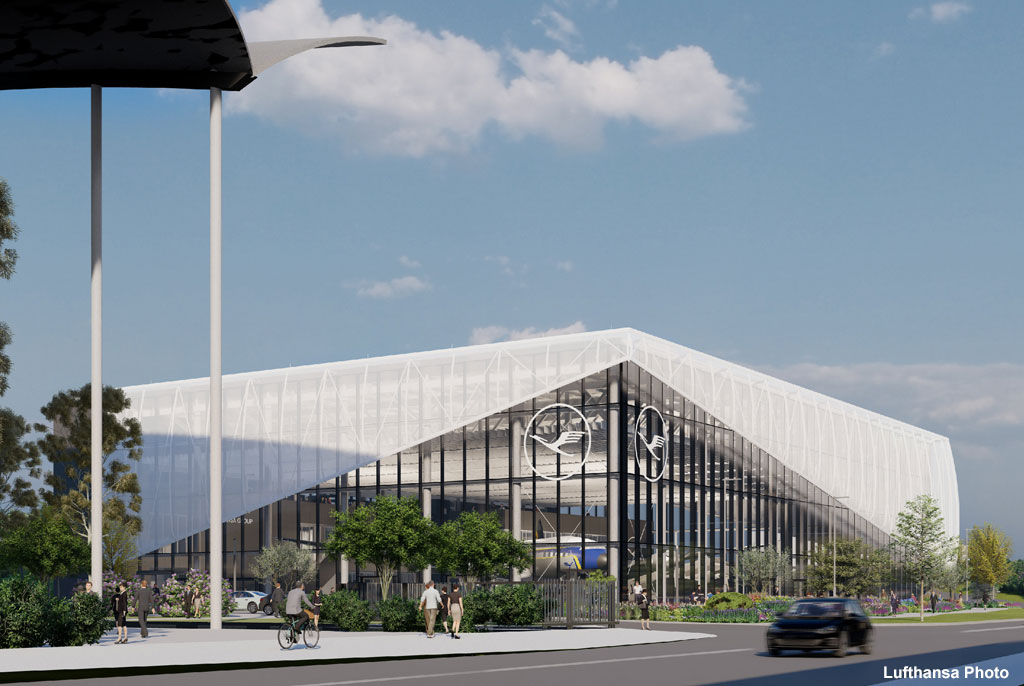
Thanks to a facade with large glass surfaces, not only will the building stand out, but these two historic aircraft will be consciously "recommended" to the viewer driving or walking past. There could hardly be a better “eye-catcher” for the Lufthansa headquarters LAC - which could make other airlines look at Frankfurt with a little envy.
Built in the style of an aircraft hangar, there will not only be visiting and conference rooms. Roomy enough for events with space for up to around 1,000 guests is on the agenda. Events in these rooms will convey a special flair due to the historical backdrop and allow guests to experience aviation history.
Lufthansa quote: "Visitors can explore exhibits from the company's history in an open gallery, some of which will be accessible to the public for the first time. Like the training and conference hotel of the "Lufthansa Seeheim" group, the Frankfurt conference and visitor center will also be open for external events and visitors will be offered gastronomic offers at a coffee lounge."
It goes without saying that the new building is planned with a sustainable and efficient energy concept. Since it will house two commercial aircraft from different eras, the dimensions of the planning are not surprising: 236 feet wide, 174 feet deep and with a height of approx. 57.4 feet. The floor area therefore totals about 40.900 square feet.
The ceremonial opening of Lufthansa's new conference and visitor center is planned for spring 2026 on the occasion of the 100th anniversary of the founding of the first Lufthansa.
It can be assumed that after the actual "birthday" of January 6th, 2026, there will certainly be numerous, diverse events there in the anniversary year.
Aviation enthusiasts may have a "crying eye" as they would rather see aircraft in their air element. But the decision to ultimately exhibit these two remarkable aircraft models statically should not be questioned here.
The fact is for the "laughing eyes" of aviation fans that both aircraft have been preserved and presented to the public in a worthy manner. And that can also be viewed with a little pride and a look backwards. After all, there were many people from technology and flight operations who ensured that the D-AQUI was accident-free for 32 years with a total of more than 256,000 passengers in Europe and the USA, giving passengers a journey through time and being an incomparable, charming advertising medium for Lufthansa.
There were also hundreds from numerous technical areas and flight operations who enthusiastically mastered all the obstacles of technical restoration and preparation for possible flight operations over 10 years. A Super Star Constellation D-ALAN in this excellent condition is unlikely to exist anywhere else in the world.
When they move into their new home in 2026, the promise from October 2022 will be fulfilled to make these two aviation monuments worthy - and, above all, to accommodate them under the Lufthansa roof.
Super Connie Prepares for Airshow - February 27, 2024
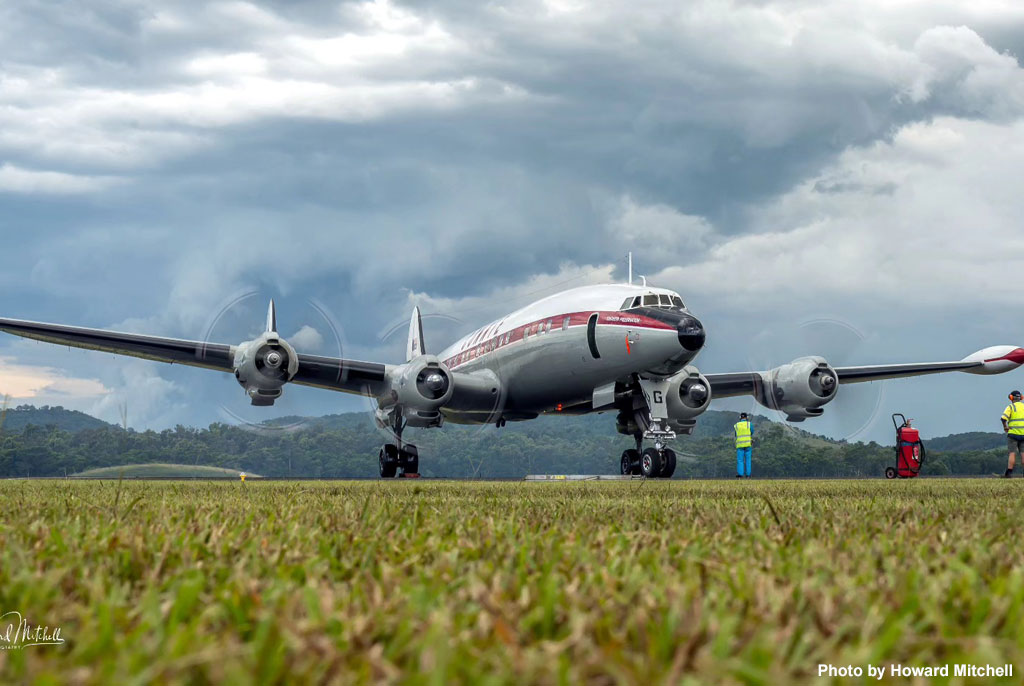
Howard Mitchell photographed HARS Super Constellation VH-EAG preparing for an upcoming airshow. This gorgeous aircraft is the sole remaining airworthy Super Constellation and flies on a regular basis. Howard reports "HARS Aviation Museum's Super Constellation VH-EAG "Connie" has an engine run trial in preparation for its participation in Airshows Downunder event next weekend at Shellharbour."
Biafran War Relics Noted on Google Maps - February 9, 2024
 David Davis recently forwarded two Google Earth images of L1049H Super Constellations CF-NAL and CF-NAM, which have been parked at the Sao Tome Airport since being abandoned in January 1970 after the Biafran War. While the aircraft were incorporated into the Asas D'Avião Restaurante Santola in 2018 and, at one time, plans were underway to declare the aircraft historical monuments, it appears that one has its right wing missing. I'd love to receive a current report on the status of the two aircraft.
Combat Air Museum EC-121T Gets Facelift - January 25, 2024
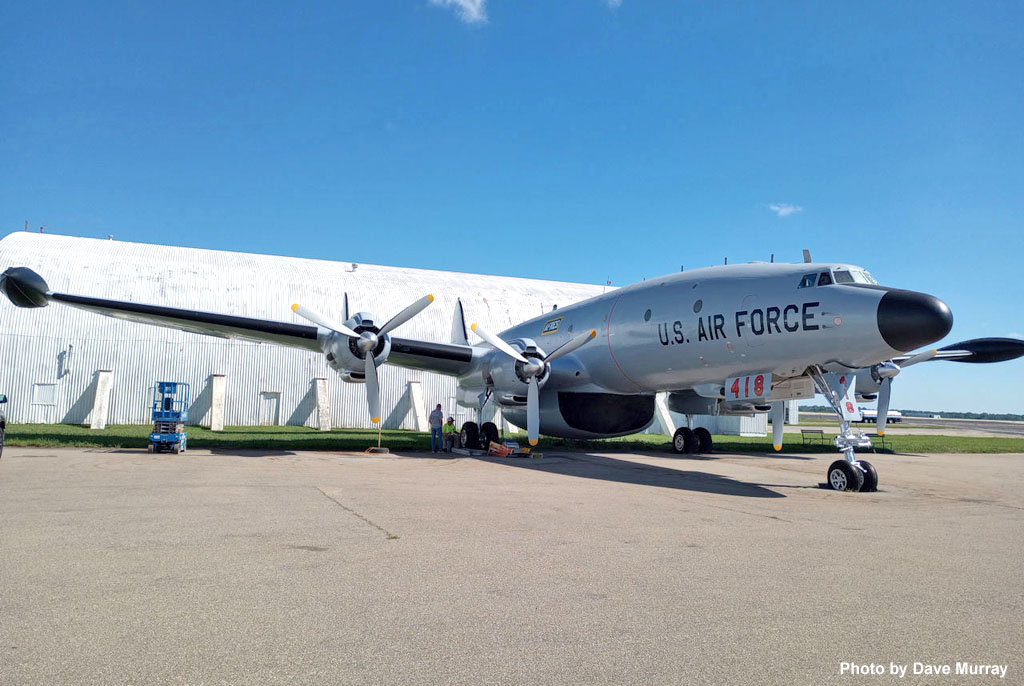
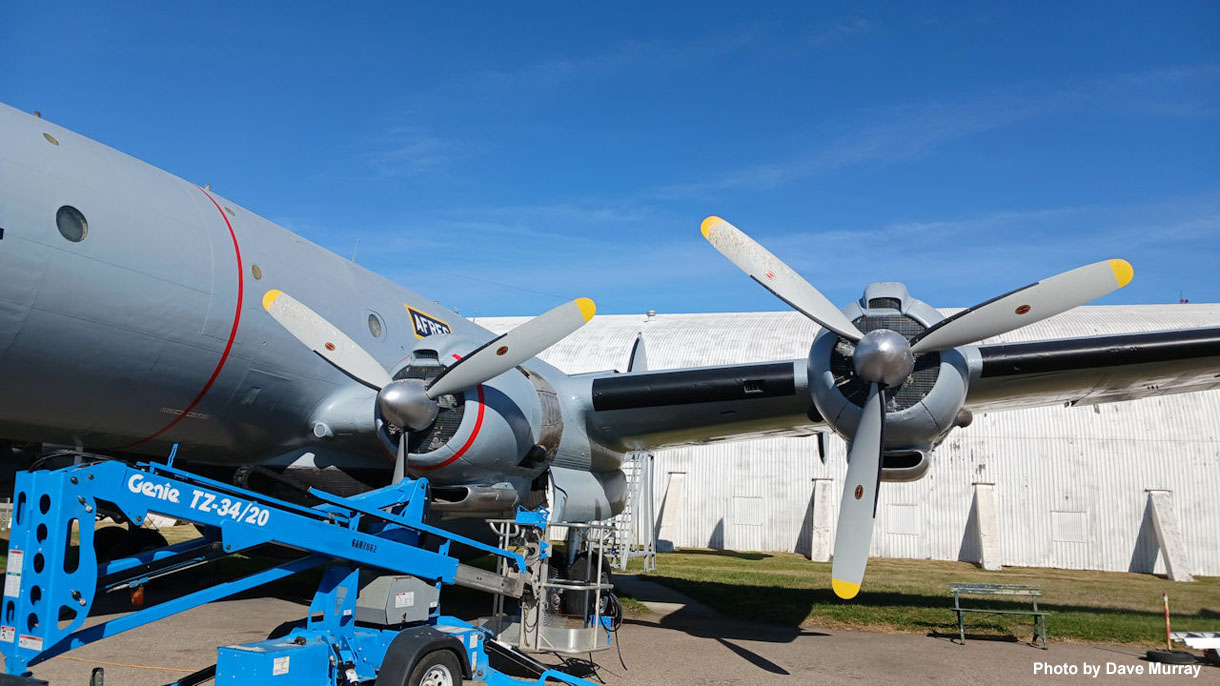
Dave Murray reports on the recent facelift of the Combat Air Museum's EC-121T 52-3418 (N4257U). "Last year (June-August) we repainted our EC-121T back into its former paint scheme and the updated livery has really revitalized and beautified the "old" bird." Many thanks to Dave for his report and photos.
See Constellation News Archive - 2023 For Additional News
----Created 31 January 2004------Updated 16 April 2025----
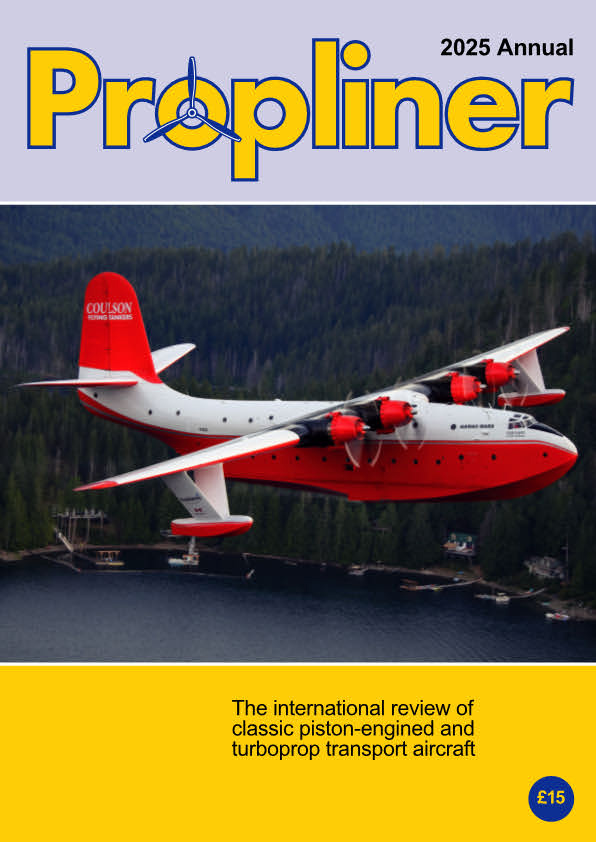 The 2025 edition of the Propliner Annual will be published in late April 2025. As its title implies, Propliner Magazine is totally dedicated to Propliner aircraft and is a must-have for any aviation enthusiast and especially Propliner enthusiasts. Orders for this bumper 176-page publication can be placed at www.propliner.co.uk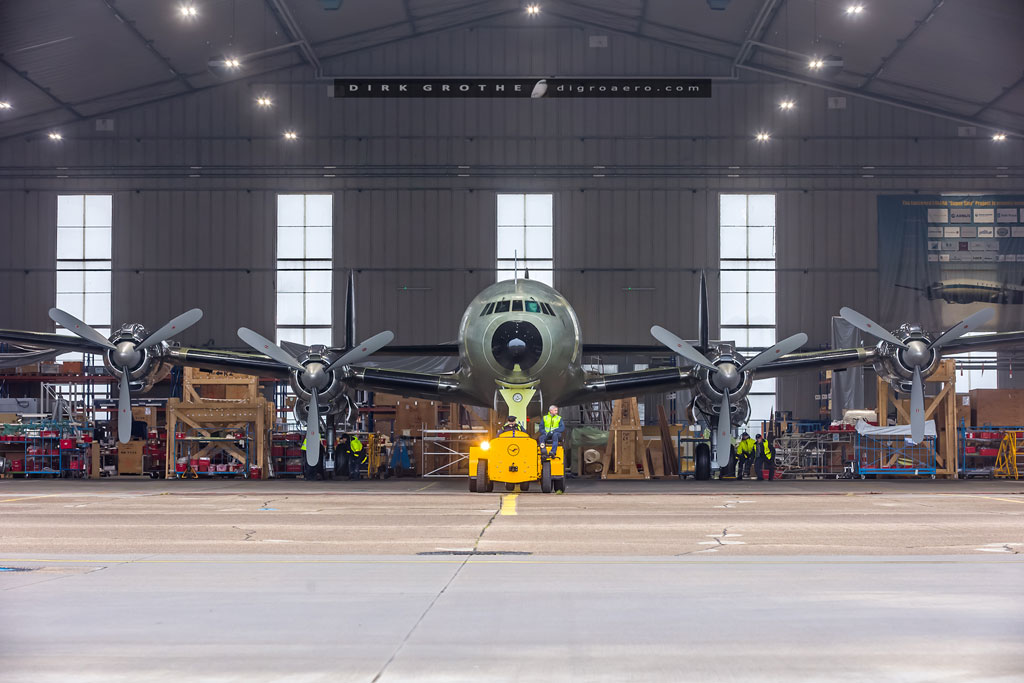
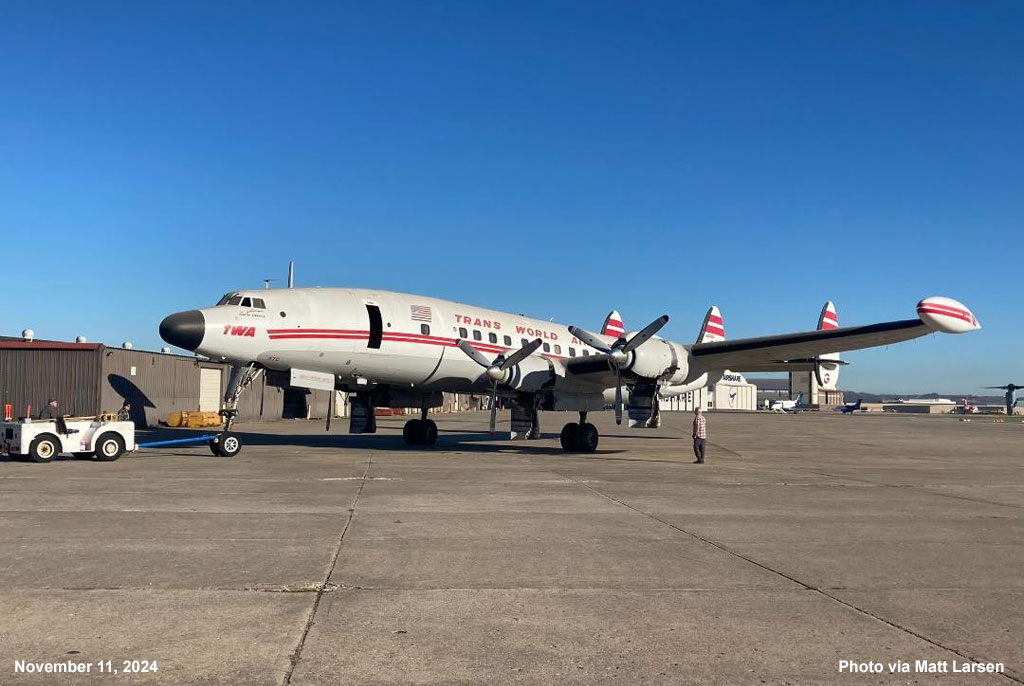 Super Constellation N6937C emerged from the Airline History Museum hangar on Monday November 11, 2024 for the first time in quite a few years. The aircraft was given a good washing to remove years of accumulated dust and dirt before being towed back into the hangar for additional work on the engines and related systems. Three of the four engines are scheduled to be run today and hopefully all will go well. While I don't believe there are any plans to get the aircraft back in the air in the immediate future, it is needed for the shooting of scenes involving the aircraft taxiing. Many thanks to Matt Larsen for providing the photo and report.
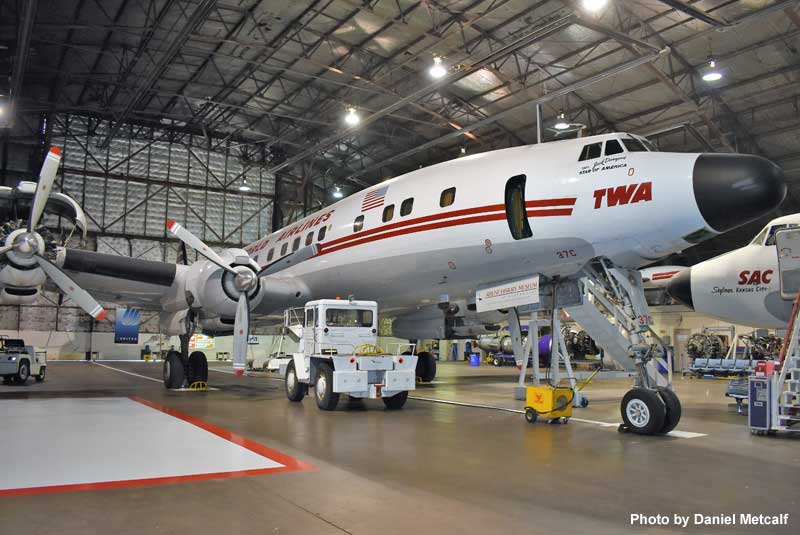 Super Constellation N6937C was registered to Constellation Productions Inc. in September 2024. The company is reportedly owned by John Travolta and this appears to be very good news. The aircraft had been owned by Save-A-Connie/Airline History Museum since December 1986 and was a fan-favorite at airshows from the late 1980's to July 2005 when an engine failure grounded it. The museum has been in a prolonged legal dispute with Signature Aviation and has been locked out of its Hangar 9 facility at Charles B. Wheeler Downtown Airport in Kansas City since July 2022. Air Classics posted the following news piece on the magazine's Facebook page yesterday.




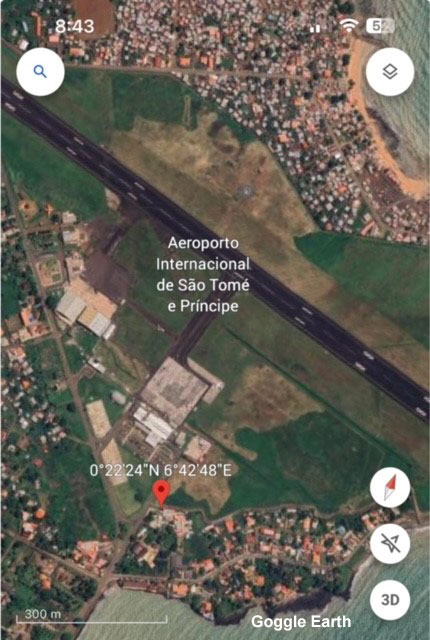
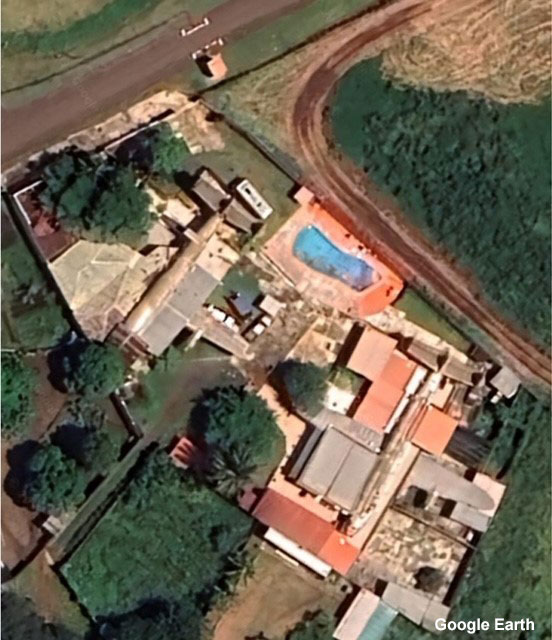 David Davis recently forwarded two Google Earth images of L1049H Super Constellations CF-NAL and CF-NAM, which have been parked at the Sao Tome Airport since being abandoned in January 1970 after the Biafran War. While the aircraft were incorporated into the Asas D'Avião Restaurante Santola in 2018 and, at one time, plans were underway to declare the aircraft historical monuments, it appears that one has its right wing missing. I'd love to receive a current report on the status of the two aircraft.