Santo Domingo Constellation Update – December 29, 2006
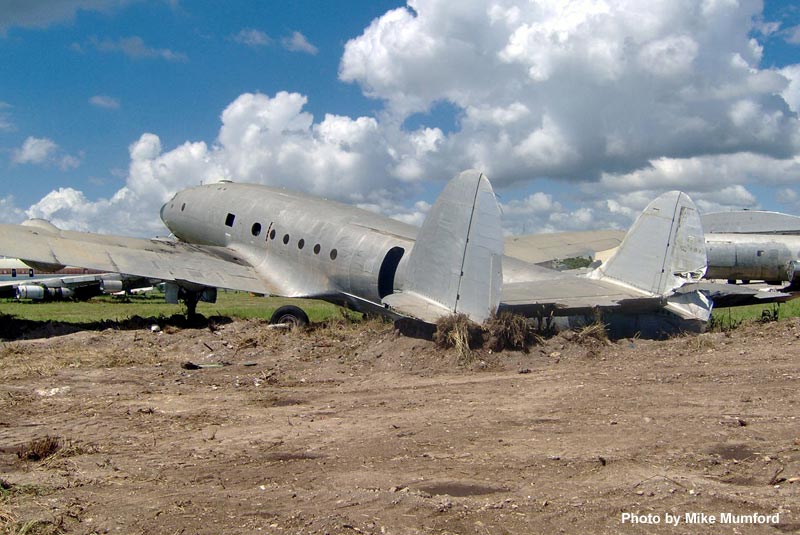
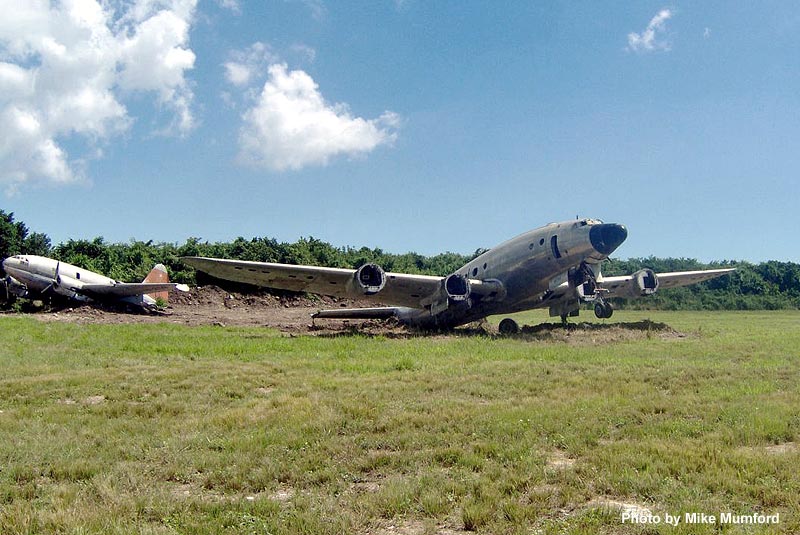
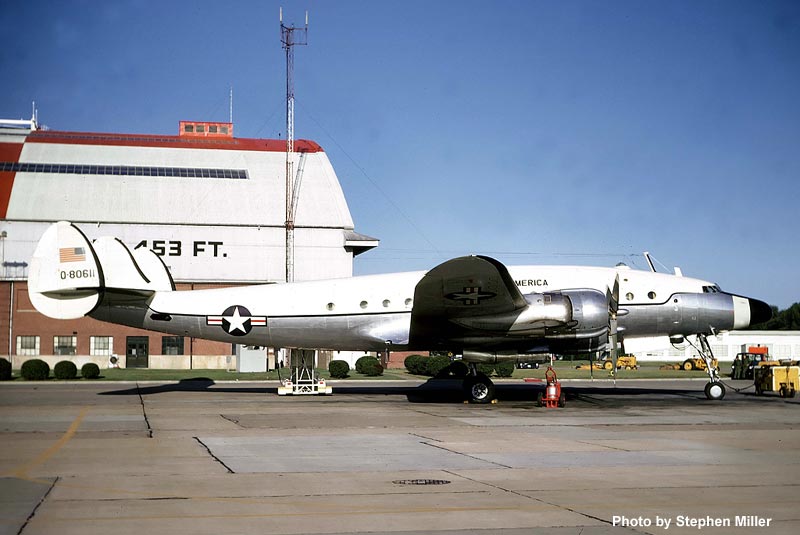 HI-393 is one of those airplanes that seem to have become more famous after being taken out of service. With its nose pointed to the sky at Los Americas International Airport (SDQ) in Santo Domingo, it has become a symbol of that country’s propliner heritage. Delivered to the USAF as C-121A 48-611 in December 1948, it was converted to a VC-121A and flew VIP missions until
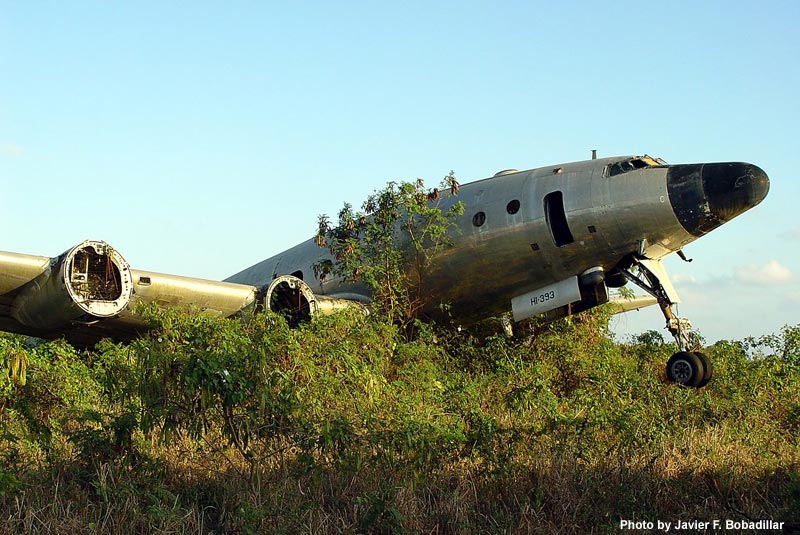
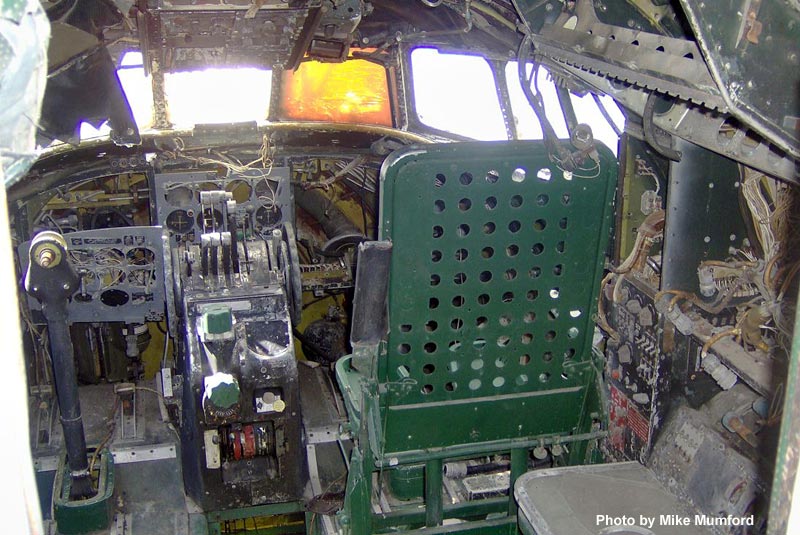
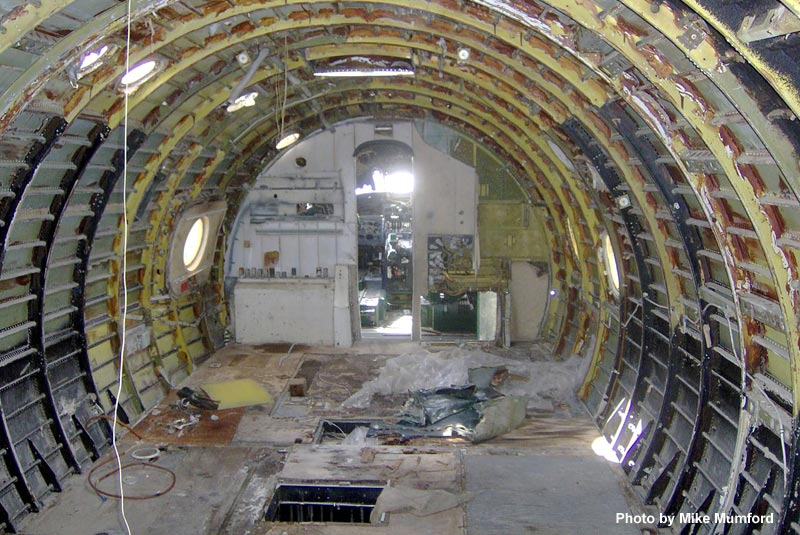
 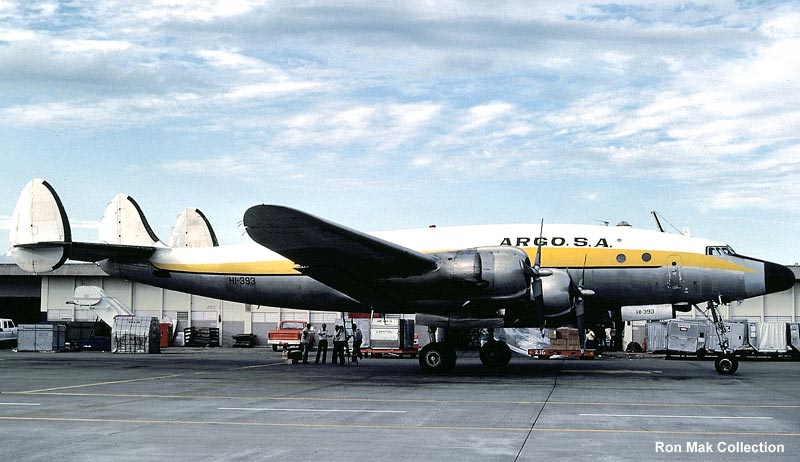 being retired in April 1968. Sold at auction in 1971, it went to Aviation Specialties of Mesa, AZ and was converted to a sprayer. It went to Argo SA as HI-393 in November 1981 and has essentially remained a resident of the airport’s ramp for over 25 years. Stripped of its engines, Curtis Electric props and other parts in the 1990’s for use on the MATS Connie, the future of this airplane has long appeared bleak. It seemed that each successive photo showed the old girl being swallowed up by more and more vegetation.
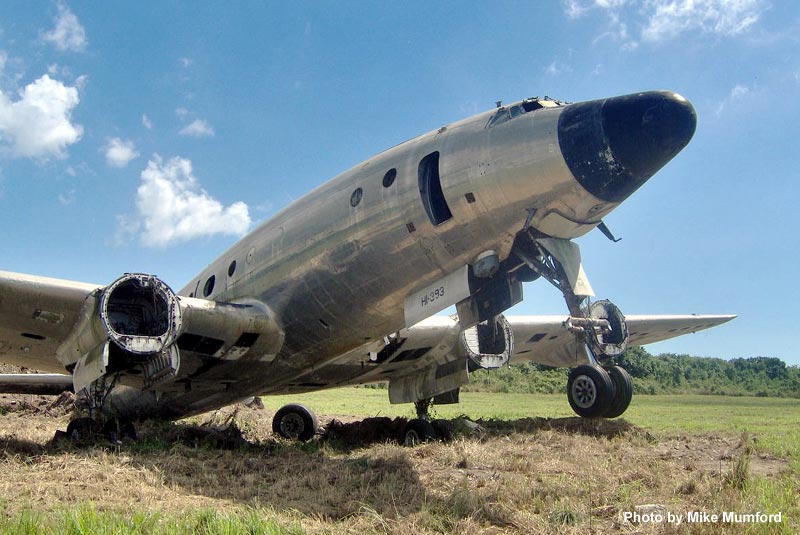
For the past five years reports have been coming out of Santo Domingo that the airport authority was planning on cleaning the ramp of derelict aircraft, including HI-393. Having recently received a number of inquiries about the aircraft, I was able to confirm that she was still intact and had not been scrapped. I was surprised and very pleased to find Mike Mumford’s November 2006 photos on the flickr.com website. The photos showed a remarkable transformation of the aircraft graveyard….the vegetation and vines were totally gone. This most definitely makes it easier to photograph the aircraft but also could be a warning that the airport authority has plans for the land and removal of the aircraft is eminent….only time will tell.
 |
 |
 |
 |
 |
 |
Toronto Super Connie Saga Continues – December 29, 2006
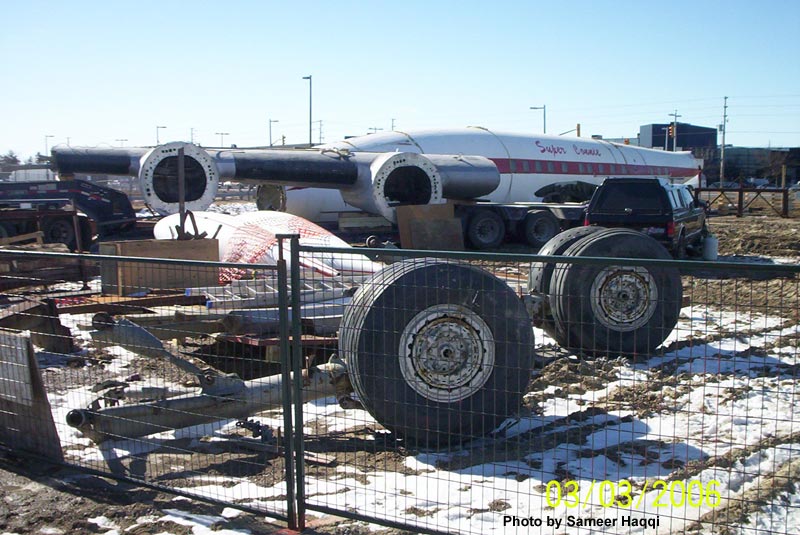 Not much has been heard lately about the ongoing struggle between the Canadians and Seattle’s Museum of Flight over possession of L1049G CF-RNR. Having denied the Seattle museum an export permit in late September, the next step was for the Canadian Heritage Board in Ottawa to establish a fair market price for the aircraft. Canadian institutions will then have an opportunity to bid on the aircraft and, if no bids are received within three months, the Seattle museum will be free to bring the airplane south. The three month clock is ticking and it appears that things are happening. Although Bob Bogash of the Seattle museum is being understandably tight-lipped about the current situation, I recently received an email from a company that had been tasked to determine a fair market value for the aircraft. This would seem to indicate that progress is being made and some type of resolution is forthcoming. Meanwhile the airplane is stored disassembled outdoors in Toronto with little or no protection from the weather, birds and other animals looking for a home. I’ve seen the damage these critters can do in a very short time and if an agreement isn’t reached soon, there will be little remaining of the airplane to fight over.
I also recently received an email from a Canadian individual providing his explanation of the Canadian Cultural Properties (CCP) legislation and his understanding of the current situation.
The Canadian Cultural Properties (CCP) legislation protects "historically significant" artifacts from being exported out of Canada. There are items, such as the Connie that fall under the "Historically significant" category, and considering the Connie in question is the last of its type in Canada, it deserves the designation.
Yes, a deal was made between the previous owner of the Connie and the Seattle Museum of Flight, but as the CCP dictates, an artifact cannot be sold out of Canada unless it is offered to all "accredited" museums and institutions for consideration to purchase it. In other words, Canadian Museums would get first chance to purchase it. The sale of the Connie was not reported to the Canadian Government and therefore, the reaction of the Canadian Government appeared late. Only after it is indicated that no museums in Canada are interested in it, and that none can put together the funds to purchase it, the sale to the Seattle Aviation Museum will be done.
I assume that the Canadian Government is informing and giving museums in Canada some time to try and pull together funds to purchase it. That is why there has been such delays, from my understanding.
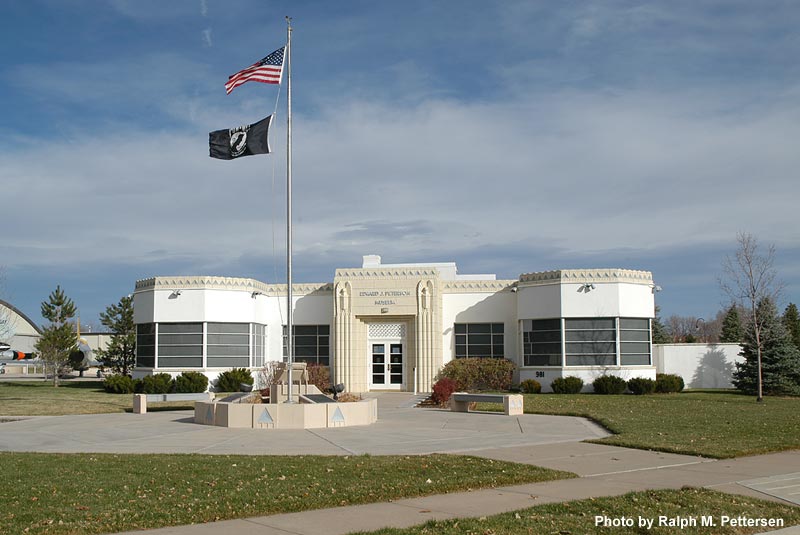
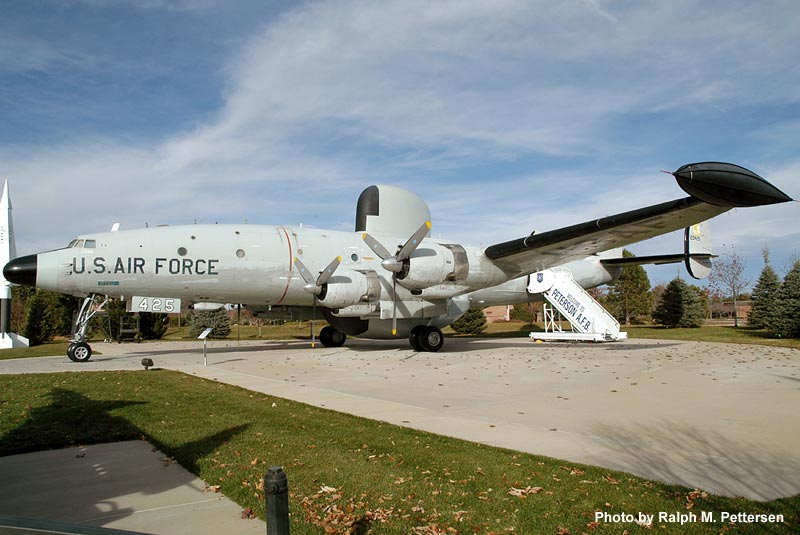
Peterson Air and Space Museum EC-121T - November 11, 2006
The Peterson Air and Space Museum is located at Peterson AFB in Colorado Springs, Colorado. It is situated within a 8.3 acre State Historic District, which is the site of the first Colorado Springs Municipal Airport founded in 1926. The museum is very different from any I have been to in that its sixteen aircraft are displayed in a beautifully landscaped
 |
 |
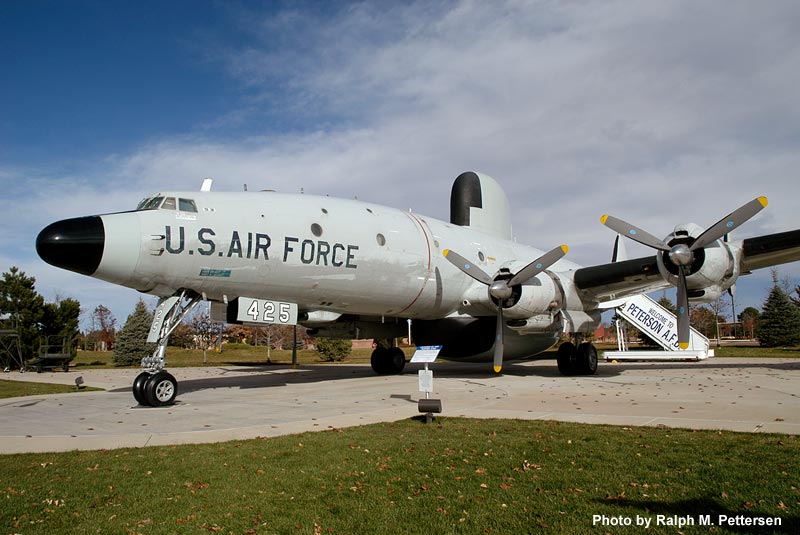 |
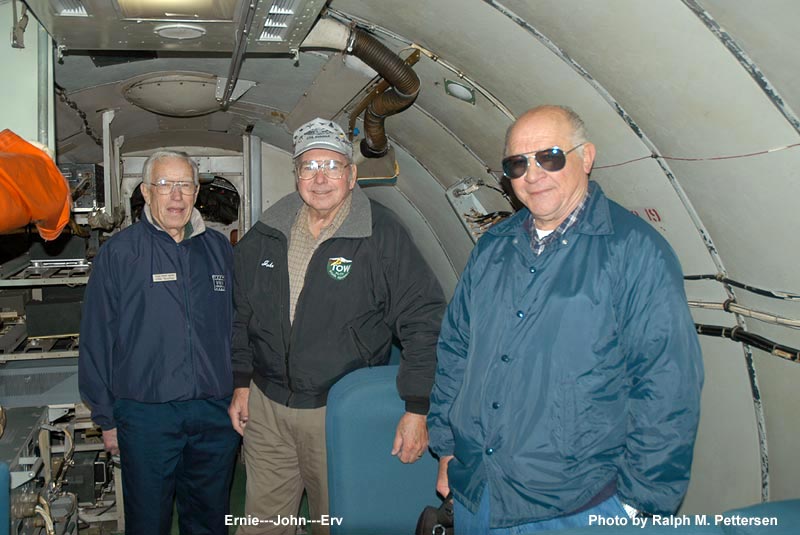
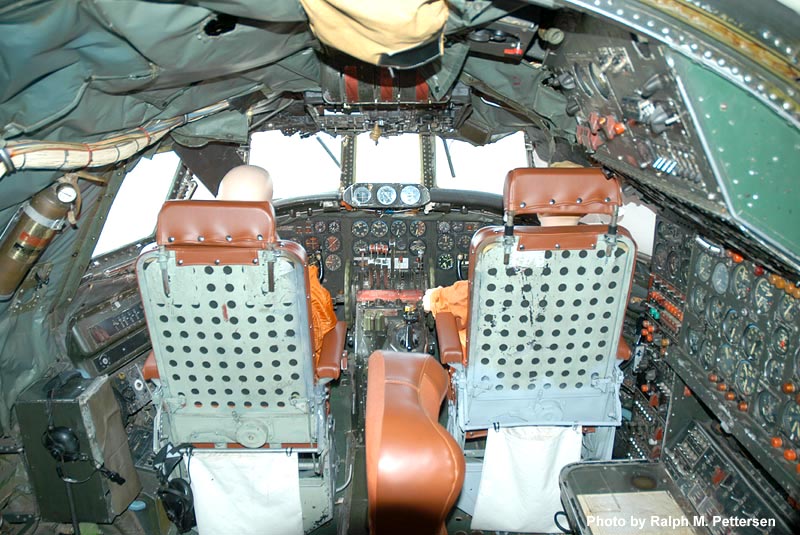
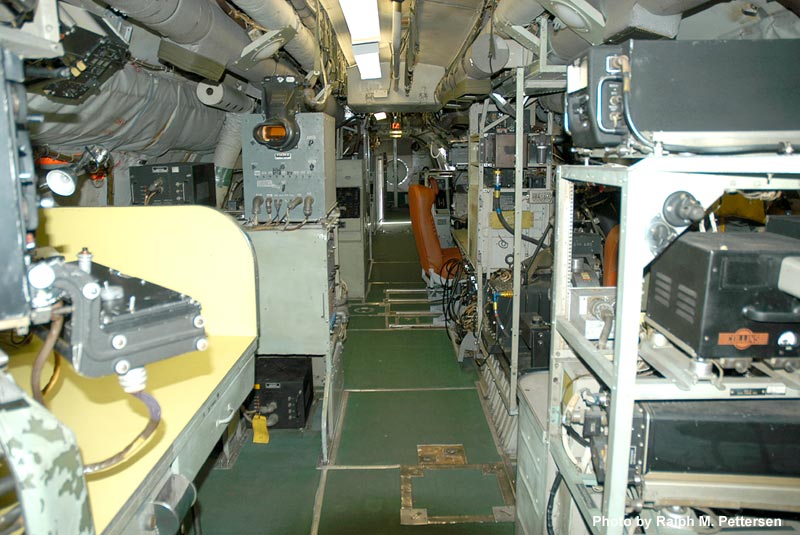
I visited the museum on Saturday November 11, 2006 and was met by three museum volunteers, Ernie Newman, John Cawood and Erv Smalley. Ernie makes the museum's videos, John is the EC-121 team leader and Erv is the museum’s website administrator and F-106 resident expert. Although it was a very cold morning, we spent two enjoyable hours in the Super Connie getting a personalized tour from John. John retired from the USAF in 1973 as a Lt. Colonel and has 9,600 flight hours in the EC-121 and over 300 hours at the controls of 52-3425. He’s not totally sure but he thinks that there are only four pilots with more flight time in the EC-121 than him. Walking through the aircraft is like taking a trip
 |
 |
 |
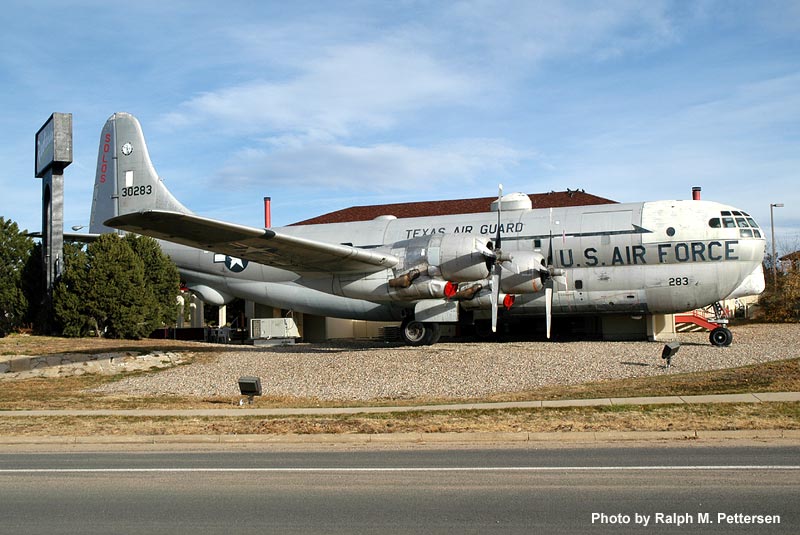
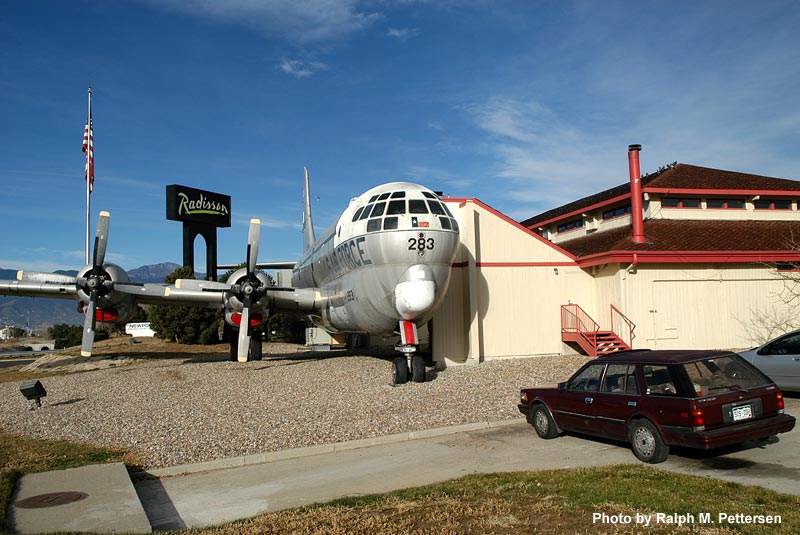
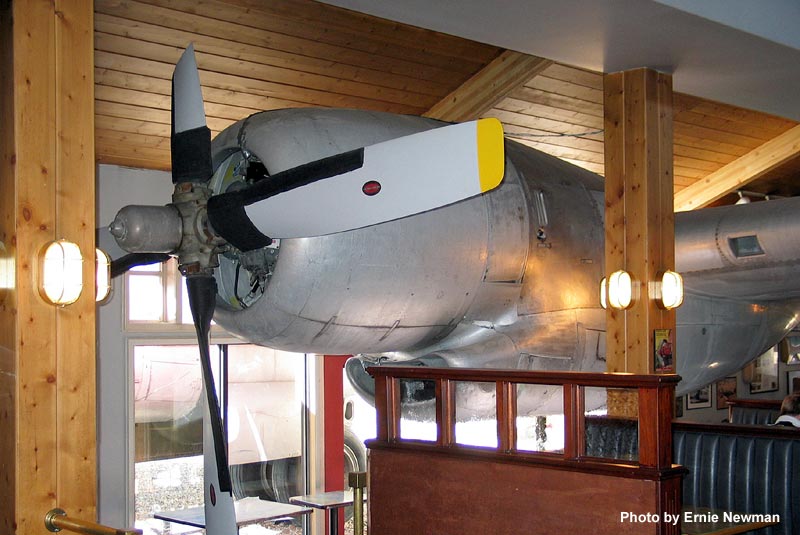
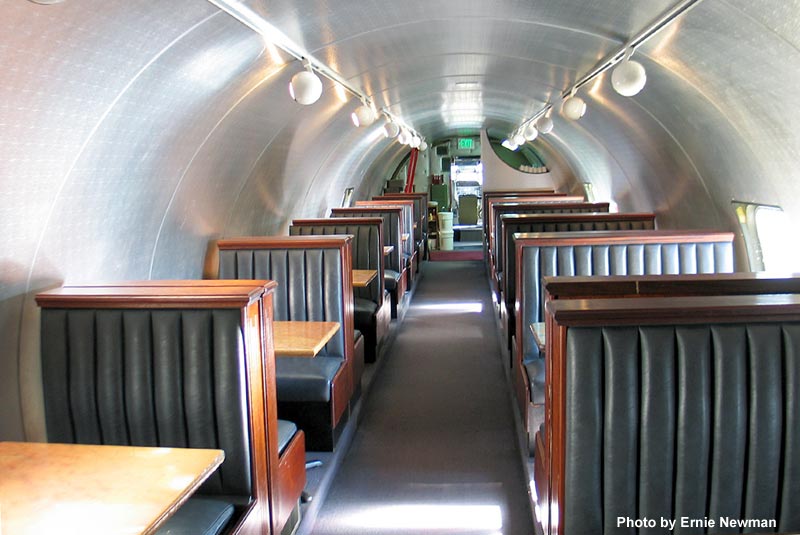
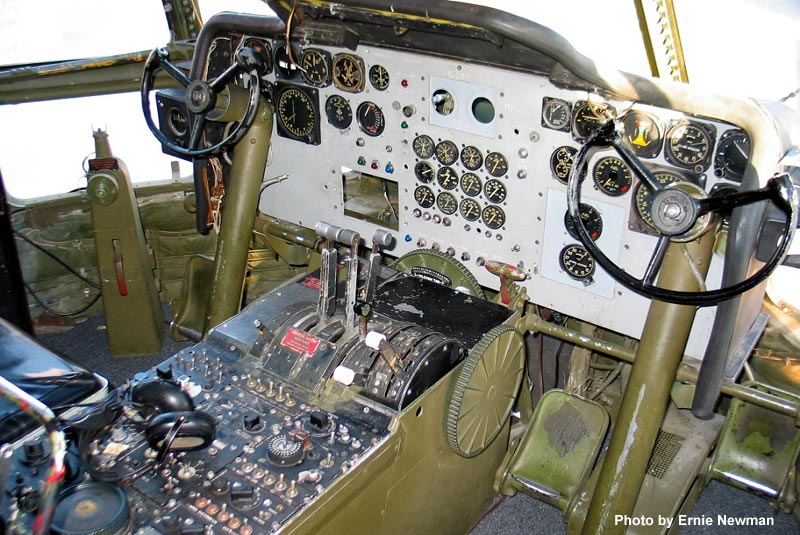
Colorado Springs is also home to Solos Restaurant, which features KC-97 53-0283 as its centerpiece. While most seating is in a traditional dining area, customers are given the choice on whether or not they would like to be seated in
 |
 |
 |
 |
 |
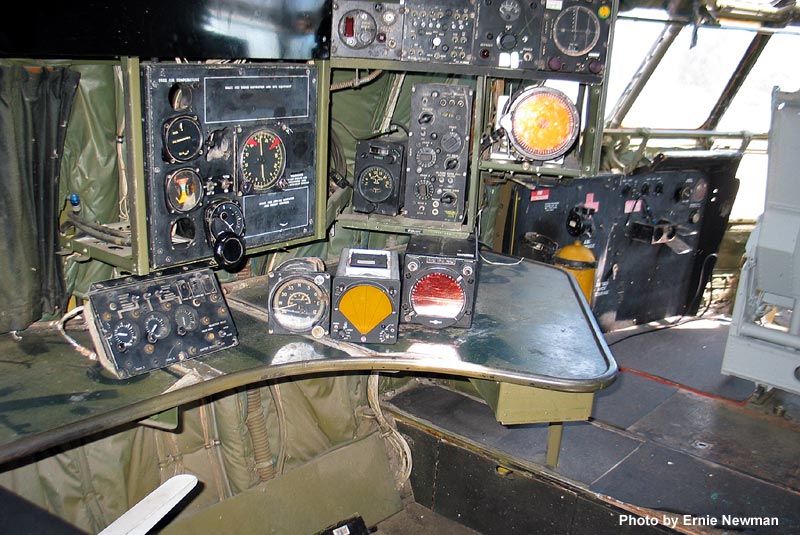 |
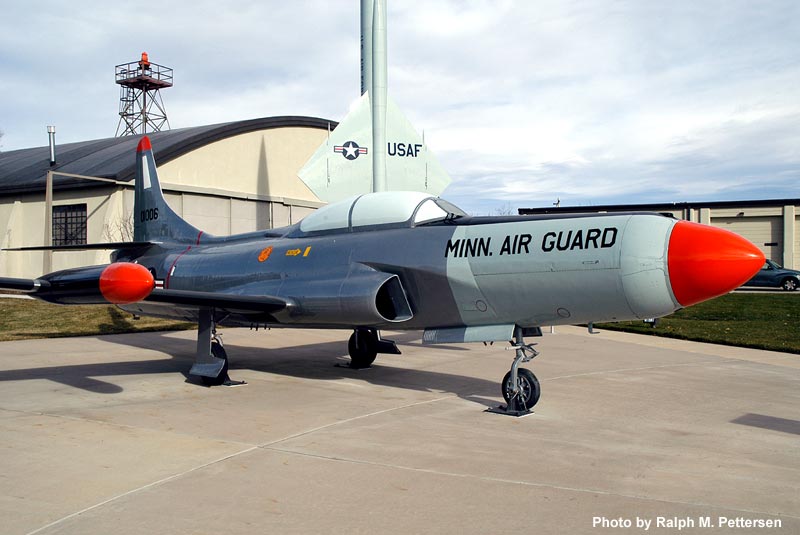
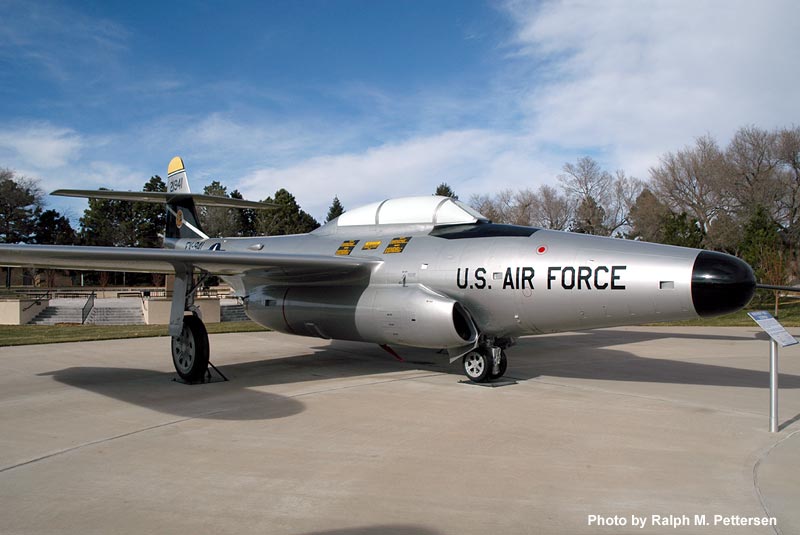 Not to be forgotten, the museum’s other 15 aircraft have all been beautifully restored and are on display in the airpark. I was very impressed with how well maintained these aircraft were. I don’t think I’ve ever seen outside displayed aircraft look so good. My compliments go to the museum’s staff and volunteers for taking such good care of their charges. Planning on visiting the museum? Since it's inside Peterson AFB you will need a U.S. military or DoD civilian ID to get past the gate guards. Current policies for base access to visit the museum can be obtained by calling 719-556-4915. Additional information about the museum can be found on its website.
I’d like to thank Ernie, John and Erv very much for taking the time out of their day to make my visit such an enjoyable event. It was a great day and well worth the trip from Maryland.
Brazilian Museum Restores L049 N86533 – November 15, 2006
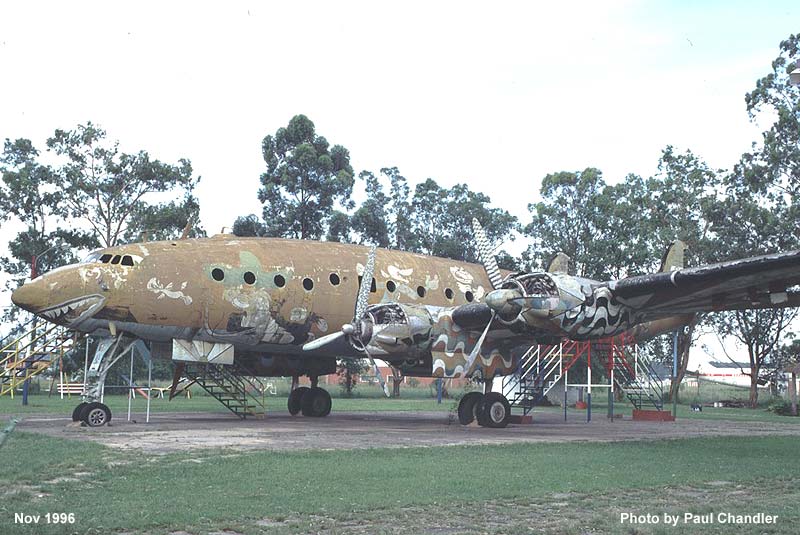
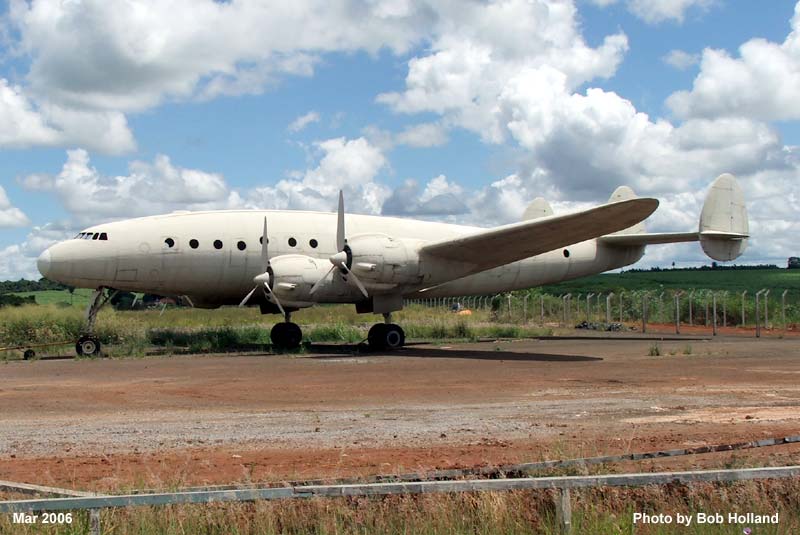
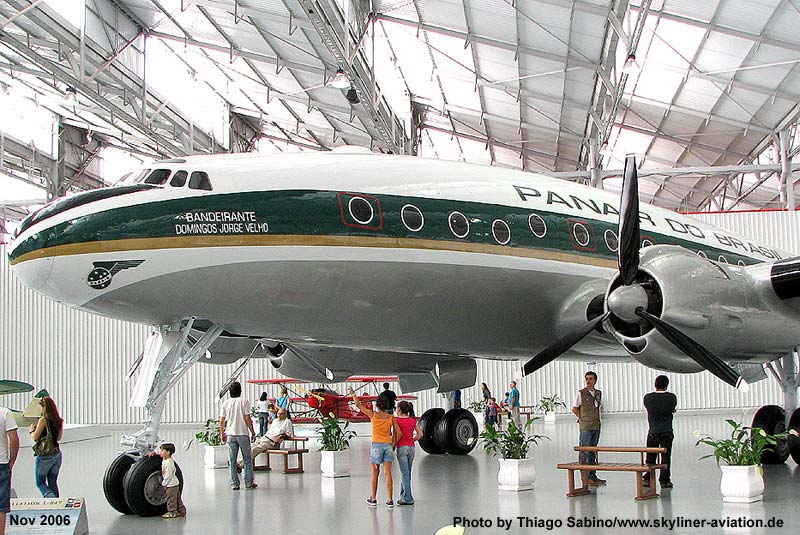
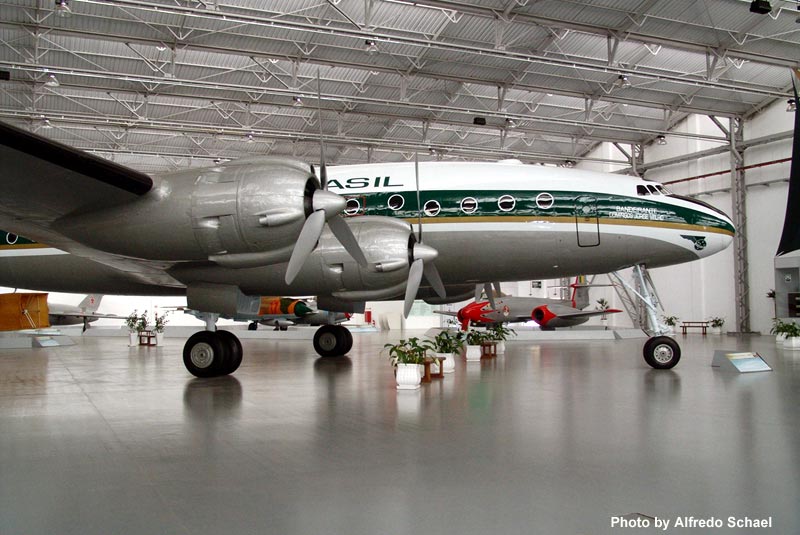
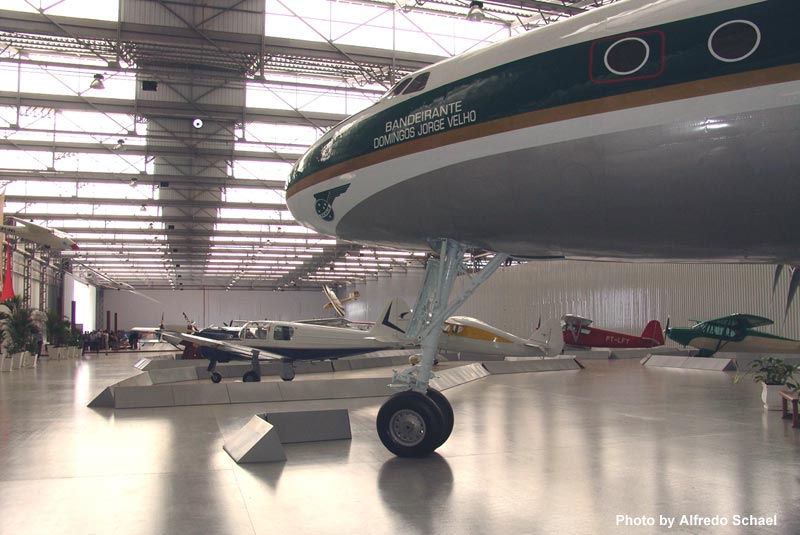
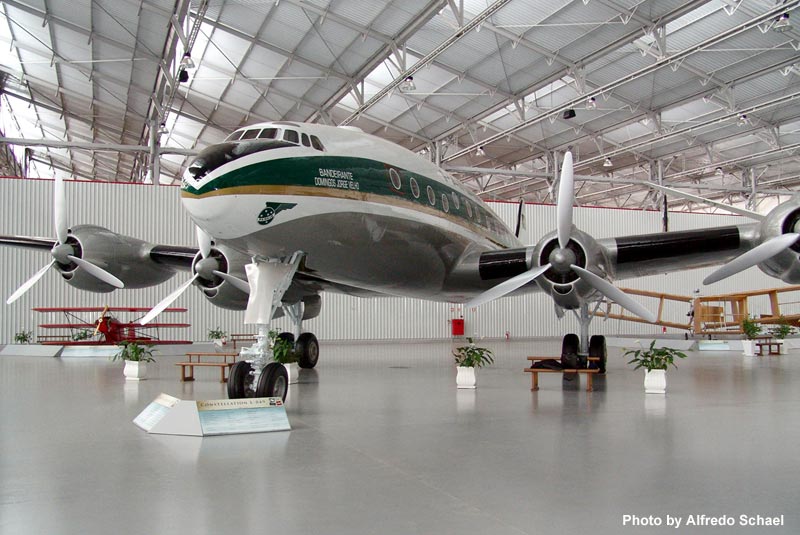
L049 Constellation N86533 has made it back from the brink of extinction to become an exhibit at the Brazilian airline TAM’s newly opened museum in Sao Carlos, Brazil. The aircraft was impounded at PG Stroessner Airport in Asuncion, Paraguay in September 1965, where it sat neglected for ten years before being painted and put on display at the airport. The aircraft slowly deteriorated as the result of vandalism and the weather until 2000 when the museum acquired the aircraft and disassembled it for shipment. It arrived at Sao Carlos on December 13, 2000 after a 30-day
 |
 |
 |
 |
 |
 |
Aviodrome Puts On Quite A Show - October 28, 2006
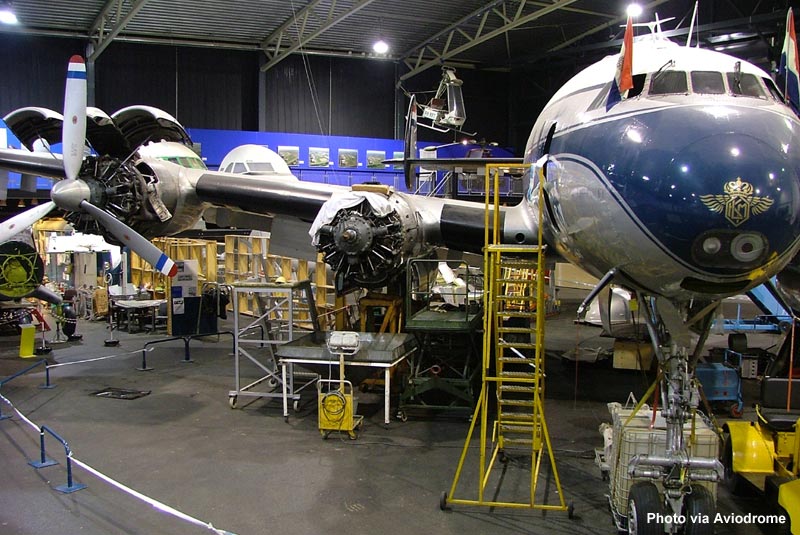
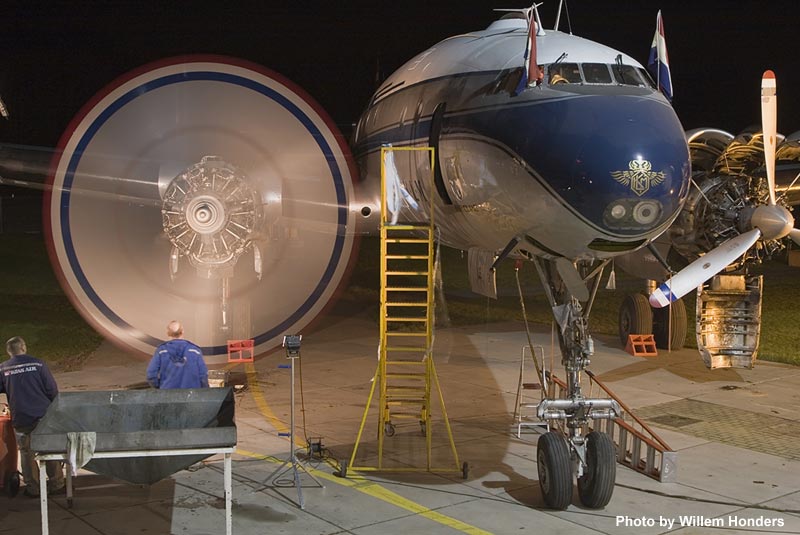
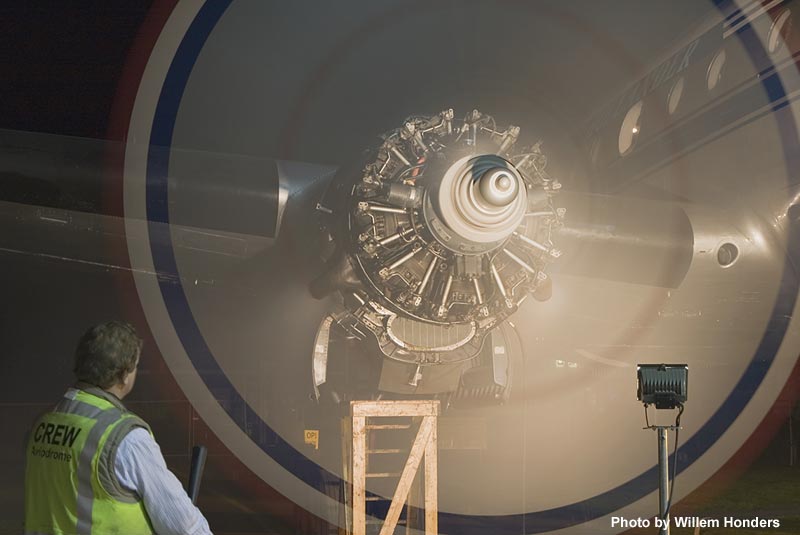
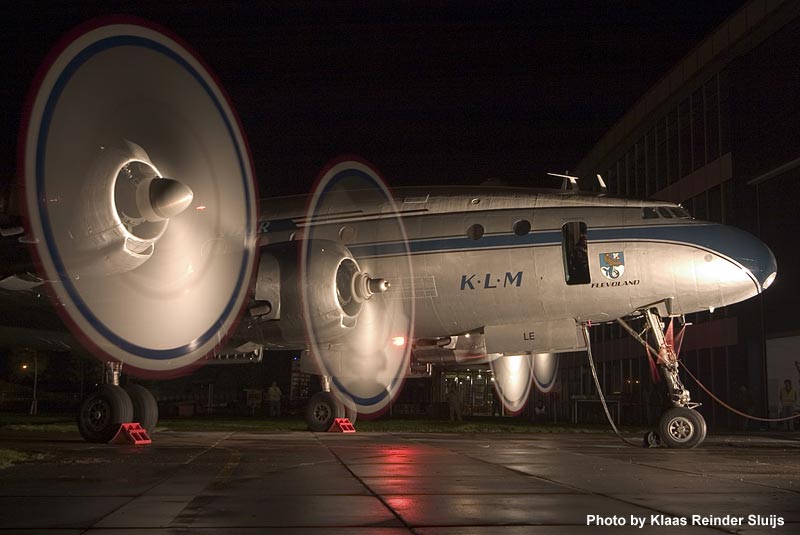
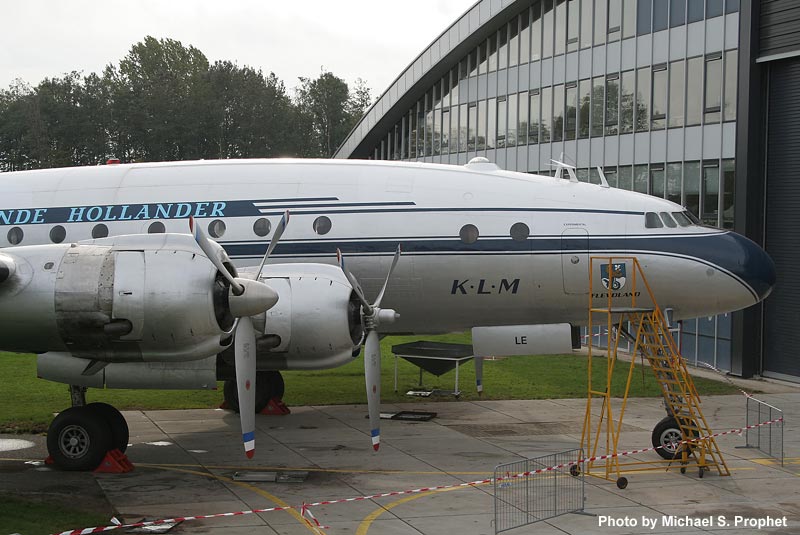
The Aviodrome put quite a show on for Dutch enthusiasts last Saturday night when they started up and ran the engines on five of their vintage aircraft. Included were the DC-3, PBY Catalina, Fokker F-27, Fokker S.11 and, most spectacular of all, their 4-engine Lockheed Constellation N749NL. The Connie has been grounded since its #3 engine failed during a test flight on July 5, 2004. In April 2006 Raymond Oostergo led a team of Aviodrome volunteers to Korea where they swapped out two “dead” R3350 engines for two serviceable ones off the ex-MATS Connie N494TW. See September 2, 2006 news article
 |
 |
 |
 |
 |
 |
"Pegasus" Survives at McMurdo Station, Antarctica - October 9, 2006

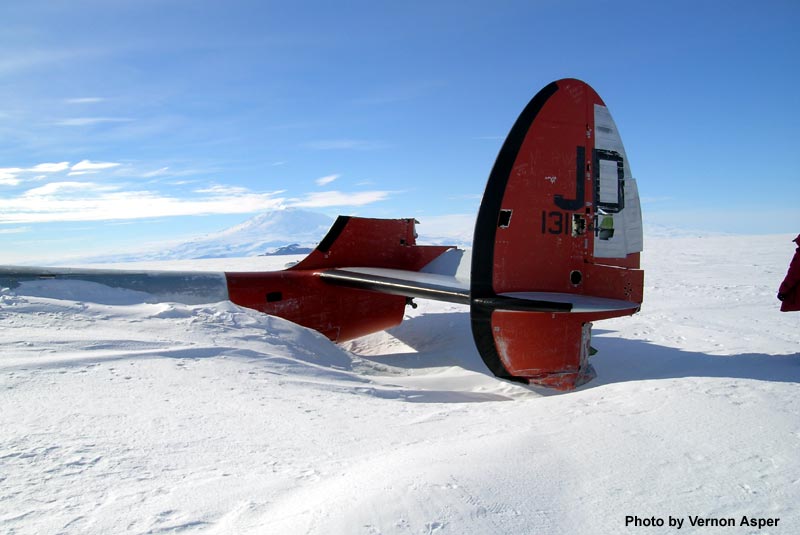
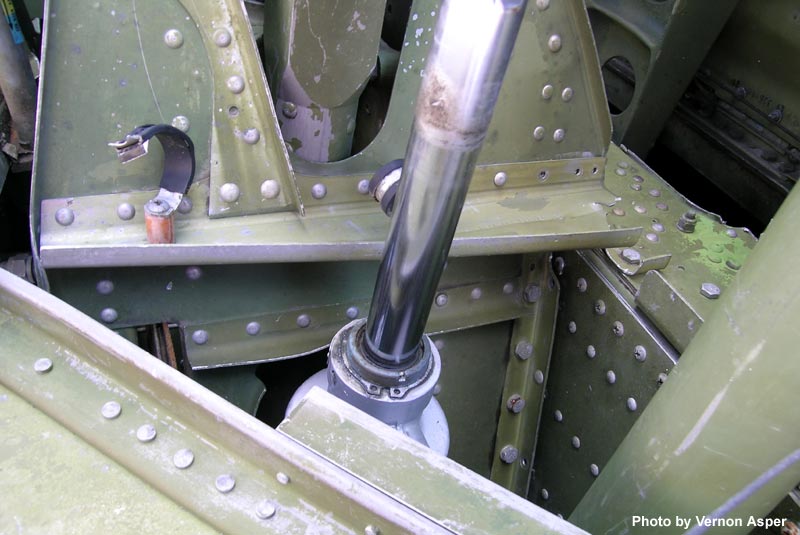
 I received an email from Vernon Asper with some very interesting photos of R7V-1 BuNo 131644 which crashed at Williams Field, McMurdo Station, Antarctica on October 8, 1970. The aircraft was severely damaged while attempting to land in zero visibility with winds gusting to over 40 mph. Thirty-six years later, having been stripped of all useful gear, the hulk still remains at McMurdo. Vernon is an oceanographer and has just completed a five-year study of the oceanography near McMurdo Station and took the photos on February 7, 2004. From the photos, its obvious that the cold dry climate has been very kind to the wreck, which appears to still be in excellent condition. The Navy has named their new airfield at McMurdo Pegasus
 |
 |
 |
Seattle Museum Suffers a Setback - September 24, 2006
 For almost seven months, Seattle's Museum of Flight has been in a struggle with the Canadian Government over the museum's plan to move Super Connie CF-RNR from Toronto to Seattle. I received an email from Robert Bogash today describing the latest round in the tug of war. "Wednesday, Sept 20, was our day in the barrel with the Heritage Board in Ottawa. Bonnie Dunbar, President of the Museum, and our Vancouver lawyer made the presentations. We got turned down, i.e. the Export Permit was denied. The next steps are uncertain. The Board will establish a 'Fair Market Price'. If no bids are received from Canadian institutions in three months, we're free to bring it across the border. If bids meet or exceed their price, we can accept or reject them. We're not forced to sell the airplane, but then again, we can't take it out of the country. The so-called "expert" who appeared as the advocate, the man who had declared the airplane invaluable and priceless, etc, at the hearing declared the airplane had no value and should be offered to Canadian institutions at minimal cost. The Museum has in hand two legitimate appraisals for over $1M, and has spent close to that so far. The lawyers seem to think there were a number of "improprieties" in the conduct of the appeal meeting, but lawyers always feel that way, so we shall see."
For additional information regarding this ongoing saga, see "Constellation News" February, March, April and June 3, 2006 reports.
Dutch Connie Back Flying in 2007? – September 2, 2006
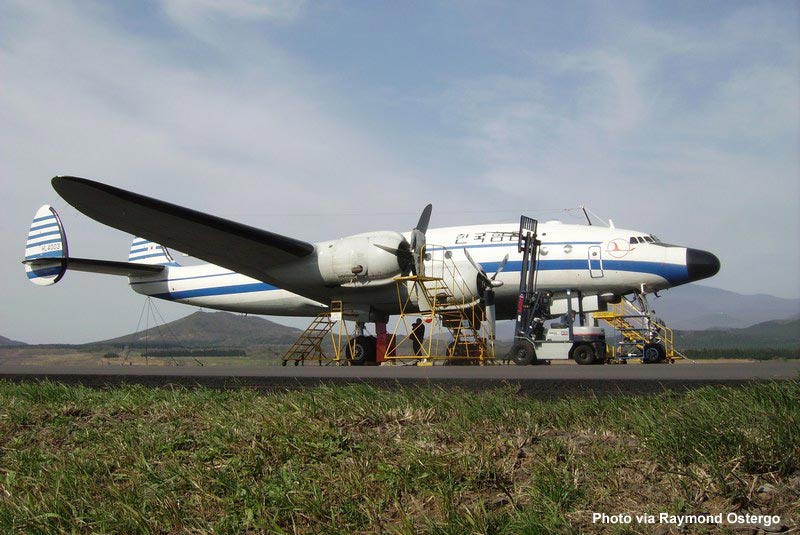
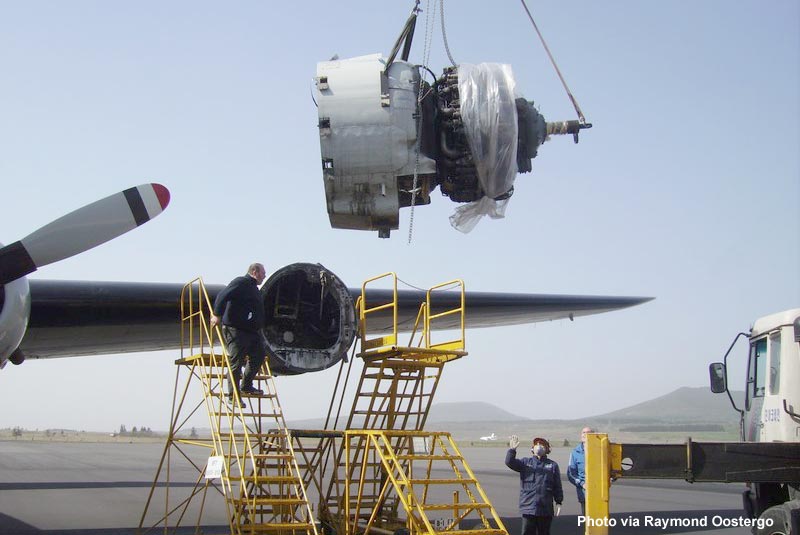
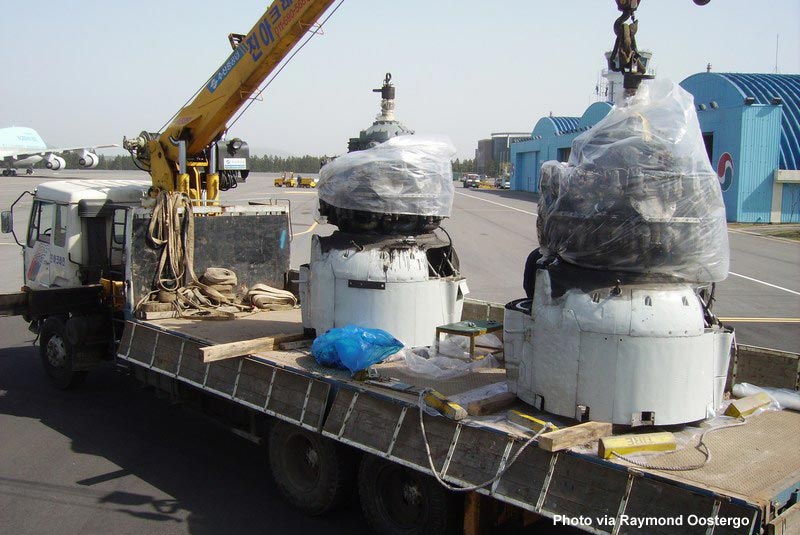
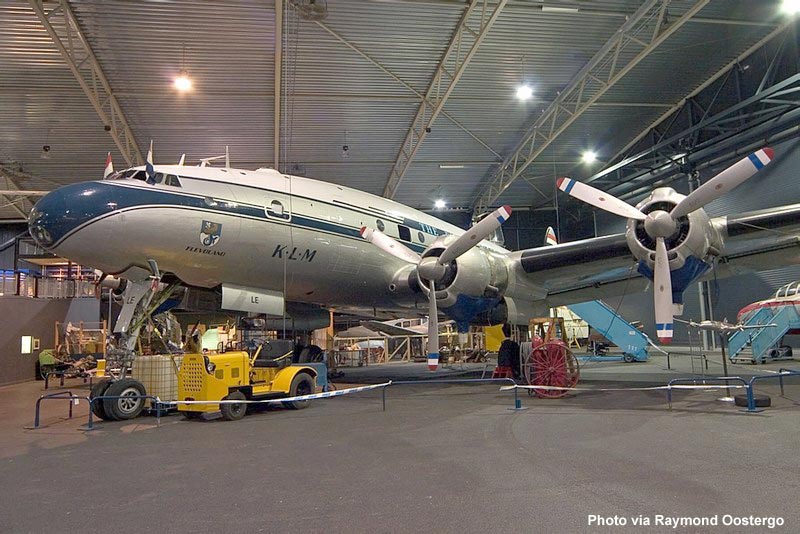
Looks like there's a very good chance that the Dutch Aviodrome’s L749A Constellation N749NL will be flying once again in 2007. Grounded since its #3 engine failed during a flight test on July 5, 2004, two serviceable engines were recently obtained off of ex-MATS Connie N494TW currently parked at the Korean Air flight training facility on Jeju Island, South Korea. A team of five museum volunteers, led by Raymond Oostergo, arrived in South Korea on April 18, 2006 to remove two engines from the aircraft. In place of the #1 and #4 engines, they installed two run-outs that had been brought from the museum in Lelystad. Engines were transported both ways in the belly of a B747 on stands specially designed and built by the museum. KLM and Korean air sponsored the transport of the engines and the team returned to Holland with their precious cargo on May 2, 2006.
 |
 |
 |
 |
 |
 |
Super Connie Cockpit Simulator Project - August 15, 2006
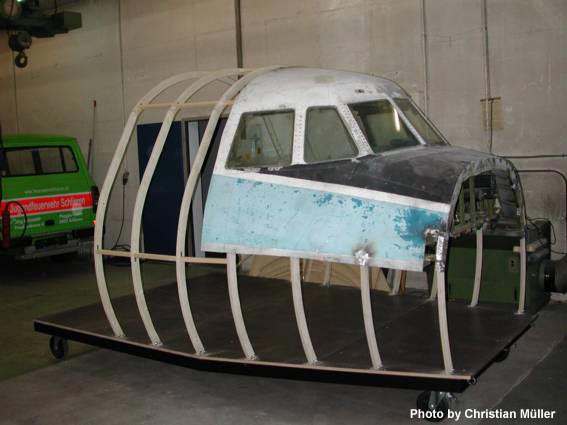 Super Constellation HI-548CT probably pushes the definition of “survivor” but an identifiable portion of this aircraft is currently being made into a simulator in the Swiss town of Schlieren. HI-548 was delivered to the USAF as a C-121C in April 1956 and served over twenty years until retirement in September 1977. Operated by the Dominican operator Aerochago from the mid-1980’s, the aircraft was severely damaged in Santo Domingo in September 1998 by Hurricane George . Francisco Agullo, founder of
 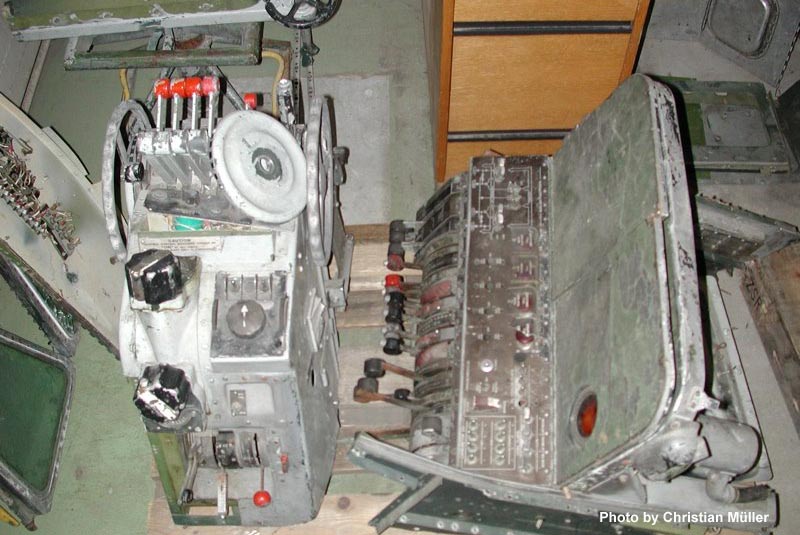 the Swiss group Super Constellation Flyers Association (SCFA), rescued the cockpit section when the aircraft was scrapped in 1999 and had it shipped to Switzerland for storage. Christian Müller, a SCFA member, is currently building the simulator in recently vacated industrial workshop in Schlieren, which is near Zurich. As can be seen in the photos, the flight engineer panel and many of the cockpit components were salvaged back in 1999. Good luck to Christian and the SCFA with this project, which will ensure a small, but significant, piece of this Super Connie lives on. An informative German language website documents progress on the project.
Engine Woes Plague The Airline History Museum - July 28, 2006
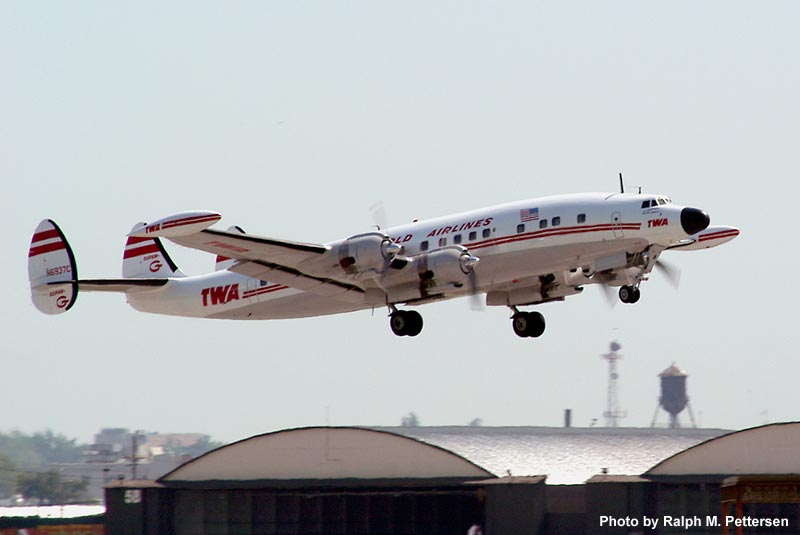 It’s been a long and frustrating year for the Airline History Museum. The museum’s L1049H Super Connie had been grounded since its #2 engine suffered a catastrophic failure back in July 2005 and hopes were high that the aircraft would return to the sky for the 2006 show at Oshkosh. The engine had been sent to an overhaul shop in California for a complete overhaul and, after many missed delivery dates, the engine finally arrived at the museum’s hangar at Kansas City’s Downtown Airport. The mechanics worked overtime to get the engine installed in
time for Oshkosh but it was not to be. On July
It’s been a long and frustrating year for the Airline History Museum. The museum’s L1049H Super Connie had been grounded since its #2 engine suffered a catastrophic failure back in July 2005 and hopes were high that the aircraft would return to the sky for the 2006 show at Oshkosh. The engine had been sent to an overhaul shop in California for a complete overhaul and, after many missed delivery dates, the engine finally arrived at the museum’s hangar at Kansas City’s Downtown Airport. The mechanics worked overtime to get the engine installed in
time for Oshkosh but it was not to be. On July  22nd the aircraft took off on a test flight and the tower reported it was trailing smoke from the #2 engine. After returning to the field for a safe landing, the screens were pulled and excessive metal was found. After spending over $100,000 to overhaul the engine, the museum was forced to return it to the California engine shop for major repairs. As luck would have it, the museum had a spare engine that had been previously removed from the aircraft because of excessive oil leakage. The engine had been repaired by museum volunteers and was ready for installation. During my visit to the museum on July 28th, volunteers were getting ready to hang the engine with the hope of salvaging the remaining three shows of the season.
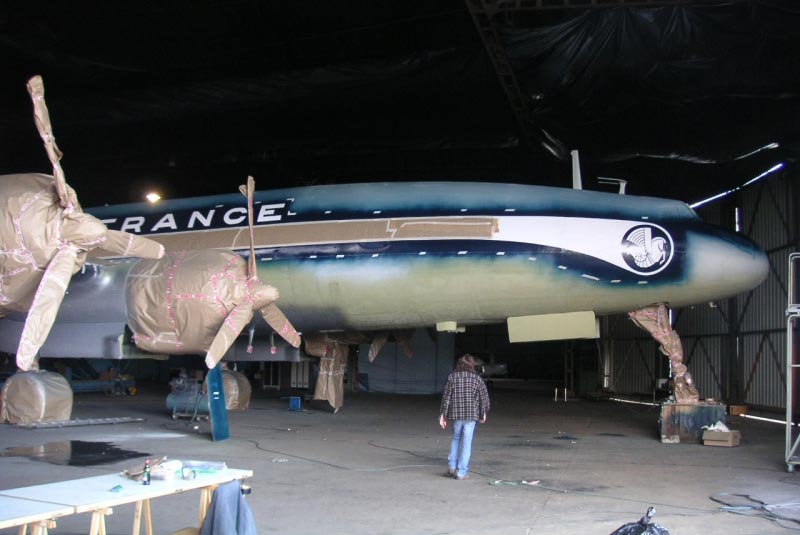
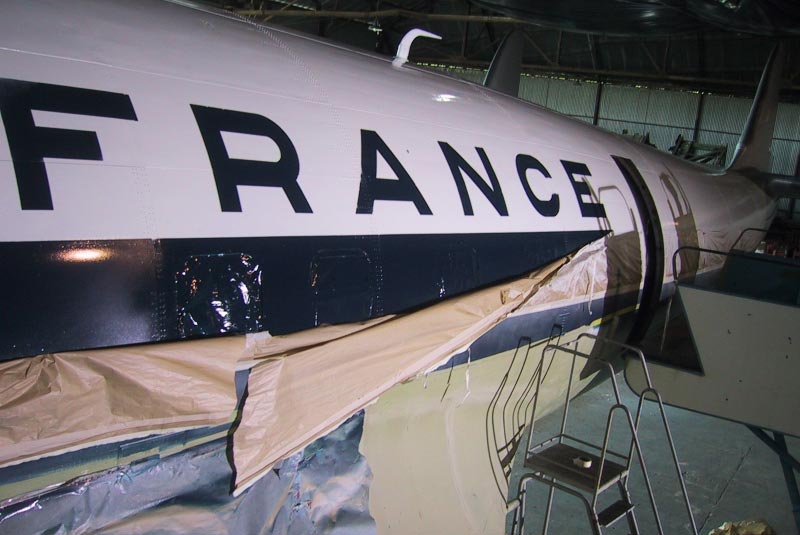
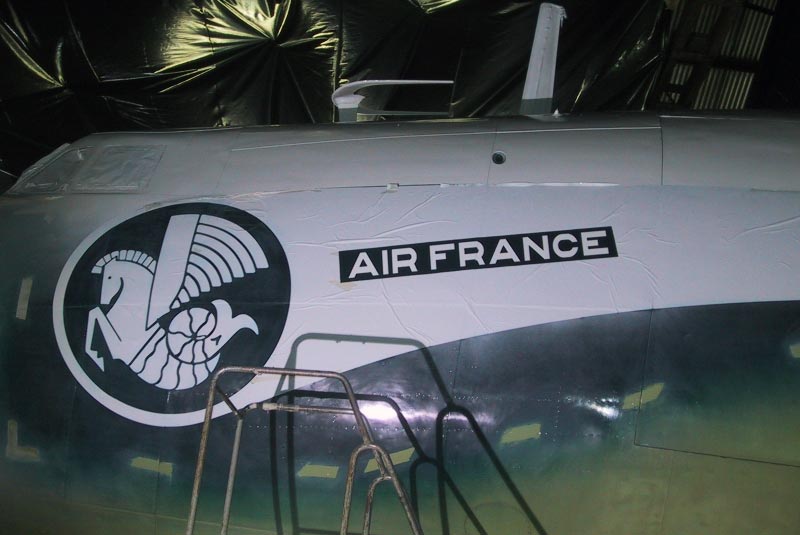
Nantes Super Connie F-BRAD Gets A Facelift – July 4, 2006
On May 1, 2004, long time residence of Chateau Bougon Airport in Nantes, France was towed across the airport to a new home at the future side of the AEROSCOPE Museum. Originally delivered to Air France as F-BGNJ in November 1953, this aircraft served with French airlines Air Fret and CATAIR before being ferried to Nantes in May 1974 for use as a tourist attraction. It has sported a number of color schemes since arriving at Nantes including Lockheed’s prototype Super Constellation and Air France colors. The
 |
 |
 |
Camarillo EC-121T Update – June 25, 2006
Still no good news from Camarillo! A group from the Van Nuys FAA FSDO office visited the aircraft on June 13th and went over her with a fine tooth comb. A list was compiled of the findings and forwarded to the Yanks Air Museum. Veteran observers say they have never seen anything like the inquisition that is going on with this aircraft. Pretty amazing stuff...even for the FAA!
Frustrating Times for Two Museums – June 3, 2006
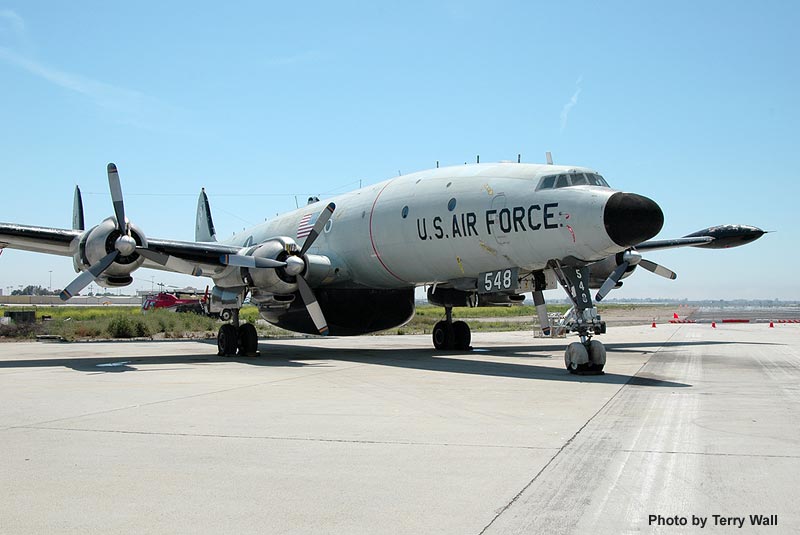 Both the Yanks Museum in Chino and the Museum of Flight in Seattle are having a difficult and frustrating time moving their recently acquired Constellations. According to Terry Wall, Camarillo EC-121T N548GF has been totally restored to flying condition but the FAA continues to drag their feet on issuing a ferry permit. This even after an IA pronounced the craft airworthy and a structural engineer blessed the wing repairs. It appears that old grudges die hard at the Van Nuys FSDO where one (or more) determined bureaucrats are intent on holding up the works. Good luck to Yanks in pursuing the ferry
 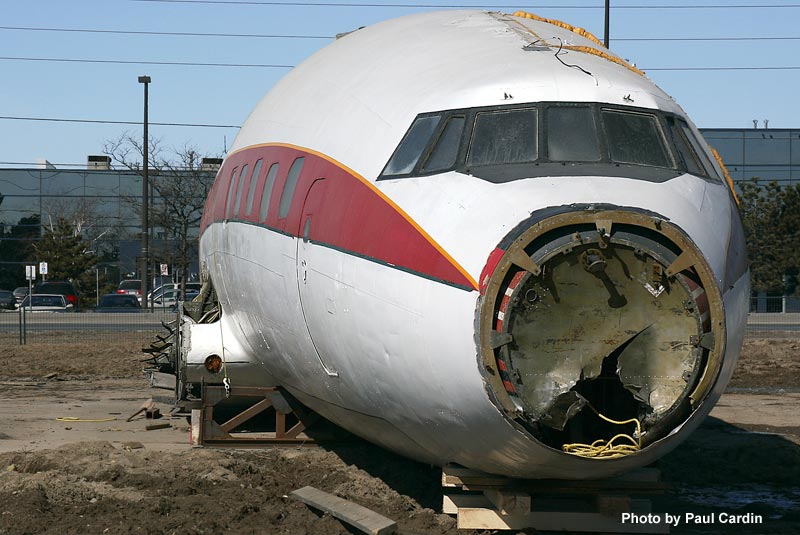 permit so this historic aircraft can be moved to Chino for proper restoration and display. The Museum of Flight suffered a setback in their bid to move their disassembled Super Connie CF-RNR from Toronto to the museum’s restoration center at Everett, Washington. Sameer Haqqi forwarded a news clip from the Mississauga News reporting that the Department of Canadian Heritage has denied the museum a permit to export the aircraft to the United States. The permit was denied after it was determined that the Super Connie was “of significant cultural and historic importance to Canada”. The museum has 30 days from the date of refusal, May 25, 2006, to ask for a review by the department's review board. It will be very interesting to see how each of these mini dramas play out. Keep tuned for further details.
Update--Additional news reported in the June 6, 2006 edition of Toronto's Globe and Mail newspaper.
Camarillo EC-121T Update – May 15, 2006
Bad news from Camarillo...the FAA is balking at approving the wing repairs. The FAA says the repairs, which were done some years ago and previously approved, just aren’t good enough. They have come to this conclusion without inspecting the repairs and in spite of the recent inspection and approved by a certified structural engineer. What could be the reason? Perhaps some bad blood from the Wayne Jones days has bubbled to the surface at the FAA. Hard to tell but it’s definitely put a damper on plans to ferry the aircraft to Chino this week. Most of the flight crew is at Camarillo, the airplane is ready to make the flight but the lack of a ferry permit has put the flight on hold!
Dr. Gerald Durbin and The WillY Victor Group – May 2006
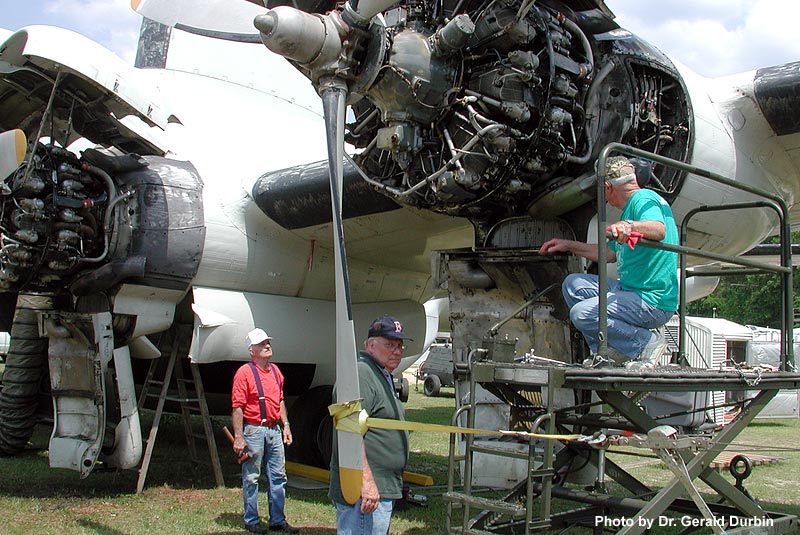
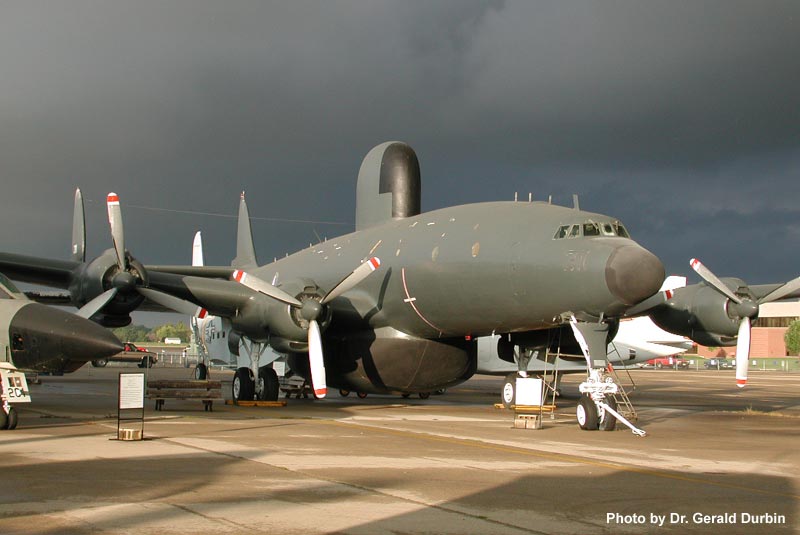 Cdr. Gerald Durbin Ph.D. is a man on a mission…restoring formal Navy patrol aircraft to their former glory. He is CEO of the Willy Victor Group, which consists of ex-Navy AEW crewmembers, ex-Air Force and civilians who volunteer their time and expertise to restore these aircraft. The mission of the group is to preserve these aircraft so that others may enjoy them and to tell the story of the efforts made by these crews to protect the United States during the Cold War. Dr. Durbin led the group of volunteers that have spent six years and in excess of 11,500 hours restoring WV-2 BuNo 141311 (Super Constellation) currently on display at the Octave Chanute Aerospace Museum in Rantoul, Illinois. Photo at left shows BuNo 141311 at Rantoul in August 2002.
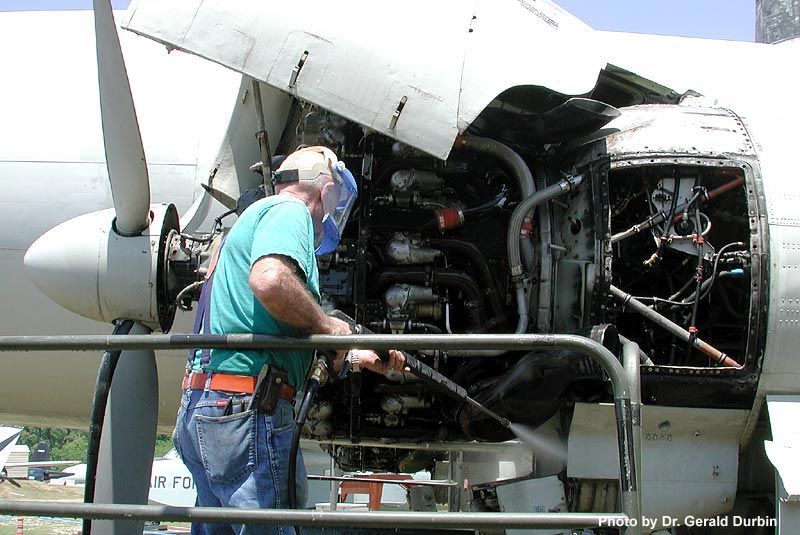
His current project involves the restoration of EC-121K (WV-2) BuNo 141297 on display at the Museum of Aviation at Warner Robins, Georgia. He and a crew of 35 volunteers started restoration work on May 1, 2006 and will be working on restoring 297 for several years. They plan on installing new tires, cleaning and preserving the engines, replacing windows and giving both the interior and exterior a good cleaning and recreating the aft CIC part of the plane. In addition they plan on opening the aircraft for public viewing
 |
 |
 |
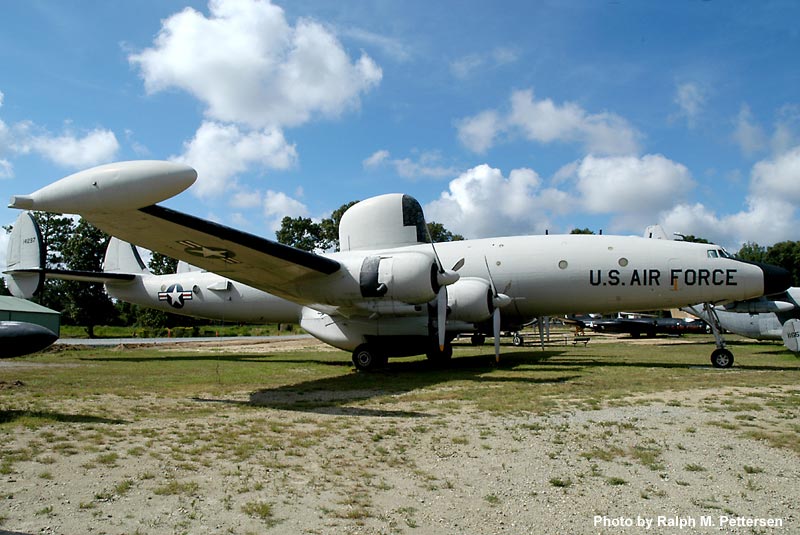
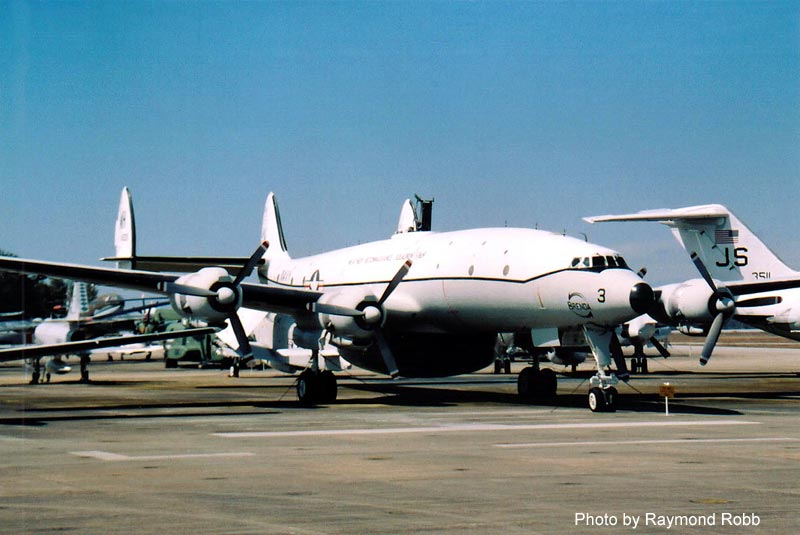 Next on the agenda is the restoration of three aircraft at the National Museum of Naval Aviation in Pensacola, Florida. EC-121K BuNo 143221 was damaged by Hurricane Ivan in September 2004 and is need of a replacement upper radome and right aileron. In addition, it is in need of a general sprucing up similar to what is being done to the Warner Robbins aircraft. Two other aircraft at the museum in desperate need of the group’s attention are SP-2H BuNo 141234 and SP-5B BuNo 135533. As with the Warner Robins EC-121K, parts from the scrapped P-2’s will be used for the restoration effort. The group plans on beginning work on the Pensacola aircraft in February 2007. Photo at left shows BuNo 143221 in March 2005 with her radome missing.
My hat goes off the Dr. Durbin and his group of dedicated volunteers who donate their time and expertise to save a little bit of history for future generations. They provide the necessary resources to restore aircraft that might have been left to deteriorate in the “back 40” outside areas of many museums.
Camarillo EC-121T Update – May 2006
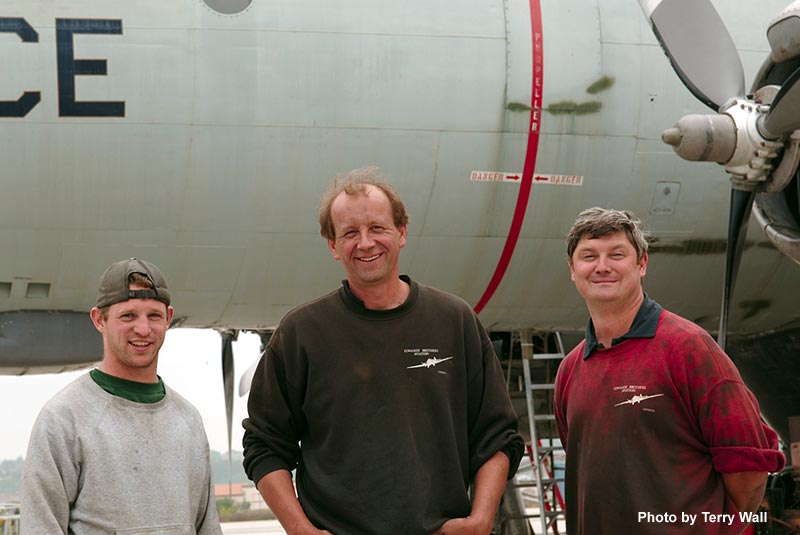
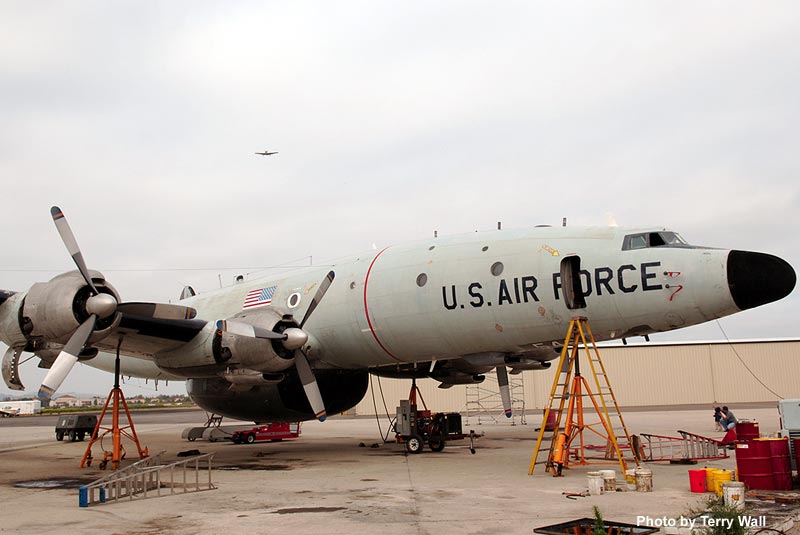
Terry Wall has been providing regular reports regarding the progress of the Camarillo EC-121T. The three mechanics working on the aircraft have been identified as Englishmen Clive Edwards and Richard Hayward and Allen Tvergyak who hails from nearby Oregon. Slow delivery of replacement fuel injection units, magnetos and distributors has impeded the crew's progress but landing gear retraction tests have been completed and all four engines have been successfully run. Completion of the number 4 engine was delayed until May 3rd waiting for a replacement distributor to arrive. A brand new replacement left windshield was found in Oakland and installed. The avionics techs have been checking the aircraft's radios and found out that there was no transponder antenna on the aircraft. Small, but important,
 |
 |
 |
Camarillo EC-121T Update – April 2006
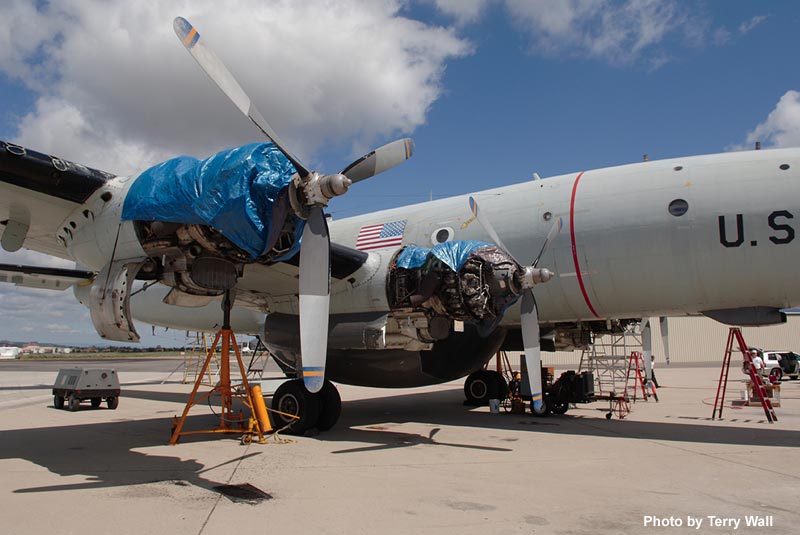
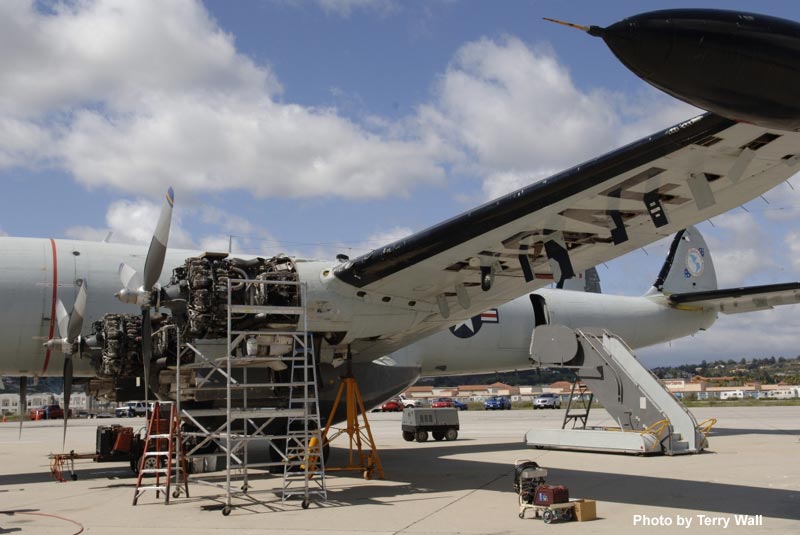
As previously reported in March 2006 work has begun, and is well underway, to return Camarillo’s long-time resident EC-121T back to the air…at least for the short ferry flight to the Yanks Museum in Chino. Three mechanics have been working on the aircraft seven days a week since arriving on March 15th. They started with the engines and by Saturday April 8th, were putting things back together. Although the left hand windscreen needs replacement and they are short a few parts, to date they have not uncovered any
 |
 |
 |
Bob Bogash Speaks Out About The Toronto Super Connie – April 2006
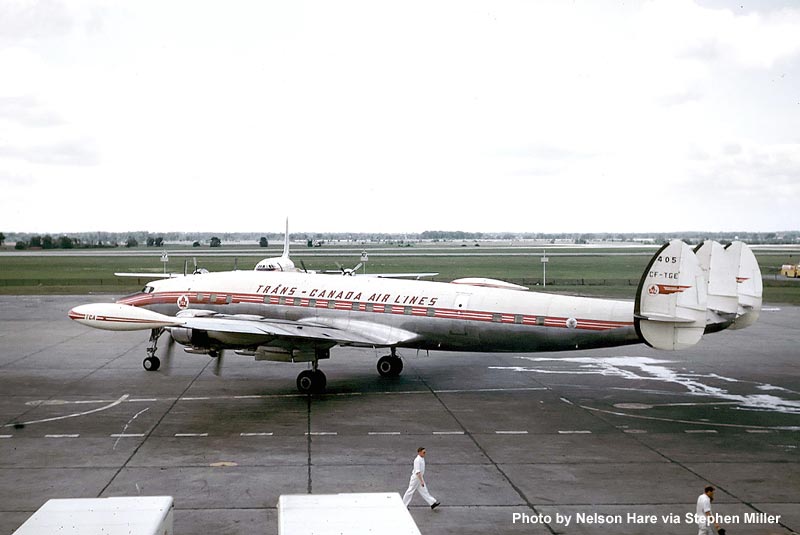 I recently received an email from Bob Bogash, the Museum of Flight volunteer project manager who has been overseeing the acquisition, dismantling and temporary storage of Toronto Super Connie CF-RNR. I sensed from his email
 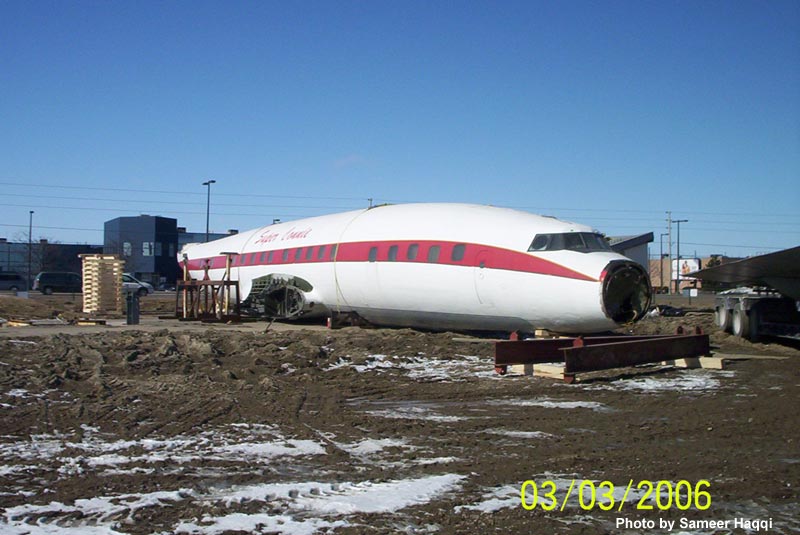 that Bob was becoming frustrated by the war of words that has been going on for the past three months and was very anxious to present the facts, as he knows them. He has put together a very informative and detailed Q&A on his website, which I would like to share with my readers. It's obvious that Bob put a lot of time and energy in preparing the website and it is a must-read for anyone following the continuing saga of this aircraft.
Avra Valley Visit and Camarillo EC-121T Update – March 2006
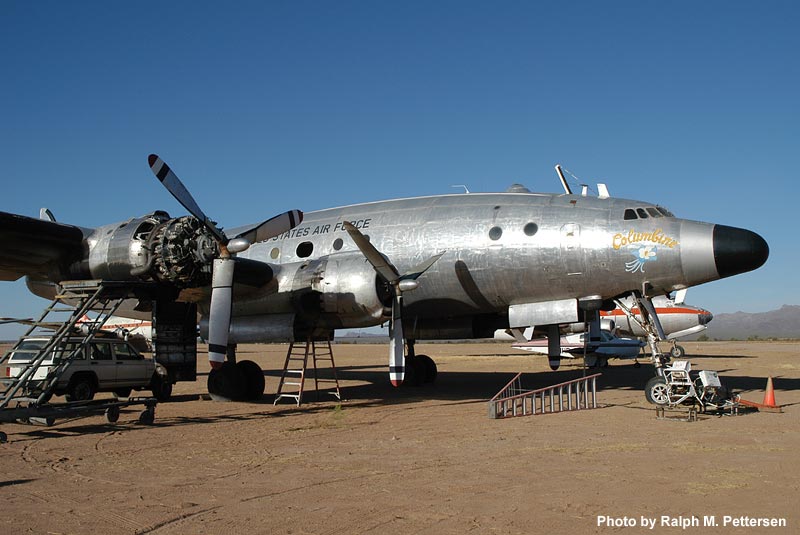 I visited Marana Northwest Regional Airport (formally known as Avra Valley Airport) on Friday March 3, 2006 to check on a couple of old Constellation friends. The good news is that ex-USAF VC-121A N9463 “Columbine II” is being made airworthy for a prospective new owner. The “buzz” around the airport and enthusiast community is that this aircraft is heading to a new owner at Orange County Airport in Southern California. Advertised for sale by the Millennium
  Northwest Marketing Group for $3.2M on a very slick website, we can only hope that the deal is finalized and a new home awaits this historic bird. On a sad note, Mel Christler, who bought Columbine II in 1970 along with four other ex-VC-121’s, passed away recently. Mel was the founder of Christler Flying Service and converted four of the five aircraft for spraying operations. One of these aircraft became the “MATS” Connie and another became the “Dutch” Connie currently on display by the Dutch Aviodrome in Lelystad. Mel was a great guy and he will be missed!
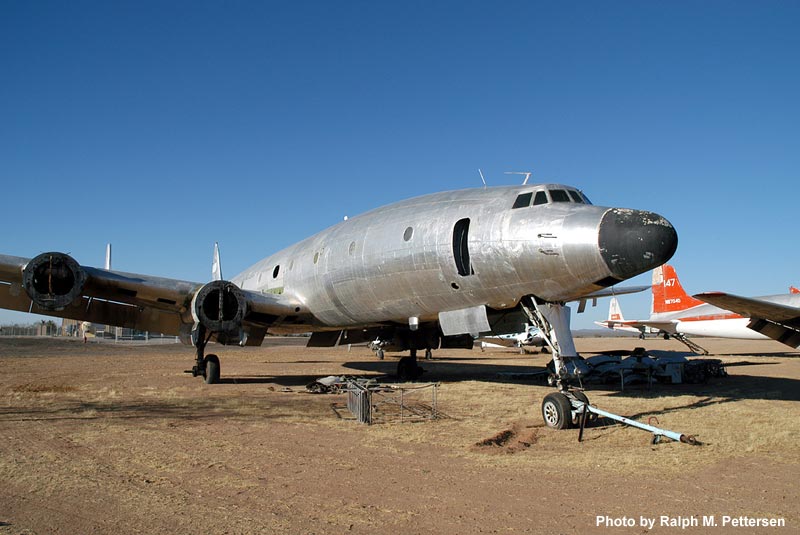 As for the other resident Constellation, SCFA C-121G N105CF seems to be heading into oblivion. Her two remaining engines were successfully run up recently and shipped off to Switzerland to provide spares for the organization’s very active Super Constellation N73544. She was also missing other parts and an ominous sign, open doors and hatches, seems to indicate that any hope of ever get her back in the air has been abandoned. Hopefully this veteran will wind up being preserved in a museum somewhere. With the many thousands of man-hours spent on her by SCFA volunteers, it would be a real shame for this aircraft to be lost. With what’s going on in Toronto over Super Connie CF-RNR, I can only hope that there is a future for this aircraft.
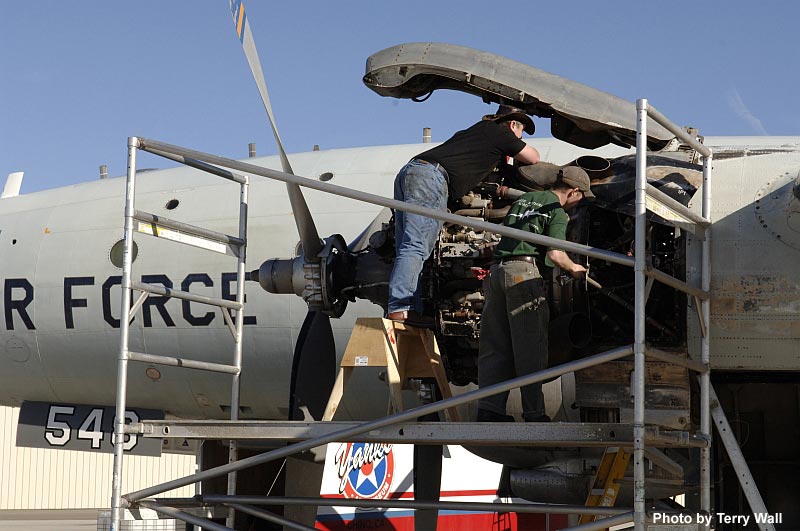 Good news from Camarillo, California. Terry Wall reports that the folks from Yanks Air Museum in Chino have finally showed up and begun working on making EC-121T N548GF airworthy for a ferry flight to Chino. The mechanics arrived on Wednesday March 15, 2006, popped the engine cowlings and began working.
 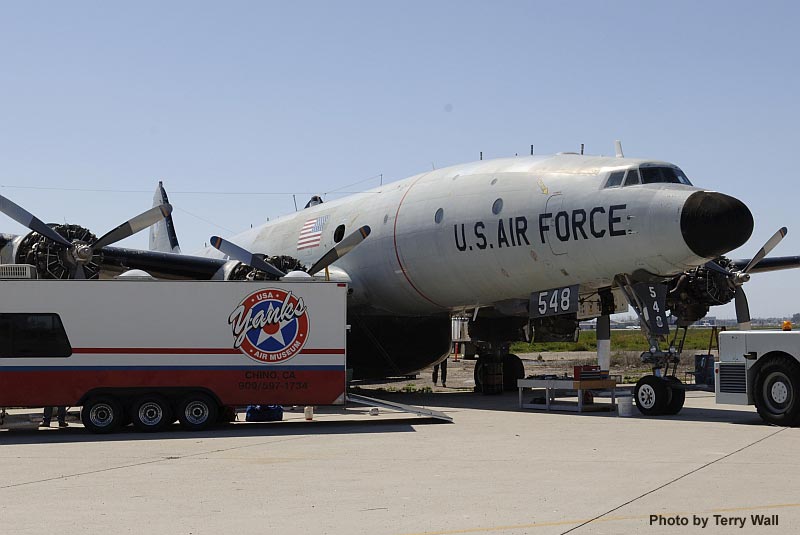 When asked by Terry when the flight would occur, their answer was “When it’s ready!”. After the passing of Wayne Jones, there was real concern that this aircraft would rot in place at Camarillo. Rumors have been rampant over the years that there was massive corrosion in the wings but apparently this is not true and the aircraft has one more flight left in her. Many thanks to Terry for keeping on eye on the old girl and passing the word on this bit of good news. I'm looking forward to Terry's report on the ferry flight.
Toronto Super Connie Update – March 2006
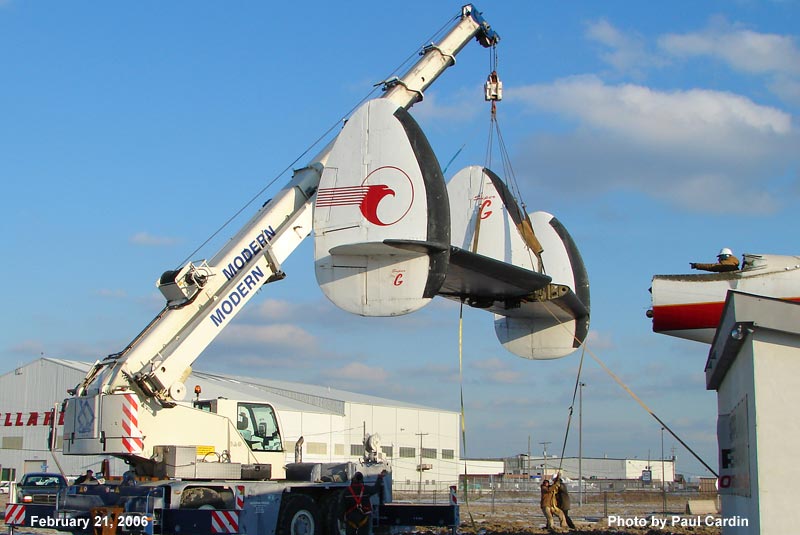
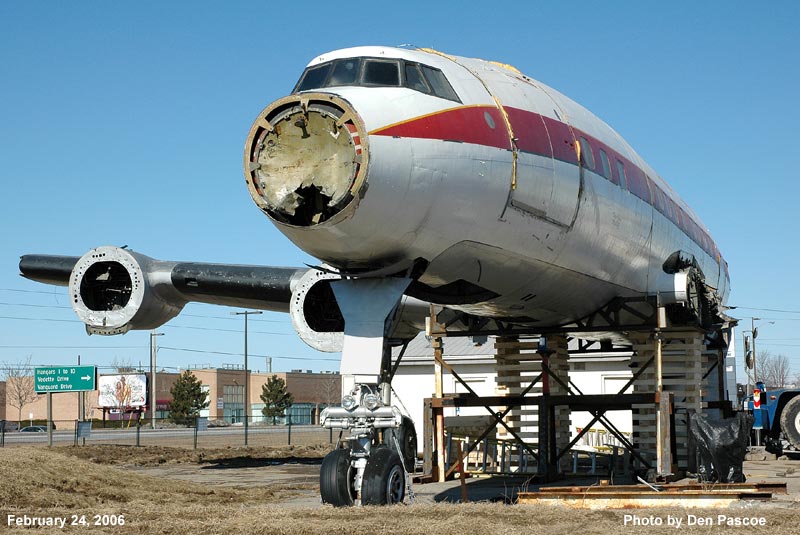 As previously noted in Constellation News, there is quite a battle going on over Toronto’s previously unwanted Super Constellation CF-RNR. As reported in the February 21, 2006 edition of the Toronto Star, the Canadian Government has notified Seattle’s Museum of Flight that the aircraft is considered to be a “moveable cultural property”. This means that it has historical or cultural significance to Canada and that a special permit will be required for its export. If the permit application is denied, the aircraft cannot be exported and Canadian institutions will be given the chance to buy the aircraft at a fair market value. While the legal and political wrangling between the parties goes on,
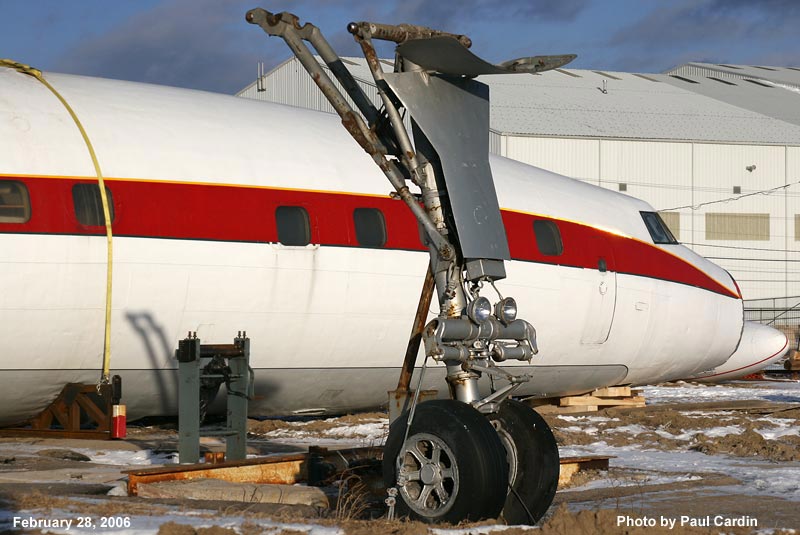 disassembly of the aircraft continues with the empennage, engines and left wing having been removed from the aircraft as illustrated in Den Pascoe's February 24, 2006 photos. Four days later on February 28th, Paul Cardin photographed the aircraft completely disassembled with the fuselage sitting on the ground. Joseph Galati reports that, with the exception of the front wheel and strut, the entire aircraft had been moved off the site by March 8th. The fuselage was moved on March 8th and the wings about week earlier.
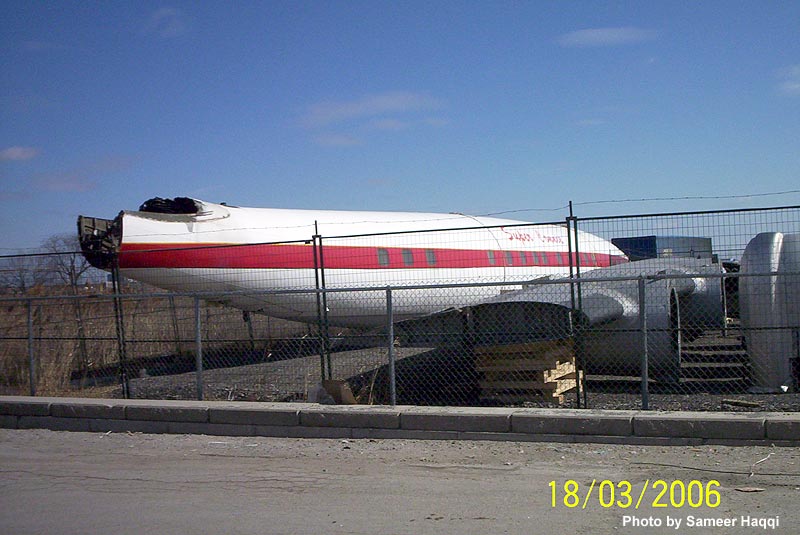
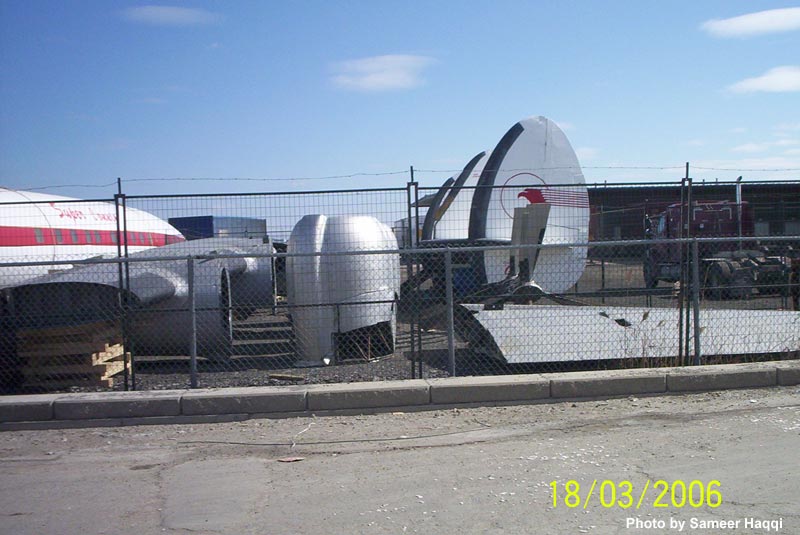 Ken Mist reported on March 13th that the aircraft was stored in the rear of a trucking company yard adjacent to the airport. Sameer Haqqi emailed me on March 21st reporting that the aircraft was very neatly tucked away at the Cargo Star yard, which is less than a mile from the restaurant site. He provided me with some photos of the aircraft and it's obvious great care was taken in storing it. Lets hope that it won't be here too long and the next move will to the Air Canada paintshop.
Casablanca's Connie Gets a Facelift – February 2006
 Koos van der Heijden recently sent me some photos of Casablanca's long-time resident L749A CN-CCN (c/n 2675). I was shocked and very happy to see that the aircraft had been the recipient of some TLC and had been repainted in Royal Air Maroc colors. CN-CCN was originally delivered to Air France as F-BBDT in
 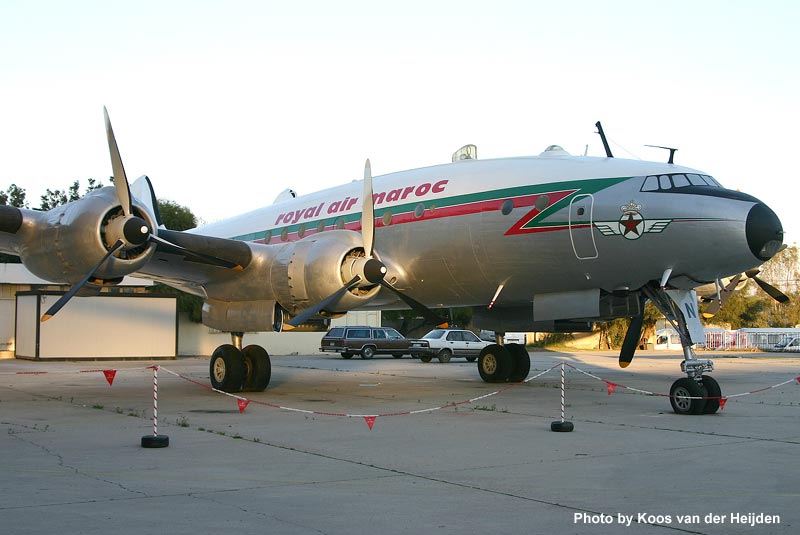 August 1951 and went to Royal Air Maroc as CN-CCN in January 1960. She was a familiar sight in European airports during the 1960's and was retired in June 1970 for use as a training airframe at RAC's facility at Casablanca's Anfa Airport. Replaced by more modern equipment some years ago, it had been slowly rotting outside the hangar until the recent turn of events. From the photos, the restoration looks first class, so kudos’ to the folks in Casablanca for a job well done!
Close-up Photos of N11SR at Ahmad Al Jaber Airbase - February 2006
 |
 |
 |
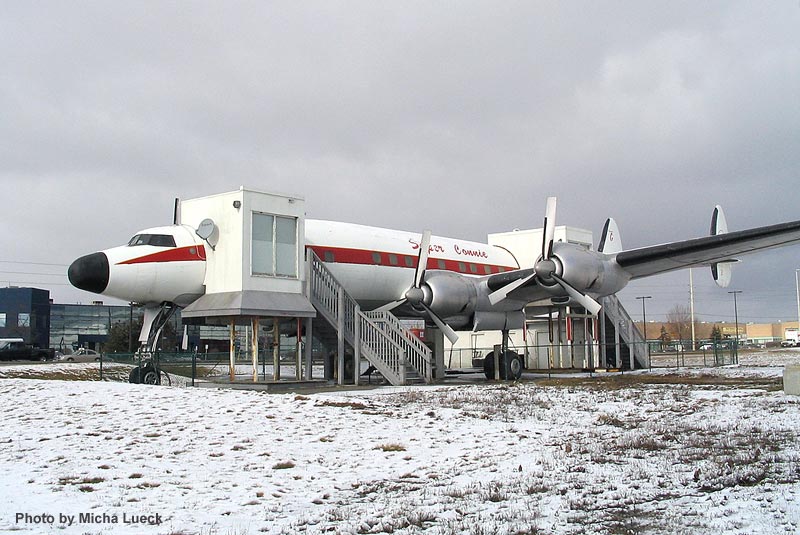 Looks like Toronto’s Super Connie CF-RNR is on the move again. Since the aircraft’s restaurant closed in 2002, it has been rumored that Seattle’s Museum of Flight was interested in acquiring the aircraft for its collection. To add to the rumor, in May 2004 the aircraft was offered on eBay with a minimum bid of
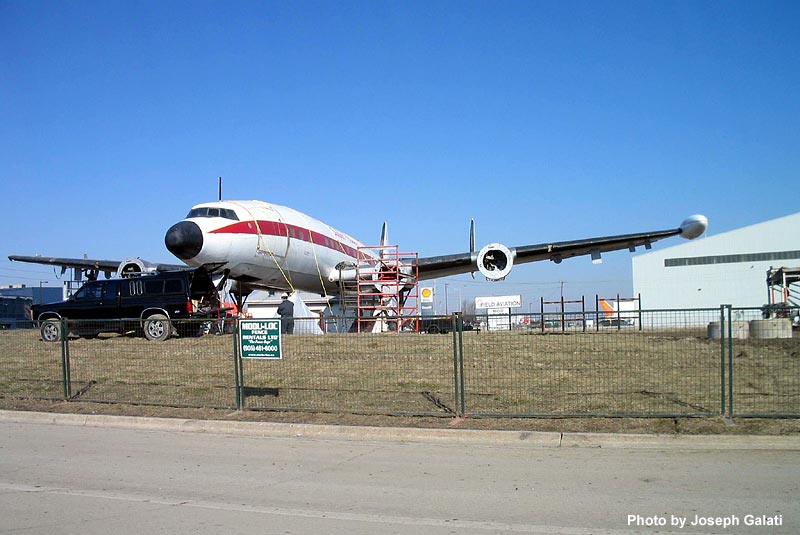 $200,000…there were no takers. The museum announced on page 8 of their January/Feburary 2006 newsletter that they had obtained clear title to the aircraft and workman began disassembling the aircraft in January. According to the Museum of Flight, Air Canada has signed up to paint the aircraft in period Trans-Canada colors at their Toronto maintenance base. Sounds like a done-deal but wait a minute, it turns out that the Toronto Aerospace Museum is also interested in acquiring the aircraft and there is a growing effort to keep the airliner in Canada.
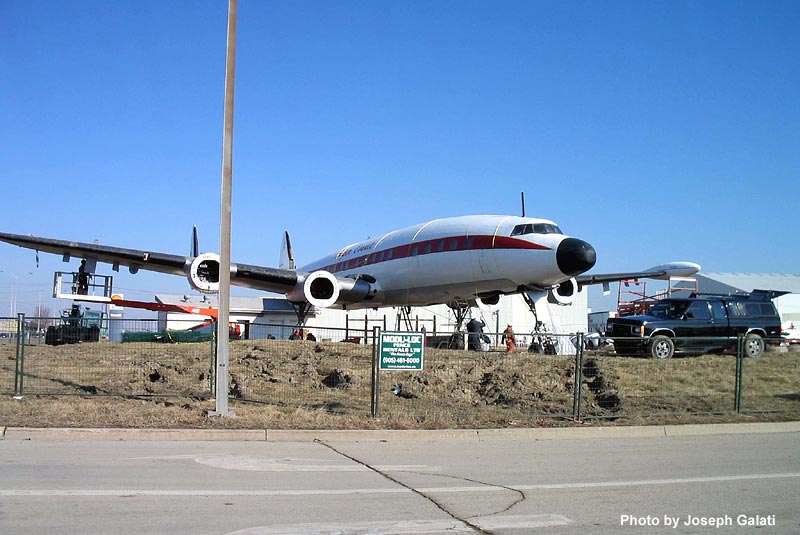 Like the Museum of Flight, the Toronto based museum had also attempted to acquire the aircraft since the restaurant shut down in 2002. The Constellation is owned by Catherine Scott, a secretive and somewhat eccentric woman who recently, as reported in the Toronto Star, threatened folks attempting to photograph the
 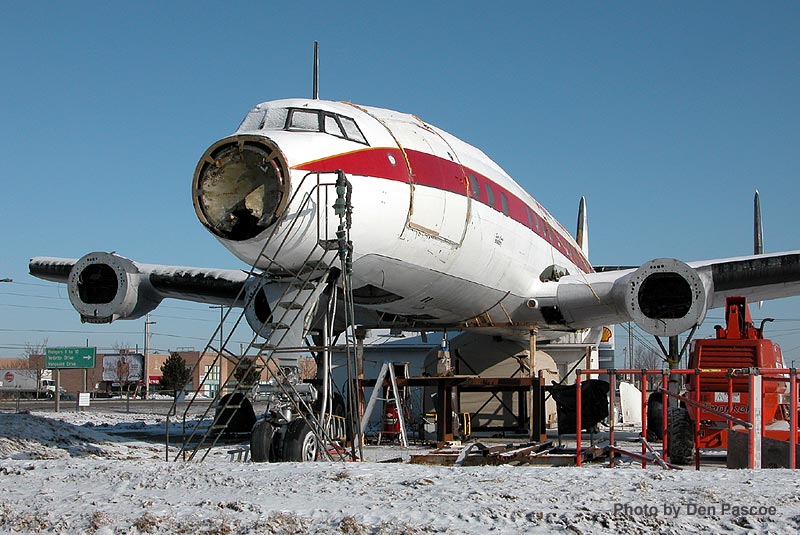 aircraft. The museum’s efforts had gone nowhere and it has now initiated a campaign to keep the aircraft in Canada citing the “Moveable Cultural Properties Program”. Canada has national laws that govern the export of historically significant artifacts such as military memorabilia, works of air and even historic aircraft. The Constellation falls within the scope of the program, which is administered by Heritage Canada, a national agency. Air Canada retirees are among the biggest supporters of this aircraft remaining in Canada and recently, the 12,000 member retiree group Air Canada Pioneers added its voice in the effort to keep the aircraft in Canada.
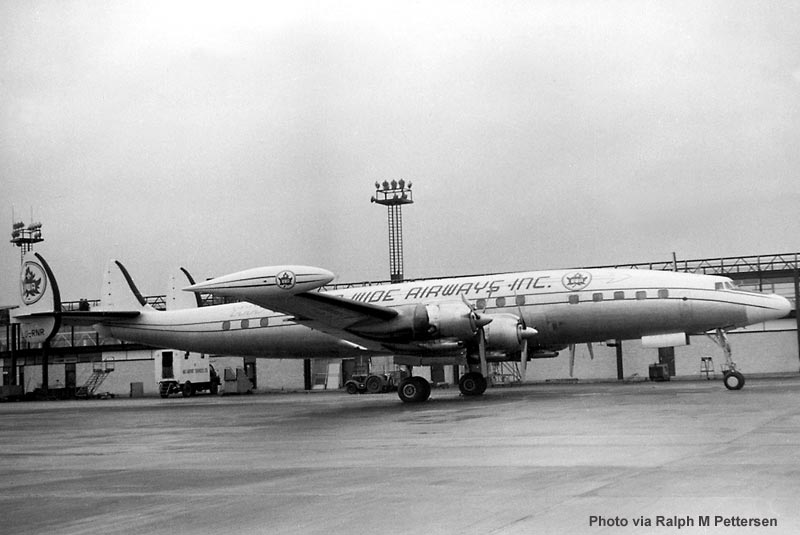 This aircraft has a very interesting history and probably has more miles on the highway than any other Constellation or, for that matter, any other passenger airliner. It was delivered to Trans-Canada Airlines in May 1954 as CF-TGE. It was retired by TCA in 1963 and leased to World Wide Airways during the summer of 1964 having been re-registered CF-RNR. It flew for WWA for about a year until operations ended in August 1965. The aircraft was stripped of engines, electronics
  and other usable spares by Nordair and moved, by road, 100 miles to St-Marc des Carrieres, Quebec in 1968 for conversion into a bar/restaurant. This never happened and, in July 1985, the aircraft was moved again by road 110 miles to St-Jean Port Joli, Quebec. The aircraft was part of Bertrand Camirand's Musee Les Retrouvailles until June
 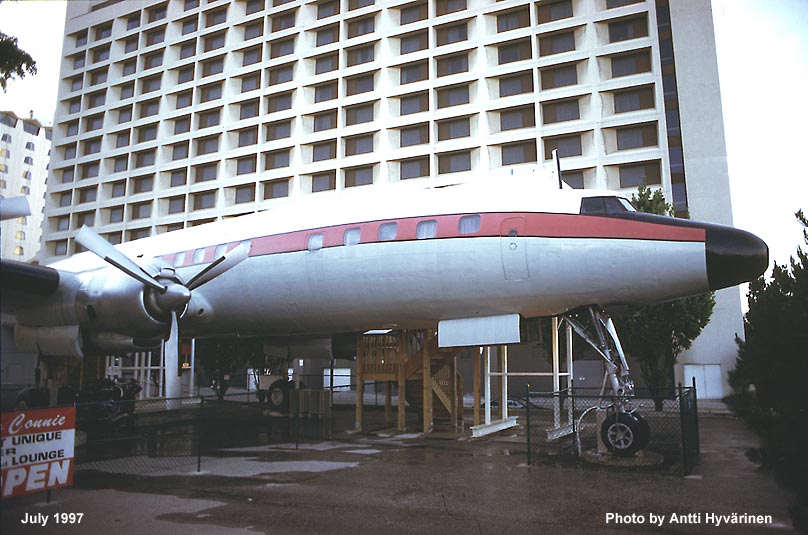 1996, when it purchased by Phillip Yull, disassembled and moved 600 miles by road to Pearson International Airport. After a two month restoration and painting, it was positioned adjacent to the Regal Constellation Hotel in Toronto for use as a cocktail lounge. The aircraft was again moved in August 1998 to its present location where it opened on October 15, 1998 as a fine dining restaurant. Unfortunately, the location was not the best, customers were scarce and, by January 2002, the restaurant was closed. During this time, Phil Yull lost ownership of the aircraft to Ms. Scott who is the apparent current owner. A detailed history of this aircraft is included in this website.
The fate of this aircraft seems to still be very much up in the air. The Toronto Star printed an interesting article about the situation in its February 7, 2006 issue. On February 10, 2006 The Museum of Flight issued a response to the many questions being asked about their purchase of and plans for the aircraft. I suspect there are a few more chapters in this evolving story so stay tuned to this website for the latest news.
Mount Blanc Gives Up Remnants of Her Victims - January 2006
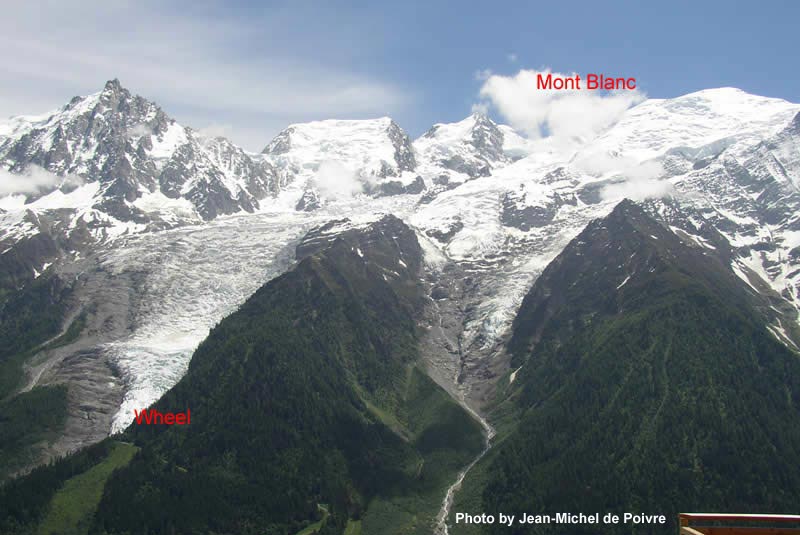 Through a strange twist of fate, Mount Blanc in the Alps has been the site of two Air India crashes, which occurred fifteen years apart. Even stranger, the aircraft crashed within 200 meters of each other on the south rim of the mountain. The first crash involved L749A Constellation VT-CQP and occurred on November 5, 1950. The aircraft was operating as Flight #45 and all 40 passengers and 8 crewmembers were killed. Flight #45 had originated in Bombay with planned stops in Cairo and Geneva before reaching its eventual destination of London, England. While descending in preparation for landing at Geneva, it crashed into the mountain in heavy snow and high winds. Fifteen years later on January 24, 1966, Air India Boeing 707-437 VT-DMN was beginning its approach to Geneva when it crashed in almost the same spot on the mountain. As with the Constellation crash, there were no survivors among the 106 passengers and 11 crewmembers.
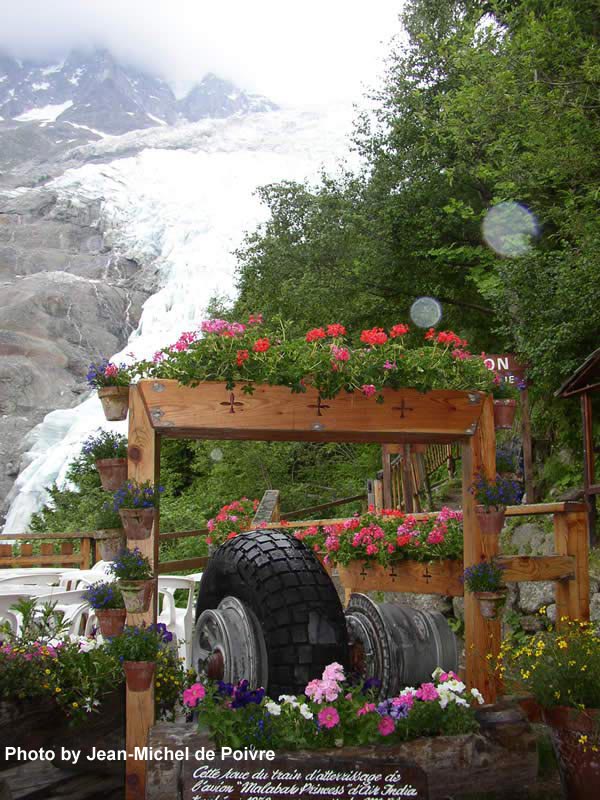 I recently received an email from Jean-Michel de Poivre with some photos of a main landing gear from the Constellation. The landing gear is on display at the Chalet des Glacier des Bossons,
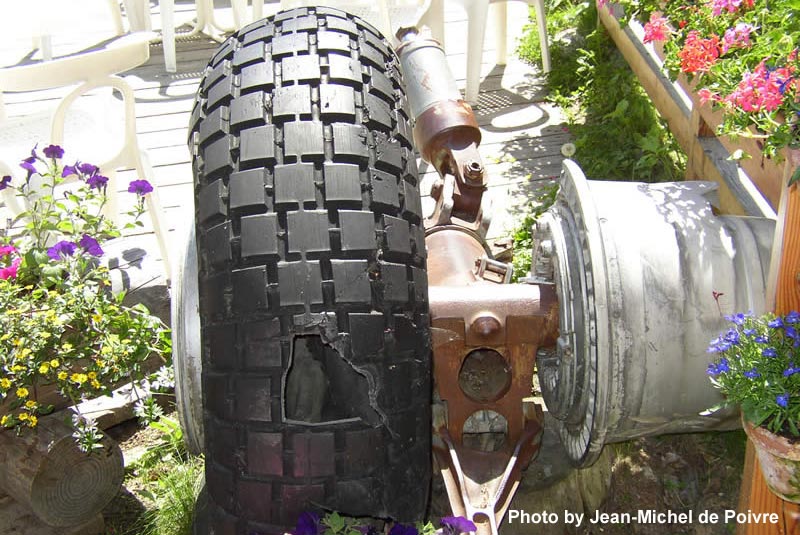 which is located on the left bank of the Glacier du Bossons on the edge of the moraine. The glacier flows for almost five miles and 11,500 feet down Mount Blanc at an average rate of about 900 feet per year. The base of the glacier is located in the Chamonix Valley and for the past twenty years airplane parts have been regularly spit out of glacier. The landing gear was found by Christian Mollier, owner of the chalet, in front of the chalet’s restaurant in 1986. It is often not possible to determine whether the parts are from the first or second crash but the landing gear are definitely from the Constellation. Jean-Michel says in his email that many of the parts found at the base of the base are in good condition despite having been encased in ice for over 55 years.
I’d like to thank Jean-Michel for his email and very interesting photographs. Lets hope that Mount Blanc’s 15,781 foot summit has claimed it last aeronautical victim.
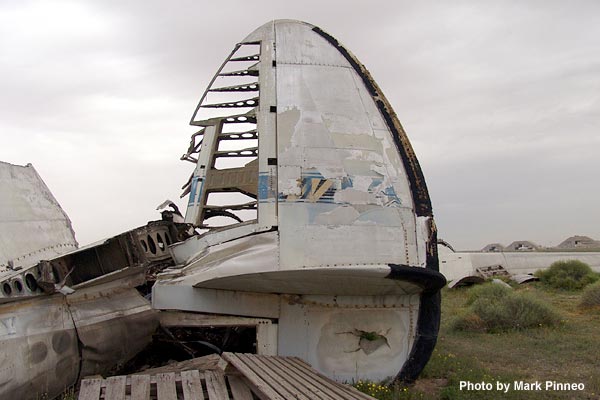
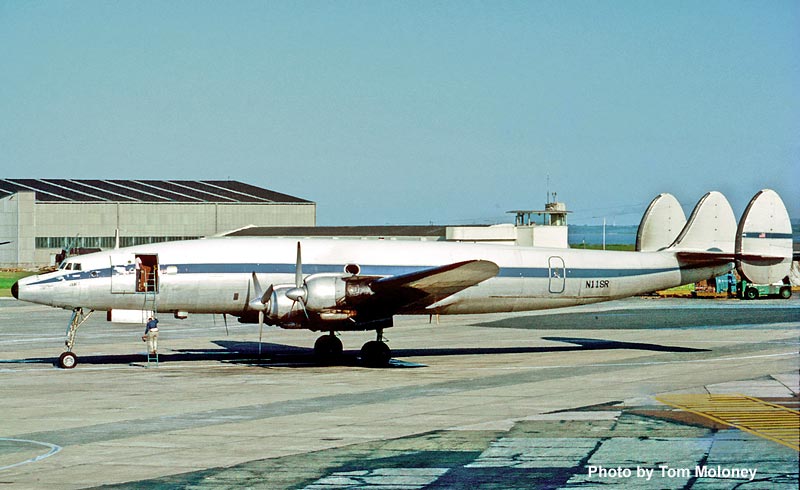 In a article on this website in February 2005, it was reported that the remains of ex-Lanzair L1049H N11SR (c/n 4581) still existed at the end of a runway at the Ahmad Al Jaber Airbase. Henk de Waard traveled to Kuwait on January 10, 2006 and photographed what was left of the aircraft. Henk reports..."With some local help, I found the airbase and aircraft after about a half hour drive. It was a sad
 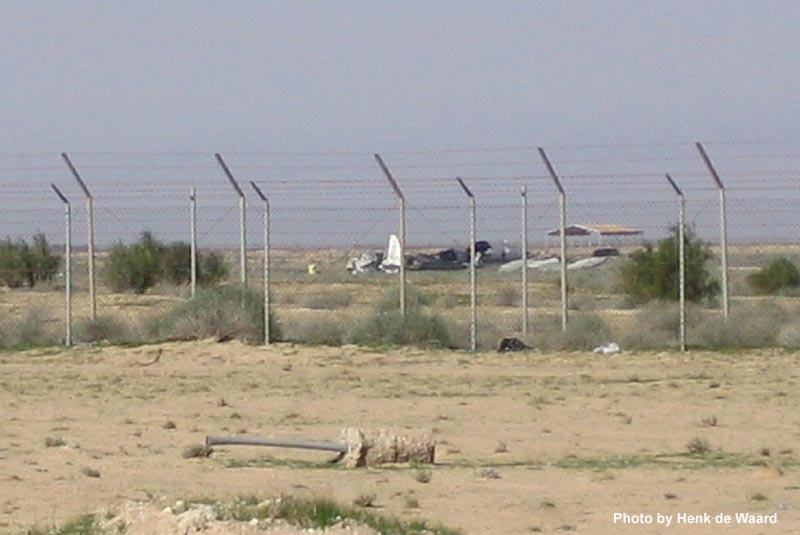 sight to see the old lady rotting away, but the remains of a Connie are still at the southern edge of the base. From the distance it was of course not possible to check a serial number plate, if one is still around, but it is a Connie for sure and most probably N11SR. It is reported that the props are hanging inside some buildings as decoration. The tail is partly intact and also large pieces of the wing were seen. Most of the fuselage is gone." I would have to agree with Henk that the aircraft is most certainly the sad remains of N11SR. Many thanks to Henk for his report.
Camarillo EC-121T Update - January 2006
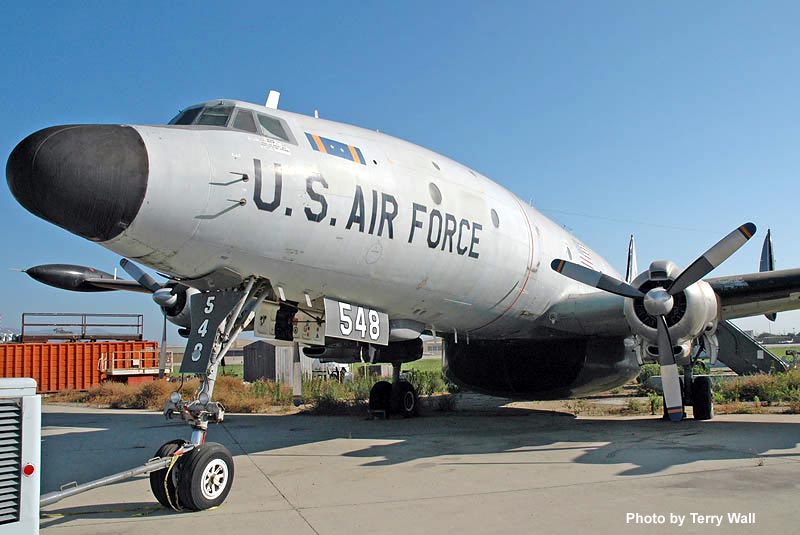
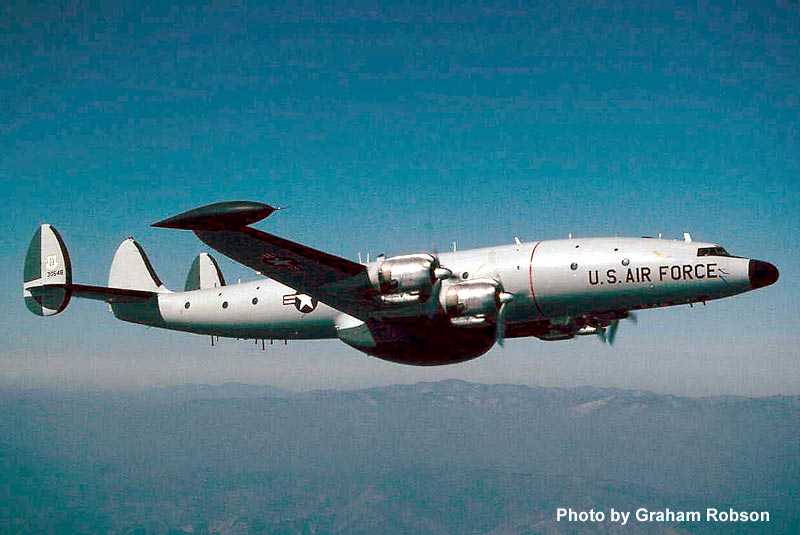 Terry Wall's August report on Camarillo's last Super Connie heading to the Yanks Air Museum has proven true. As officially reported in the museum's current newsletter, the aircraft has been acquired and efforts are being made to return the aircraft to flying condition for the ferry flight to the museum's home base in Chino. There is no set date but rumors have the flight happening some time in the next few months. My hat's off to Wayne Jones' widow Lois and the Yanks Air Museum for making this happen. Thanks to Terry and Ted Quackenbush for their detective work.
| Page Top | Home |
----Created 4 April 2007----